Wax-Free CMP Polishing Pads for Semiconductor Manufacturing
Table of Contents
- 1. Definition and Technical Scope of Wax-Free CMP Polishing Pads
- 2. Product Forms and Design Intent of Wax-Free Polishing Pads
- 3. Core Technology: Wax-Free Adsorption Fundamentals
- 4. How Wax-Free CMP Polishing Pads Work in Practice
- 5. Wax-Free vs Wax-Based CMP Polishing Pads
- 6. Integration of Wax-Free Pads in CMP Processes
- 7. Material and Structural Foundations of Wax-Free CMP Pads
1. Definition and Technical Scope of Wax-Free CMP Polishing Pads
Wax-free CMP polishing pads are engineered wafer holding and polishing interfaces designed to operate without wax or adhesive bonding layers during chemical mechanical planarization. Unlike traditional wax-based systems, these pads rely on mechanically governed adsorption, elastic conformity, and pressure-induced interface sealing to achieve wafer stability throughout the CMP process.
The elimination of wax fundamentally changes how wafer holding behaves under thermal load, chemical exposure, and dynamic motion. Wax-free CMP polishing pads are therefore increasingly adopted in advanced semiconductor manufacturing, where thinner wafers, tighter process windows, and contamination control requirements exceed the capabilities of conventional wax bonding approaches.
2. Product Forms and Design Intent of Wax-Free Polishing Pads
From a product perspective, wax-free polishing pads are manufactured in multiple structural forms to address different CMP tool architectures and process requirements. While design details vary, all wax-free pads share the objective of providing stable wafer adsorption without introducing sacrificial bonding materials.
Key design considerations include pad thickness, compressibility, surface topology, and compatibility with carrier head pressure distribution systems. A detailed breakdown of product configurations and specifications is provided on the dedicated product page Wax-Free Polishing Pads.
| Design Aspect | Engineering Purpose |
|---|---|
| Pad thickness | Pressure uniformity and mechanical stability |
| Surface topology | Controlled contact area and air evacuation |
| Elastic compliance | Adsorption force generation and wafer protection |
3. Core Technology: Wax-Free Adsorption Fundamentals
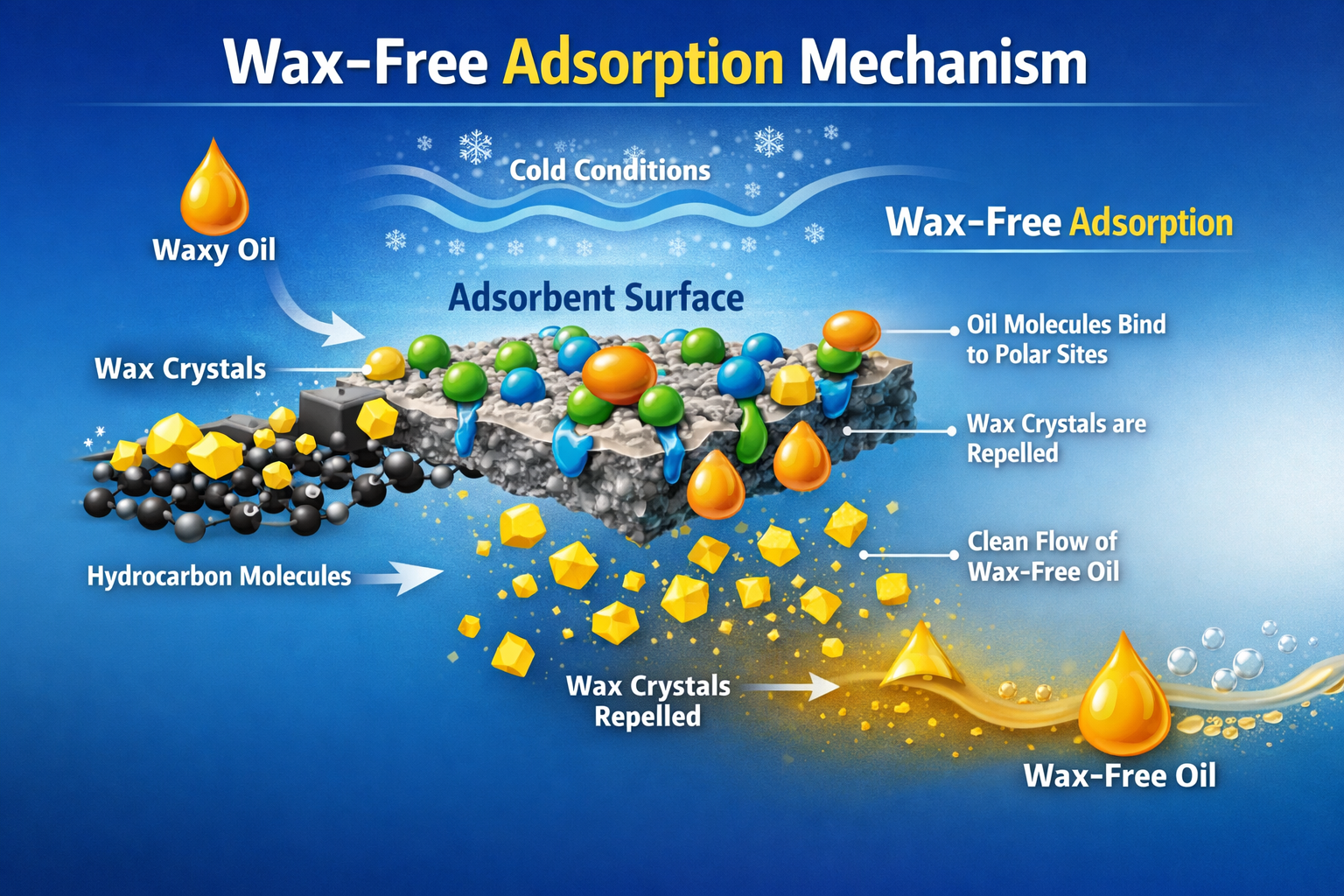
At the core of wax-free CMP polishing pads is an adsorption mechanism that replaces chemical adhesion with mechanical interface control. Adsorption force arises from a combination of pressure-driven conformity, interfacial sealing, and frictional resistance generated at the pad–wafer interface.
Unlike wax bonding, adsorption strength in wax-free systems is not a fixed material property but a dynamic response to applied load and deformation. The underlying adsorption technology, including pad microstructure and pore connectivity, is explained in detail on the technology page Wax-Free Adsorption Polishing Pad Technology.
4. How Wax-Free CMP Polishing Pads Work in Practice
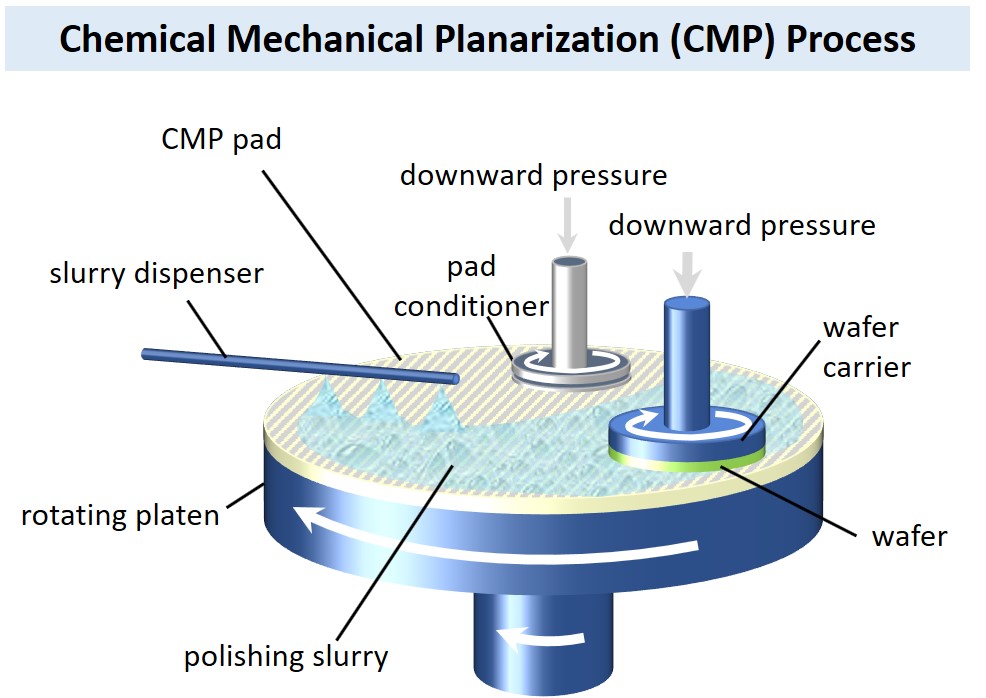
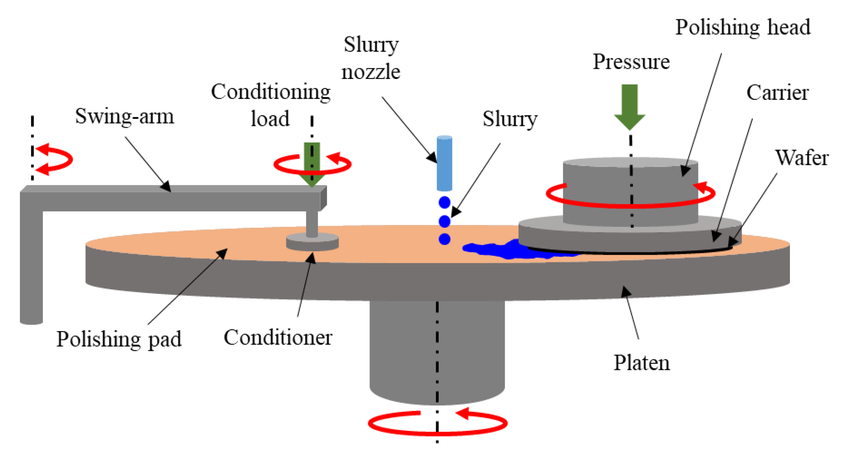
In actual CMP operation, wax-free polishing pads function as a dynamic mechanical interface rather than a static holding layer. Adsorption develops progressively during wafer loading, stabilizes during pressure ramp-up, and remains responsive to process variables such as downforce, platen speed, and slurry flow.
A full process-sequenced explanation of how wax-free polishing pads behave from wafer loading to release is provided in the dedicated working principle white paper How Wax-Free Polishing Pads Work in CMP Processes. This separation allows process engineers to analyze mechanism-level behavior without conflating it with product or material descriptions.
5. Wax-Free vs Wax-Based CMP Polishing Pads
When comparing wax-free and wax-based CMP polishing pads, the fundamental difference lies in how wafer holding force is generated and maintained. Wax-based systems rely on adhesive strength that varies with temperature, wax thickness, and chemical exposure, while wax-free systems rely on mechanically regulated adsorption.
This difference has significant implications for process stability, contamination risk, maintenance requirements, and compatibility with advanced semiconductor nodes. A detailed side-by-side comparison is available at Wax-Free vs Wax Polishing Pads.
| Aspect | Wax-Based | Wax-Free |
|---|---|---|
| Holding mechanism | Chemical adhesion | Mechanical adsorption |
| Thermal sensitivity | High | Low |
| Backside contamination | Possible | Minimal |
6. Integration of Wax-Free Pads in CMP Processes
Wax-free polishing pads are integrated into CMP processes across a range of applications, including wafer thinning, planarization, and advanced packaging. Their mechanical holding behavior enables more stable pressure transmission and improved wafer-to-wafer consistency.
Process-level considerations, including slurry compatibility and yield impact, are addressed in detail on the application page Wax-Free Pads in CMP Processes.
7. Material and Structural Foundations of Wax-Free CMP Pads
The performance of wax-free CMP polishing pads is ultimately governed by material selection and internal structure. Elastic modulus, pore architecture, surface roughness, and wear behavior collectively determine adsorption efficiency, lifetime, and polishing stability.
A comprehensive discussion of CMP polishing pad materials and structural design principles is provided at CMP Polishing Pad Materials, where wax-free pads are analyzed in the context of broader CMP pad technologies.