Diamond Dicing Blades for Wafer Dicing
Diamond dicing blades are the core cutting tools used in modern semiconductor wafer singulation. From a product engineering perspective, a diamond dicing blade is not a generic consumable but a highly engineered composite tool designed to operate within a narrow and well-defined process window. Its performance directly affects cutting stability, edge integrity, blade lifetime, and overall manufacturing yield.
Unlike conventional abrasive tools, diamond dicing blades must simultaneously satisfy conflicting requirements: extremely high hardness to cut brittle wafer materials, controlled wear behavior to maintain consistent cutting geometry, and sufficient compliance to suppress vibration-induced damage. Achieving this balance is the primary objective of diamond dicing blade product design.
This page provides a product-engineering-level explanation of diamond dicing blades, focusing on blade construction, bond systems, performance trade-offs, and how different blade designs are matched to specific semiconductor wafer applications. It supports the broader context introduced in Wafer Dicing Blades for Semiconductor Applications and builds upon the technical foundations described in Dicing Blade Technology.
What Are Diamond Dicing Blades?
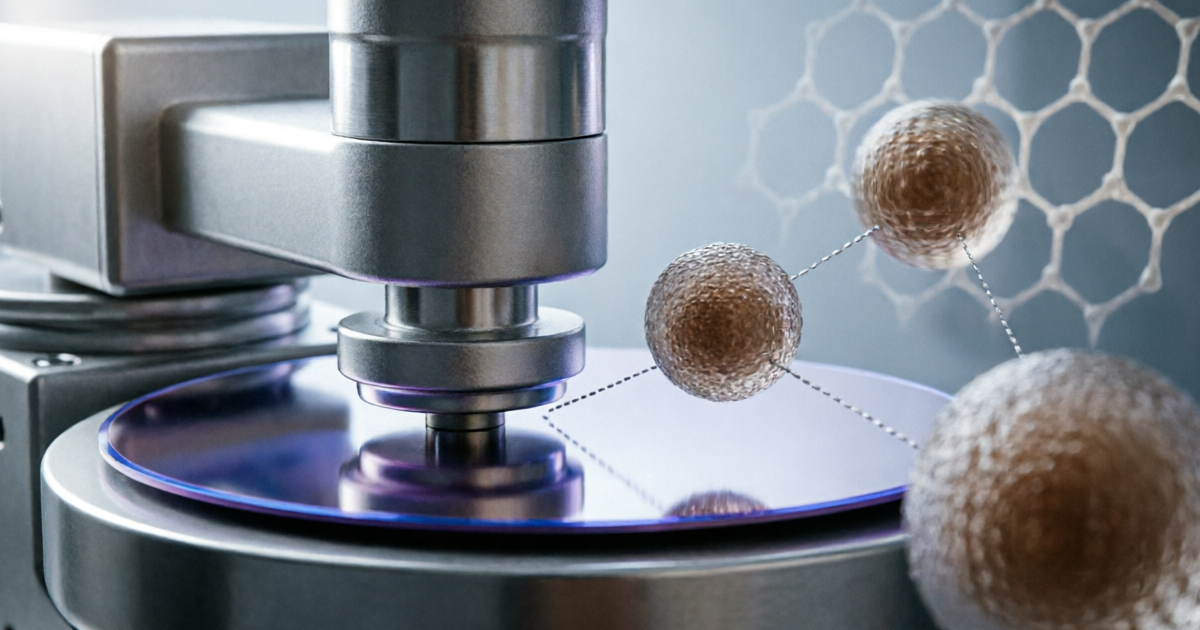
Diamond dicing blades are ultra-thin circular saw blades that use synthetic diamond particles as the cutting abrasive. These diamond particles are embedded or fixed within a bonding matrix that determines how the blade wears and how cutting edges are renewed during operation. The blade is mounted on a high-speed spindle and used to cut semiconductor wafers along scribe lines with micrometer-level precision.
From a structural standpoint, a diamond dicing blade consists of three primary components: a core substrate that provides mechanical rigidity, a diamond-containing cutting rim where material removal occurs, and a bonding system that controls diamond retention and exposure. Each of these components must be engineered together; optimizing one while ignoring the others often leads to unstable cutting performance.
In semiconductor manufacturing, diamond dicing blades are preferred because diamond is capable of cutting a wide range of wafer materials, including silicon, glass, sapphire, and compound semiconductors, while maintaining dimensional stability over extended production runs.
Advantages of Diamond Dicing Blades
The primary advantage of diamond dicing blades lies in their ability to deliver consistent, repeatable cutting performance under high-speed conditions. Diamond abrasives provide superior hardness compared to conventional materials, allowing the blade to maintain sharp cutting edges even when processing hard or abrasive wafers.
From an engineering standpoint, diamond blades offer several measurable benefits. First, they enable narrower kerf widths, which directly translates into higher die yield per wafer. Second, they exhibit predictable wear behavior, allowing process engineers to define stable maintenance and replacement intervals. Third, properly designed diamond blades can minimize subsurface damage, preserving die strength and long-term reliability.
These advantages make diamond dicing blades the default choice for most applications discussed in Blade Dicing Process for Semiconductor Wafers, especially where high throughput and yield consistency are required.
Bond Types for Diamond Dicing Blades
Bond type is one of the most important product-level differentiators among diamond dicing blades. The bond determines how diamond particles are held in place, how they are released as they become dull, and how the blade responds to mechanical and thermal loads during cutting.
Resin Bond Diamond Dicing Blades
Resin bond blades use polymer-based matrices to retain diamond abrasives. These bonds are relatively soft and elastic, which allows controlled diamond exposure and reduced cutting forces. From a product engineering perspective, resin bond blades are designed to prioritize edge quality and damage suppression rather than maximum blade life.
Because resin bonds can absorb vibration, they are often used for thin wafers, fine scribe lines, and devices sensitive to micro-cracking. The trade-off is faster wear and the need for more frequent blade replacement or dressing.
Metal Bond Diamond Dicing Blades
Metal bond blades employ metallic matrices that provide higher hardness and wear resistance. These blades are engineered for long tool life and dimensional stability, particularly in applications involving thick wafers or hard materials such as silicon carbide.
From a process standpoint, metal bond blades generate higher cutting forces, which can increase the risk of edge chipping if feed rates and spindle speeds are not carefully controlled. Their use is therefore closely tied to equipment rigidity and process optimization.
Electroformed Diamond Dicing Blades
Electroformed blades are produced by electroplating diamond particles onto a metal substrate. In this design, diamond particles are fully exposed at the blade surface, resulting in extremely sharp cutting action and low cutting resistance.
Electroformed blades are often selected for ultra-thin wafers and applications requiring minimal kerf width. However, because they lack a true self-sharpening mechanism, their usable life is limited once diamond particles become worn.
| Bond Type | Primary Design Objective | Typical Applications | Key Trade-Off |
|---|---|---|---|
| Resin Bond | Edge quality and low damage | Thin wafers, MEMS, sensors | Shorter blade life |
| Metal Bond | Durability and stability | Thick wafers, hard materials | Higher cutting force |
| Electroformed | Sharpness and minimal kerf | Ultra-thin wafers | Limited usable life |
Applications in Semiconductor Wafer Dicing
Diamond dicing blades are applied across a wide range of semiconductor wafer types and device categories. However, blade design must be tailored to the specific combination of wafer material, thickness, and device sensitivity.
For silicon logic and memory wafers, blade designs emphasize kerf control, cutting consistency, and throughput. In contrast, compound semiconductor wafers such as GaAs and SiC require blades with enhanced wear resistance and controlled cutting aggressiveness to manage brittle fracture behavior.
Application-driven blade selection is closely linked to the performance considerations discussed in Diamond Dicing Blades for Semiconductor Wafers, where wafer-specific requirements are analyzed in greater detail.
Custom Diamond Dicing Blade Solutions
As semiconductor devices continue to diversify, standard catalog diamond dicing blades are often insufficient to meet specific process requirements. Custom blade solutions allow product engineers to fine-tune diamond grit size, concentration, bond formulation, blade thickness, and rim geometry for a given application.
From a product engineering perspective, customization is not about maximizing individual parameters, but about achieving the optimal balance between cutting performance, blade life, and yield stability. For example, a slightly thicker blade with a softer bond may reduce chipping and improve overall yield, even if it increases kerf loss.
Effective customization requires close collaboration between blade suppliers and process engineers, as well as iterative testing under real production conditions. This approach aligns with the selection framework described in How to Choose the Right Dicing Blades.