Oxide and Dielectric Ceria CMP Slurry Guide
Interlayer dielectric and bulk oxide removal rely heavily on cerium-oxide chemistry. This guide explains how to select an oxide and dielectric CMP slurry — why ceria dominates, high-selectivity versus non-selective formulations, how planarization works, and how to control defects.
Why Oxide CMP Matters
Dielectric planarization is one of the most common CMP steps: each interlayer and intermetal dielectric must be flattened so the next pattern prints in focus. Bulk oxide, gap-fill and pre-metal dielectric steps add to the volume. These large-area films reward an abrasive with strong chemical affinity for silicon dioxide — which is why ceria leads. For the selection method, see the selection framework, and the pillar guide for context.
Oxides also vary: thermally grown oxide, deposited TEOS-based oxide and doped glasses differ in density and removal behaviour, so even within oxide CMP the slurry must match the specific film.
The Ceria Advantage
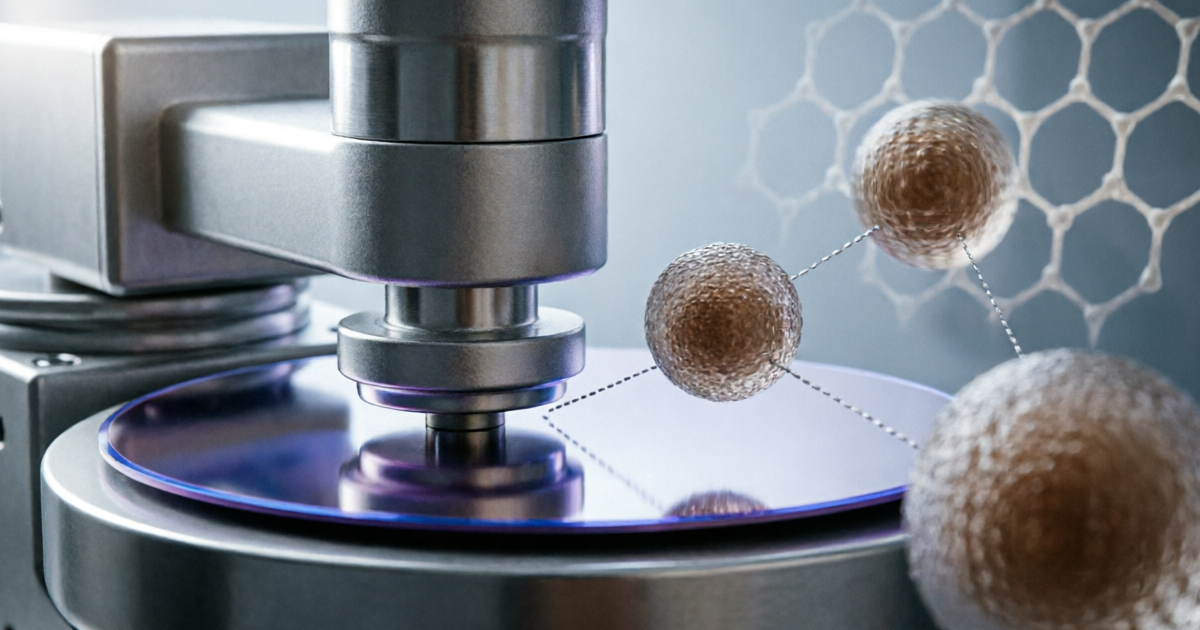
Cerium oxide interacts chemically with silicon dioxide in a way that enhances removal beyond pure mechanics — often described as a chemical-tooth effect, in which surface bonds form and break to lift molecular fragments of oxide. The practical payoff is excellent step reduction and planarization at moderate hardness and lower solids loading, which keeps defectivity manageable on broad films. Silica-based oxide slurries also exist and are gentler but less efficient. The comparison is laid out in silica vs ceria vs alumina vs diamond slurry.
High-Selectivity vs Non-Selective Formulations
Oxide slurries fall into two broad families. Non-selective slurries remove oxide at a roughly constant rate and are used for bulk dielectric polishing where the goal is planar removal of a thick film. High-selectivity slurries (HSS) are engineered with additives that dramatically slow removal when a stop layer such as nitride is exposed — essential for isolation steps. Choosing between them is the first branch in oxide-slurry selection.
| Family | Behaviour | Typical use |
|---|---|---|
| Non-selective | Steady oxide removal | Bulk / interlayer dielectric |
| High-selectivity (HSS) | Slows sharply on nitride | STI and self-stopping steps |
The high-selectivity case is covered in depth in the polysilicon and STI guide.
Planarization and Step Reduction
The figure of merit for dielectric CMP is how preferentially high features are removed relative to low ones — strong planarization means the surface flattens quickly without over-thinning the bulk. This is governed by abrasive type and size, downforce, pad properties and planarization additives that suppress removal in recessed areas. Tight particle-size control is essential because large particles both scratch and undermine planarity.
Faster oxide removal usually means a more aggressive abrasive or higher loading, which raises scratch risk on these large, exposed films. The best oxide slurries planarise quickly while holding the large-particle tail tight.
Defect, Cleaning and Selectivity Control
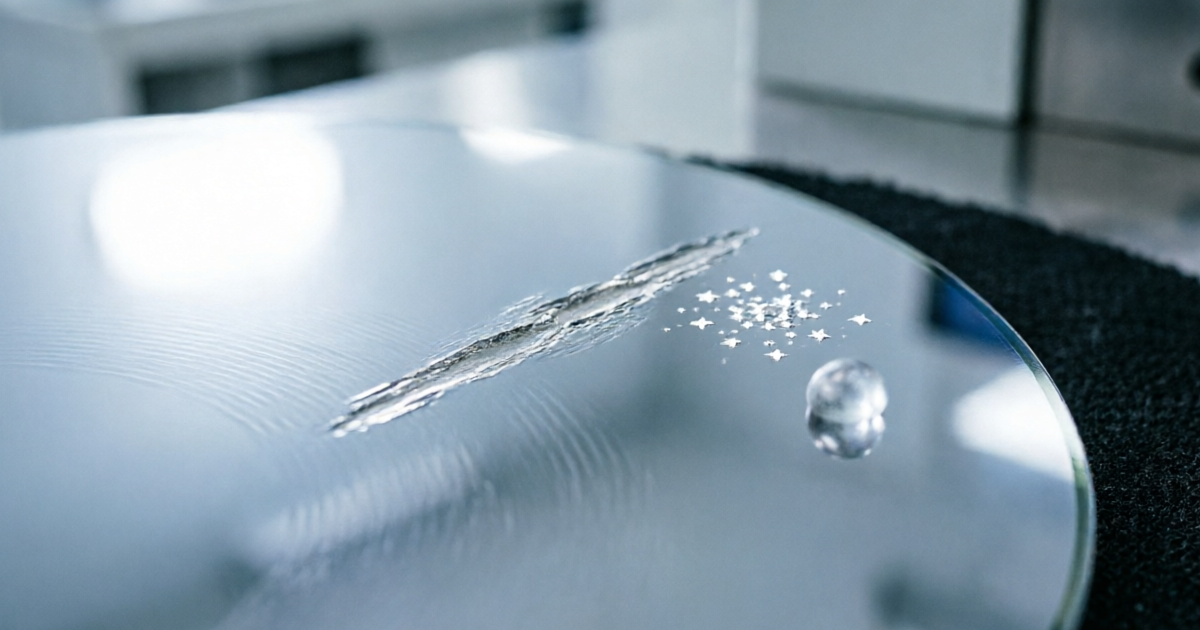
Scratches and residual ceria particles are the dominant oxide-CMP defects, so particle control and an effective post-CMP clean are central — ceria can adhere tenaciously to oxide and demands a clean tuned to remove it. Where the process must stop on a nitride layer, selectivity becomes critical. The same ceria chemistry also underpins precision optics, discussed in polishing slurry for optical glass and lenses.
Selecting Your Oxide Slurry
Identify your oxide type and whether you need a stop layer, choose between non-selective and high-selectivity families, define planarization and removal-rate targets, set scratch and residue limits, and validate particle stability and clean compatibility on your own line. For broad dielectric layers, prioritise planarization efficiency and large-particle control over raw speed.
Frequently Asked Questions
Why is ceria used for oxide and dielectric CMP?
What is the difference between non-selective and high-selectivity oxide slurry?
What is planarization efficiency in oxide CMP?
What defects are most common in oxide CMP?
Do different oxides need different slurries?
Talk to the JEEZ slurry engineering team
From first slurry selection to defectivity optimisation and multi-source qualification, JEEZ — Jizhi Electronic Technology Co., Ltd. — helps you match the right polishing slurry to your material and process targets.
Contact JEEZ →Part of the JEEZ Polishing Slurry knowledge series. Reviewed and updated June 2026 by Jizhi Electronic Technology Co., Ltd.