What Is Colloidal Silica? Particles, Chemistry, and How It Differs from Other Abrasives
A ground-up technical explanation of colloidal silica—what defines it as a material, how its SiO₂ nanoparticles are structured, the surface chemistry that drives CMP performance, and why it outperforms fumed and precipitated silica for precision polishing applications.
The term “colloidal silica” appears on slurry data sheets, CMP process recipes, and supplier catalogs throughout the semiconductor and precision polishing industries—but what exactly is it, and what makes it different from other silica-based polishing materials? Understanding the physical and chemical identity of colloidal silica is not a purely academic exercise: the material’s unique particle morphology, surface chemistry, and colloidal behavior directly determine its performance in chemical mechanical planarization (CMP) applications, and a clear grasp of these fundamentals helps engineers make better slurry selection and process optimization decisions.
This article provides a complete technical explanation of what colloidal silica is, how its nanoparticles are structured and chemically characterized, how it compares to fumed and precipitated silica, and what specification parameters define a CMP-grade product.
1. Colloidal Silica: Core Definition
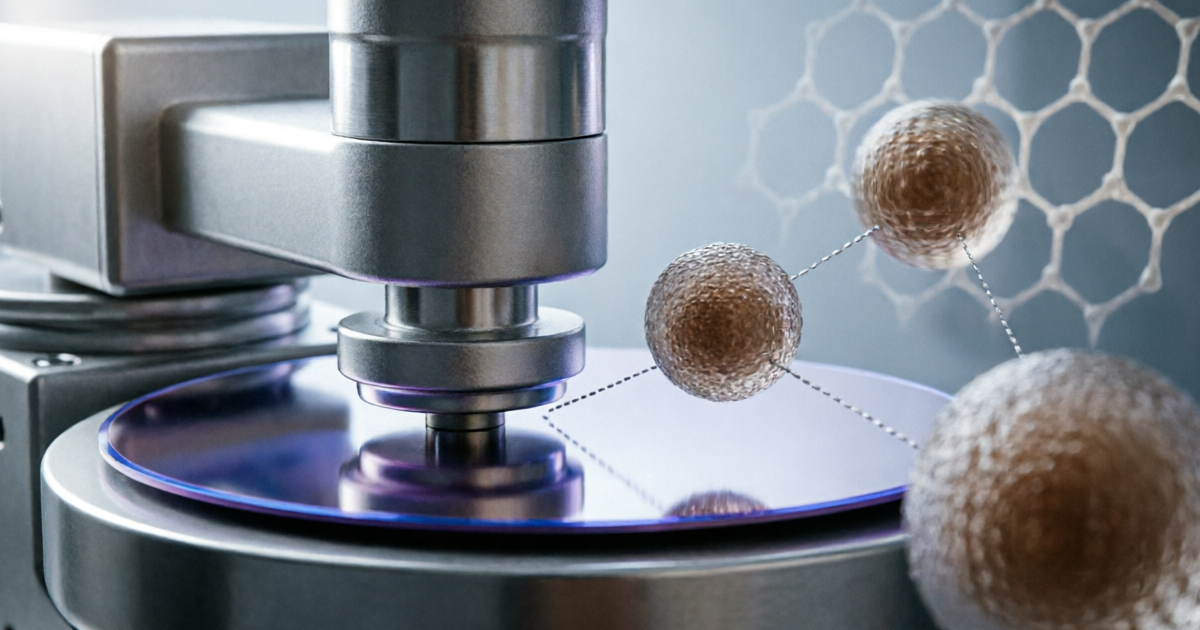
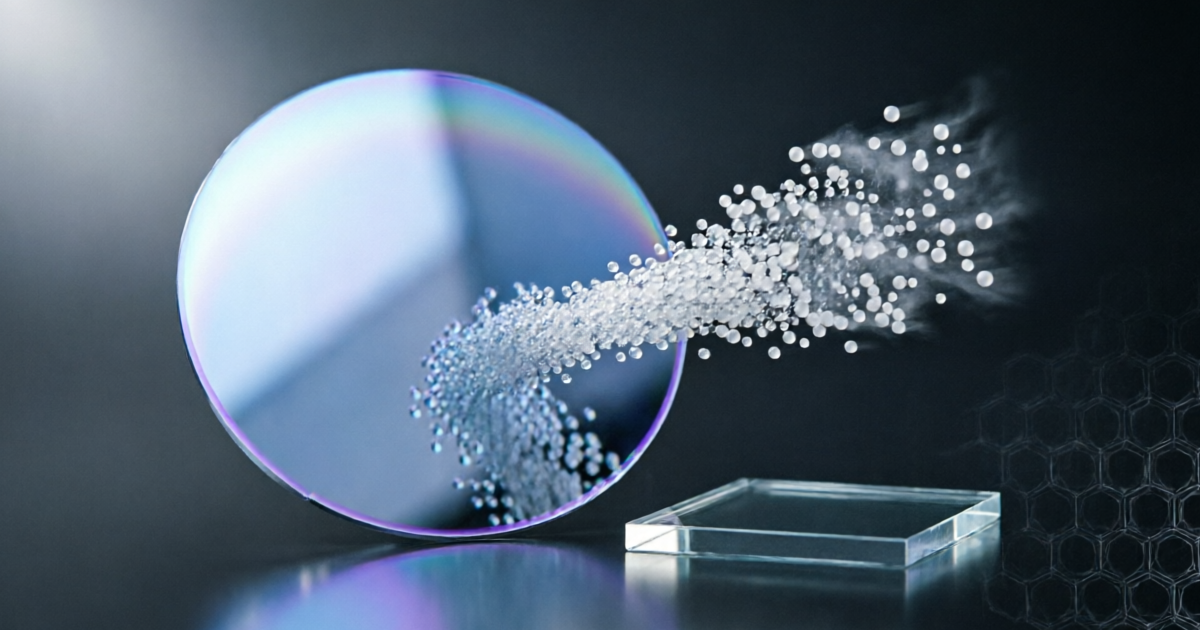
Colloidal silica is an aqueous dispersion of amorphous, non-porous silicon dioxide (SiO₂) nanoparticles that exist in a stable, uniformly dispersed state due to electrostatic repulsion between particles. The key term in this definition is colloidal: in colloid science, a colloidal dispersion is a two-phase system in which one phase (the dispersed phase—here, solid SiO₂ particles) is finely subdivided and distributed throughout a second continuous phase (the dispersion medium—here, water), with particle sizes typically in the range of 1 nm to 1 µm.
Within this size range, particles are too small to settle under gravity on any practical timescale (unlike coarser suspensions, which sediment), yet large enough to interact mechanically with a substrate surface. This size regime is also where the ratio of surface area to volume is extremely high, making surface chemistry—rather than bulk material properties—the dominant factor in particle behavior. A 50 nm SiO₂ particle has a surface-to-volume ratio approximately 3,600 times higher than a 180 µm conventional abrasive grain.
The SiO₂ in colloidal silica is amorphous—meaning its silicon and oxygen atoms are arranged in a random, glass-like network rather than a long-range crystalline structure. This distinguishes it from crystalline silica phases such as quartz (α-SiO₂) and cristobalite, which have defined crystal structures and are classified as hazardous by inhalation (IARC Group 1). Amorphous colloidal silica does not carry this classification and has a substantially more benign safety profile, an important practical consideration for fab environments.
Colloidal silica vs silica sol: The two terms are used interchangeably in most industrial contexts. “Silica sol” is the older chemical engineering term for a stable colloidal dispersion of amorphous SiO₂ in water, while “colloidal silica” is the preferred term in semiconductor and CMP contexts. Both describe the same material class.
2. SiO₂ Nanoparticle Size, Shape, and Structure
The performance of a colloidal silica slurry in CMP begins with the geometry of the individual SiO₂ particle. Several structural parameters define a CMP-grade colloidal silica particle population:
Primary Particle Size
For CMP applications, colloidal silica primary particles range from approximately 20 nm to 150 nm in diameter. This range is deliberately engineered during synthesis—smaller particles (20–40 nm) are used for ultra-low-defect applications such as silicon wafer final polishing, while larger particles (80–150 nm) are used in higher-MRR oxide CMP steps where throughput is the primary objective. The primary particle size distribution is characterized by statistical parameters: D50 (median diameter), D90 (90th percentile), and the large particle count (LPC) above threshold sizes such as 0.5 µm and 1 µm.
Spherical Morphology
Colloidal silica particles grown by controlled wet-chemical synthesis (both the Stöber alkoxide route and the ion-exchange seeded-growth route) produce discrete, nearly spherical primary particles. Sphericity is not merely an aesthetic property—it determines the contact mechanics between the abrasive and the polished surface. A spherical particle distributes contact stress over a well-defined Hertzian contact area, producing predictable, uniform micro-scratching forces. An irregular or angular particle creates stress concentrations at its sharp edges, dramatically increasing peak contact pressure and the probability of deep scratch formation.
Amorphous Internal Structure
Internally, each colloidal silica particle consists of a continuous, cross-linked SiO₂ network with no crystalline long-range order. The material has a density of approximately 2.0–2.2 g/cm³ (compared to 2.65 g/cm³ for quartz and 2.20 g/cm³ for vitreous silica), a Mohs hardness of approximately 6–7 (vs. 7 for quartz), and a refractive index of approximately 1.44–1.46. The amorphous network does not have cleavage planes, which means particles do not fracture to produce sharp new edges during polishing—another key advantage over crystalline abrasives.
3. Surface Chemistry: Silanol Groups and Zeta Potential
The surface of every colloidal silica particle is covered with silanol groups—Si-OH functional groups that form the chemical interface between the SiO₂ particle and its aqueous environment. This surface chemistry is the foundation of both colloidal stability and the tribochemical CMP material removal mechanism.
Silanol Group Density and Types
The silanol surface density on colloidal silica is approximately 4–5 OH groups per nm². Three types of silanol groups exist at the SiO₂ surface: isolated silanols (single Si-OH, the most reactive), geminal silanols (two OH groups on the same Si atom, Si(OH)₂), and vicinal or hydrogen-bonded silanols (adjacent Si-OH groups connected by hydrogen bonds). The relative population of these types depends on synthesis conditions and thermal history and influences both the reactivity of the particle surface and its response to chemical additives.
pH-Dependent Ionization and Surface Charge
At pH values above approximately 4, silanol groups begin to dissociate (ionize) according to: Si-OH → Si-O⁻ + H⁺. This ionization increases with pH, giving the particle surface an increasingly negative charge. The degree of ionization—and thus the surface charge density—is described by the Henderson-Hasselbalch relationship for surface acid-base equilibria, with an effective pKa for the silanol-to-siloxide transition of approximately 6–7 in aqueous systems.
Zeta Potential and Colloidal Stability
The negative surface charge at alkaline pH creates an electrical double layer around each particle—a layer of counterions (positively charged species from the solution) attracted to the negatively charged surface. The potential at the boundary between the immobile Stern layer and the diffuse outer layer is the zeta potential (ζ), which quantifies the electrostatic repulsion between approaching particles. For colloidal silica at typical CMP pH values (pH 9–12), ζ is typically −35 to −65 mV—well beyond the ±30 mV stability threshold, giving the dispersion excellent long-term stability. Near the isoelectric point of SiO₂ (pH ~2–3), ζ approaches zero and the dispersion is unstable, leading to rapid particle aggregation.
4. Three Forms of Amorphous Silica: Colloidal vs Fumed vs Precipitated
Amorphous SiO₂ is commercially available in three distinct forms, produced by fundamentally different manufacturing routes that result in very different particle morphologies and application properties. Understanding these differences is critical for CMP abrasive selection.
| Property | Colloidal Silica | Fumed Silica | Precipitated Silica |
|---|---|---|---|
| Synthesis route | Wet-chemical (Stöber or ion exchange) | Flame hydrolysis of SiCl₄ | Acid precipitation from water glass |
| Particle form | Discrete spheres, non-porous | Branched aggregates of fused primary spheres | Porous agglomerates, irregular |
| Primary particle D50 | 20–150 nm | 5–30 nm (primary), 100–400 nm aggregate | 100–500 nm primary |
| Surface area (BET) | 20–150 m²/g | 100–380 m²/g | 30–800 m²/g |
| Dispersion form | Stable aqueous suspension | Dry powder; dispersed as aggregate slurry | Dry powder; wet dispersions are unstable |
| PSD control | Excellent (±5% D50) | Moderate (aggregate size varies) | Poor |
| CMP defectivity | Low | Moderate–High | High (not used in semiconductor CMP) |
| Primary CMP use | Final polish, oxide CMP, barrier CMP | Commodity oxide CMP | Not typically used in semiconductor CMP |
The key structural difference between colloidal and fumed silica is that colloidal silica consists of discrete, non-aggregated primary particles, while fumed silica consists of aggregates of fused primary particles. Fumed silica’s primary particles (5–30 nm) are irreversibly fused during synthesis into chain-like three-dimensional aggregates that cannot be broken down into individual primary particles by any practical dispersing method. These aggregates have irregular shapes with sharp edges and are the fundamental abrasive unit in fumed silica slurry—not the individual primary particles.
5. Why Particle Morphology Determines CMP Performance
The difference between a spherical, discrete colloidal silica particle and an angular fumed silica aggregate is not merely aesthetic—it has direct, quantifiable consequences for CMP process performance, especially defectivity.
Contact Mechanics and Stress Distribution
When an abrasive particle contacts a polished surface under the normal force applied by the CMP pad, the resulting contact stress follows the Hertz contact model for spherical indenters. For a spherical particle of radius R in contact with a flat surface under load F, the maximum contact pressure P₀ = (3F/2πa²) where a is the contact radius determined by R, F, and the elastic moduli of the particle and substrate. A smooth spherical particle distributes the load over this well-defined contact area, producing manageable, uniform contact stresses.
For an irregular fumed silica aggregate, the same applied force is concentrated at its sharpest asperity—a point contact that can be modeled as an effectively much smaller radius particle. This geometric stress concentration multiplies the local contact pressure by a factor potentially 10–100× compared to an equivalent-mass spherical particle, dramatically increasing the probability of plastic deformation (scratching) of the polished surface rather than the controlled elastic-regime tribochemical removal that characterizes ideal colloidal silica CMP.
Implications for Final Polish and Advanced Oxide CMP
For silicon wafer final polish—where the surface roughness specification is below 0.1 nm RMS and the LPD count specification is below 50 particles at >0.09 µm detection—even a small population of irregularly shaped or large particles will exceed the defect budget. Colloidal silica’s tight size distribution and spherical morphology are the only abrasive characteristics currently capable of meeting these specifications in production. Fumed silica’s aggregate morphology makes it fundamentally incompatible with sub-0.3 nm RMS surface finish requirements.
6. Key Specifications for CMP-Grade Colloidal Silica
When evaluating a colloidal silica slurry for CMP use, the following specification parameters—all of which should be reported on the Certificate of Analysis (CoA) for each production lot—are the primary decision variables:
- D50 (median particle diameter by DLS): The primary MRR-governing parameter; must match the application requirement (see selection guide)
- D90 (90th percentile by DLS): D90/D50 ratio should be ≤2.0 for well-controlled production lots
- Large Particle Count (LPC) by SPOS: At >0.5 µm and >1 µm thresholds; the primary defect risk parameter; specify LPC by SPOS explicitly—laser diffraction data cannot reliably quantify this tail
- pH at 25°C: Must fall within the specified stability window; verify against the declared IEP-safe range
- Solids content (wt%) by TGA: Determines working concentration and dilution factor
- Zeta potential (mV): Should be more negative than −30 mV at working pH; confirms stability
- Metallic impurities (ppb, ICP-MS): Na, K, Fe, Cu, Ni; critical for gate-oxide-proximate processes
For a complete overview of colloidal silica slurry applications, selection criteria, and product options, see our master reference: Colloidal Silica Slurry: The Complete Guide to CMP Applications, Properties, and Selection.
7. Frequently Asked Questions
Yes—the two terms describe the same class of material. “Silica sol” is the traditional chemical engineering term for a stable colloidal dispersion of amorphous SiO₂ in water, widely used in catalyst manufacturing and paper coating industries. “Colloidal silica” is the preferred terminology in semiconductor CMP and precision polishing contexts. Both refer to stable aqueous dispersions of discrete, nanometer-scale SiO₂ particles.
Colloidal silica is exclusively amorphous—its silicon and oxygen atoms form a random, glass-like network with no long-range crystalline order. This is an important safety distinction: crystalline silica phases (quartz, cristobalite, tridymite) are classified as Group 1 human carcinogens by IARC when inhaled as respirable dust. Amorphous colloidal silica does not share this classification and is considered significantly less hazardous. From a CMP performance standpoint, amorphous SiO₂ also lacks cleavage planes, so particles do not fracture to produce sharp new abrasive edges during polishing—a key advantage over crystalline abrasives.
Yes. Colloidal silica is used across a wide range of substrate materials beyond silicon. At alkaline pH (10–12), it is effective for polishing silicon dioxide (SiO₂) dielectric layers, sapphire (Al₂O₃) wafers for LED and power device substrates, optical glass (borosilicate, fused silica), display glass, and hard disk substrates. The tribochemical removal mechanism adapts to the specific substrate chemistry: on Al₂O₃, OH⁻ ions attack Al-O bonds analogously to how they attack Si-O bonds on SiO₂, forming a softer aluminum hydroxide hydration layer that the colloidal silica abrasive removes mechanically.
Properly formulated colloidal silica CMP slurry typically has a shelf life of 12–24 months from the manufacture date when stored at 10–35°C in sealed original containers. The primary stability risks are: gelation from temperatures below 5°C (irreversible); pH drift toward the isoelectric point from CO₂ absorption or contamination (triggers aggregation); and introduction of high-ionic-strength contaminants (tap water dilution, incompatible chemical contact) that compress the electrical double layer and reduce zeta potential. Verify pH against the CoA specification before every production lot use; discard or return any lot with pH drift exceeding ±0.3 units from the declared value.
Need the Right Colloidal Silica Slurry for Your Process?
JEEZ offers CMP-grade colloidal silica in three particle size series (CS-20, CS-60, CS-100) covering final silicon polish through high-MRR oxide CMP. Request a sample or discuss your process requirements with our application engineering team.
Contact JEEZ →Published by Jizhi Electronic Technology Co., Ltd. (JEEZ) · August 2026. For process-specific advice, contact our application engineering team.