Breaking Through the High Cost and Slow Response of G804W
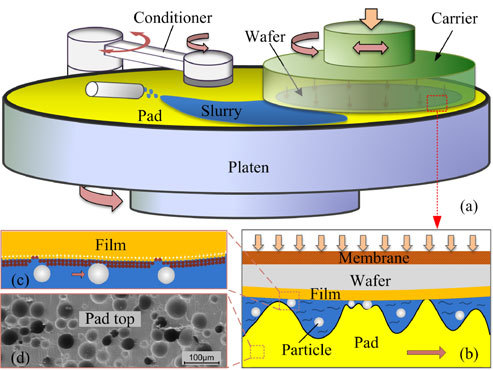
As the third-generation semiconductor industry accelerates its iteration today, silicon carbide (SiC), as a core material, is reshaping the technological landscape of high-end manufacturing fields such as new energy vehicle power devices and high-frequency communication devices with its excellent high-temperature resistance and high breakdown field strength. Chemical Mechanical Polishing (CMP), a critical process in SiC processing, relies heavily on the performance of its core consumable—the polishing pad—which directly determines the precision and reliability of the finished devices. For a long time, Fujibo’s G804W polishing pad from Japan has been one of the mainstream choices in the global SiC CMP field, thanks to its stable performance. Now, with the rise of the domestic semiconductor materials industry, Jizhi Electronics has achieved a key breakthrough in the domestic substitution of G804W, leveraging its independent R&D capabilities and injecting strong momentum into the autonomous and controllable industrial chain.
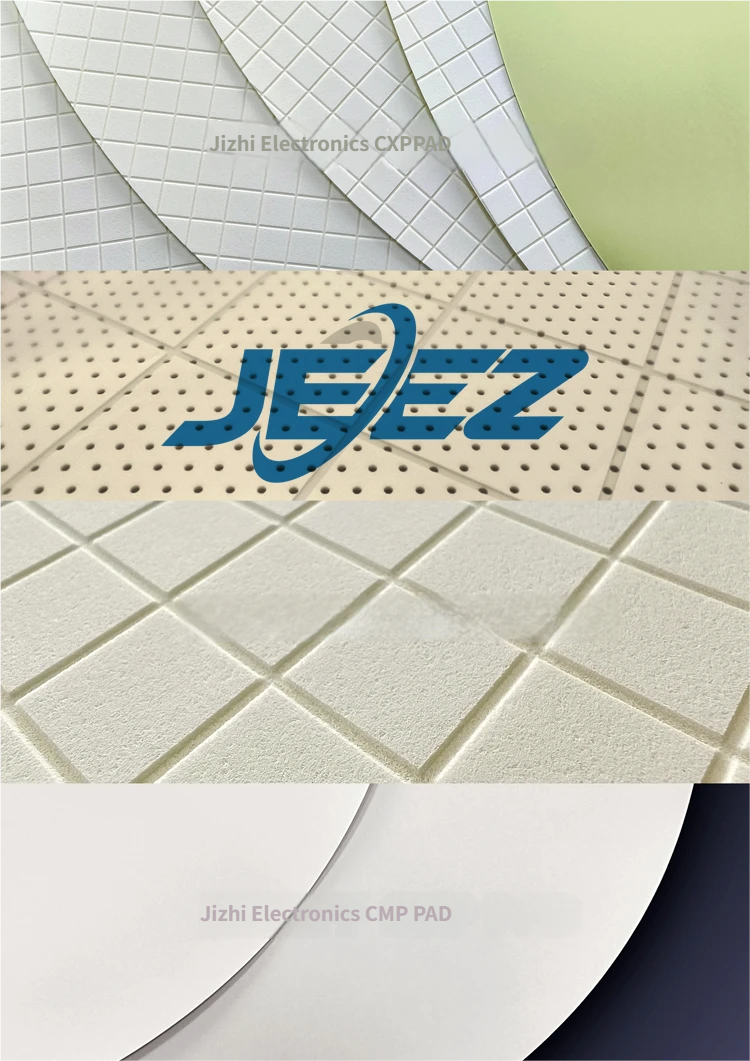
Industry Pain Points Highlighted: Hidden Risks in the Industrial Chain Under G804W Dependence
As Fujibo’s core product designed for SiC polishing scenarios, the G804W polishing pad plays a crucial role in high-end semiconductor manufacturing due to its high flatness and low scratch rate. The SiC material it is compatible with has a Mohs hardness of up to 9.2, making its processing significantly more challenging than traditional silicon wafers and imposing extreme demands on the polishing pad’s grinding precision, chemical corrosion resistance, and wear control. However, the long-term reliance on imported G804W has gradually exposed three core pain points:
• Supply Chain Security Risks: The global CMP polishing pad market is dominated by overseas leaders such as DuPont and Fujibo. Geopolitical fluctuations and extended logistics cycles can lead to supply disruptions, affecting the mass production plans of downstream wafer fabs.
• Cost Control Challenges: Imported polishing pads involve multiple costs, including tariffs, transportation, and brand premiums. Coupled with the frequent replacement demands in high-precision processing scenarios, these factors significantly increase the manufacturing costs of semiconductor devices, limiting the cost-effectiveness advantages of the domestic SiC industry.
• Delayed Service Response: Overseas manufacturers face noticeable time and spatial gaps in technical support, customized adaptation, and after-sales issue resolution, making it difficult to quickly respond to the process adjustment needs of domestic customers and hindering the efficiency optimization of polishing processes.
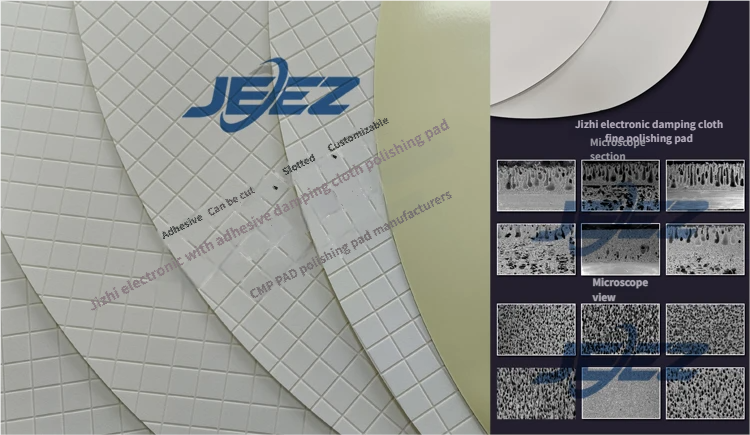
Jizhi Electronics’ Breakthrough Solution: Independent Innovation, Leading the Way in Domestic Substitution
Addressing these industry pain points, Jizhi Electronics has dedicated years of expertise to the CMP polishing pad field, aiming for “performance parity and enhanced experience” in its R&D. It has developed a domestically produced alternative to the G804W polishing pad, achieving a leap from “usable” to “highly effective” through material innovation, process optimization, and precise adaptation. Its core advantages are reflected in three dimensions:
-
Performance Parity: Replicating High-End Quality for Demanding Scenarios
Leveraging an in-depth understanding of SiC polishing mechanisms, Jizhi Electronics has achieved precise alignment with G804W in the core performance of its alternative product. Using independently developed high-toughness non-woven fabric substrate and a polishing layer with nano-scale particle distribution, the product’s flatness error is controlled within ±0.5μm, and its scratch rate is below 0.02/cm², fully meeting the polishing requirements for high-end SiC substrates. In terms of durability, the optimized polyurethane cross-linking process significantly enhances the product’s chemical corrosion resistance, making it compatible with mainstream polishing slurry systems. Its service life is 10%–15% longer than that of G804W, effectively reducing replacement frequency.Furthermore, the product adheres to the ISO9001 quality system for production, with thickness tolerance controlled within ±0.2mm, Shore hardness stabilized at A77±3, and batch production consistency reaching 99.2%. This fully replicates the standardized characteristics of G804W, ensuring the stability of process migration for downstream customers.
-
Cost Optimization: Full-Chain Cost Reduction to Enhance Industrial Competitiveness
Jizhi Electronics has significantly reduced the comprehensive cost of its alternative product through a model of “local R&D + localized supply chain + scaled production.” Compared to imported G804W, the domestically produced alternative reduces procurement costs by 20%–30%. Additionally, leveraging domestic logistics networks, the delivery cycle is shortened from 45 days to 7–10 days, reducing customers’ inventory holding costs.For different processing scenarios, the product also offers a full-process adaptation solution for “rough polishing to fine polishing.” By optimizing process parameters, the polishing cost per unit area of SiC substrates can be further reduced by 8%–12%, helping downstream enterprises build cost-effectiveness advantages and accelerate the market promotion of domestically produced SiC devices.
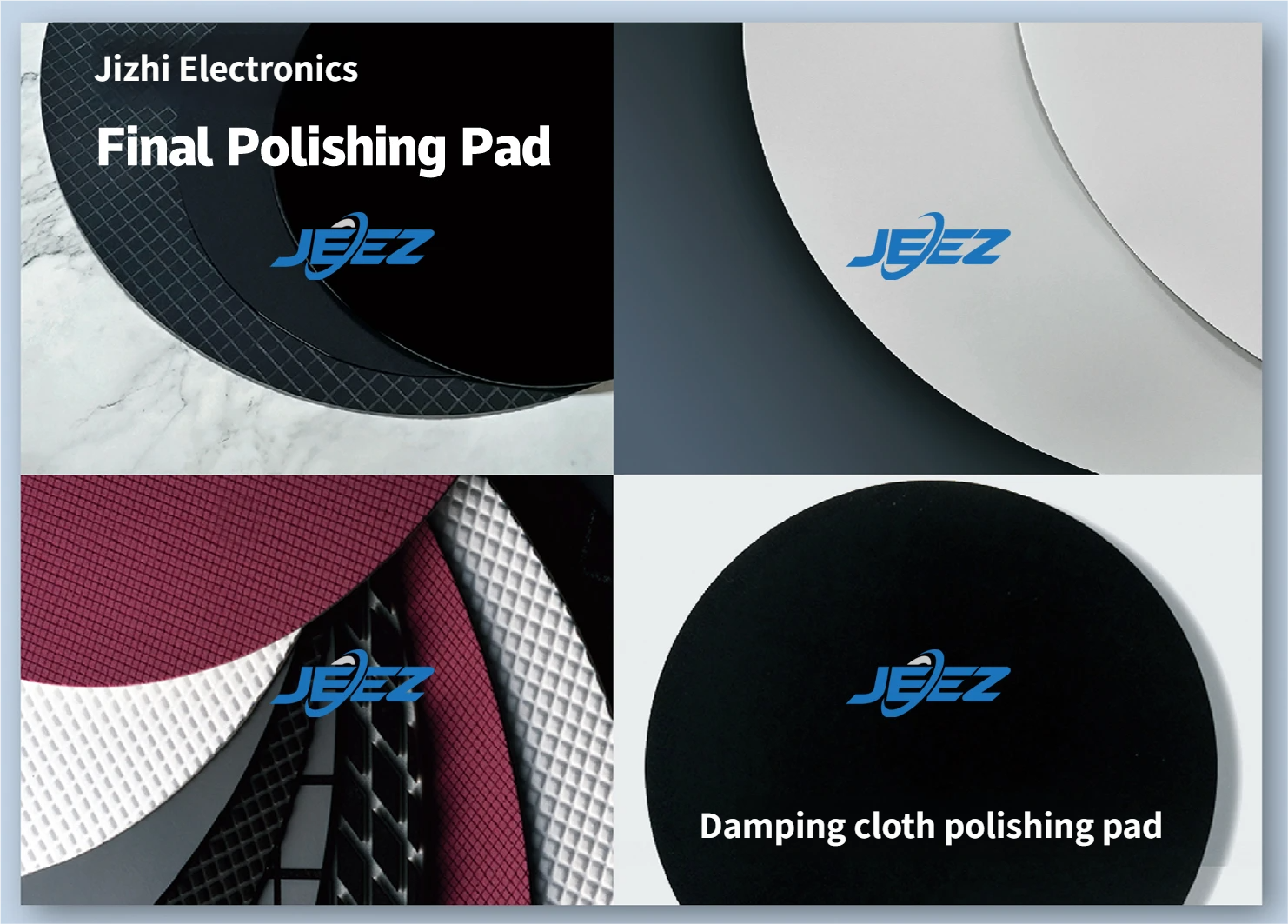
Damping Fabric Polishing Pad Manufacturer: Full-Process Adaptation from Rough to Fine Polishing
-
Service Upgrade: Customized Adaptation and Full-Cycle Support
Unlike the standardized supply model of overseas manufacturers, Jizhi Electronics has established a “one-on-one” customized service system. For specific polishing processes of customers (such as different SiC wafer sizes or varying grinding stage requirements), it can provide customized solutions for back adhesives and groove designs within 72 hours, achieving a precise balance between polishing efficiency and surface quality.