Unlocking the Secrets of Optical Glass Polishing Slurry in CMP Processes
Unlocking CMP Process: Principles and Advantages
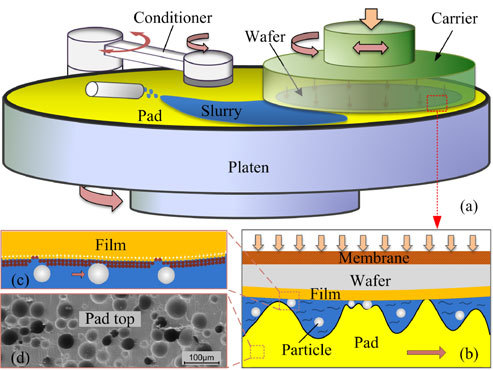
In the field of optical component processing, Chemical Mechanical Polishing (CMP) is a core technology for achieving high-precision surface planarization. Through the synergistic effects of chemical corrosion and mechanical grinding, it accomplishes the precision machining of optical glass. The essence of the CMP process lies in the synergy between chemical and mechanical actions. Chemical reagents in the polishing slurry first react with the glass surface to form an easily removable softened layer. This chemical pretreatment lays the foundation for subsequent mechanical grinding, ensuring that the softened layer is easy to remove without damaging the glass substrate by precisely controlling the reaction intensity. Subsequently, mechanical grinding is initiated, where abrasive particles on the polishing pad frictionally remove the softened layer under specific pressure and rotational speed. By precisely controlling parameters such as polishing pressure, rotational speed, and abrasive characteristics, the material removal amount can be accurately managed to achieve the required planarization precision.
Compared to traditional polishing, the CMP process offers significant advantages. In terms of precision, it enables nanometer-level surface flatness control, meeting the stringent requirements for surface quality in high-end optical components—minor surface irregularities can directly affect optical performance, and the precise control capability of CMP ensures the manufacturing of high-quality components. In terms of flatness, CMP provides global planarization capabilities, ensuring uniform flatness across large-area glass surfaces and improving the yield rate of large-sized optical components. Simultaneously, by adjusting the composition of the polishing slurry and process parameters, it can be adapted to different types of optical glass, meeting diverse processing needs. The flexibility of the CMP process makes it widely applicable in the field of optical glass processing, efficiently adapting to everything from ordinary silicate glass to optical glass with special properties.

Optical Glass Polishing Slurry – CMP Polishing Solutions in the Optical Field – Jizhi Electronics
The CMP process is indispensable in optical glass manufacturing, and its application directly determines the performance of high-end optical components.
In high-end lens manufacturing, CMP is key to achieving exceptional imaging quality. Through the synergy of chemical and mechanical actions, it reduces the surface roughness of lenses to the nanometer level, minimizing light scattering and reflection losses, significantly enhancing lens resolution and contrast, and meeting the demands of high-end applications such as professional photography.
In microscope lens manufacturing, CMP greatly improves lens flatness and smoothness, reducing aberrations and chromatic aberrations. This provides high-resolution imaging support for scenarios such as cell observation in biological research and pathological analysis in medical diagnostics, aiding accurate judgments in scientific research and healthcare.
In optical prism processing, CMP precisely controls surface flatness and angular accuracy, ensuring that light refraction and reflection meet design requirements, reducing energy loss and deviations, and guaranteeing the performance stability of systems such as laser optics.
The Critical Role of Optical Glass Polishing Slurry
Optical glass polishing slurry is the core of the CMP process. It is formulated from components such as abrasives, oxidizers, dispersants, and pH adjusters, with the synergistic effects of these components determining polishing precision and efficiency.
Abrasives directly participate in mechanical grinding, with cerium oxide, aluminum oxide, and silicon dioxide being the mainstream types. Cerium oxide, with moderate hardness, is suitable for fine polishing and can achieve nanometer-level smoothness. Aluminum oxide, with high hardness, is ideal for high removal rate scenarios, meeting the demands of rapid defect repair.
Oxidizers react with the glass surface to form an easily removable softened layer, enhancing grinding efficiency. For example, hydrogen peroxide offers strong controllability in oxidation reactions, preventing excessive corrosion while ensuring the quality of the softened layer and maintaining polishing stability.
Nano Cerium Oxide Polishing Slurry – Optical Glass Polishing Slurry
Dispersants prevent abrasive agglomeration through electrostatic repulsion or steric hindrance, ensuring uniform grinding force. For instance, polyaspartic acid achieves nanometer-level dispersion of abrasives, ensuring the stability of the polishing slurry and the consistency of polishing results.
pH adjusters, such as citric acid and triethanolamine, regulate acidity and alkalinity to meet the requirements of different glass materials. For example, polishing phosphate glass requires precise control of an acidic environment to ensure controllable reactions and avoid surface damage.

(1) Technological Achievements and Innovations
Jizhi Electronics holds multiple core patents in the field of CMP, with its composite abrasive formulation technology being particularly representative. By precisely blending cerium oxide abrasives of different particle sizes—larger particles for rapid defect removal and smaller particles for fine polishing—it achieves improvements in both efficiency and quality.
In oxidizer development, Jizhi Electronics has developed a novel organic oxidizer with high stability and mild, controllable reactions. It efficiently forms a softened layer while avoiding excessive corrosion, enhancing polishing stability.
In auxiliary components, a novel polymer dispersant enables long-term stable dispersion of abrasives, while an intelligent pH adjustment system dynamically adapts to reaction requirements, further optimizing polishing results.
(2) Practical Application Cases and Outcomes
A well-known optical instrument manufacturer required the production of high-end microscope objective lenses with surface roughness <0.1nm and surface figure accuracy PV value <λ/10. The traditional process yielded only a 60% success rate, failing to meet the requirements.
After adopting Jizhi Electronics’ CMP process, the lens surface roughness reached 0.05nm, and the surface figure accuracy PV value was ≤λ/15, fully meeting the requirements. Additionally, production efficiency increased by 30%, and the success rate rose to 90%, significantly reducing customer costs.
When processing a 1.5-meter diameter large optical reflector for an aerospace company, Jizhi Electronics overcame the challenges of large-scale processing by combining specialized polishing slurry and equipment with real-time parameter adjustments, achieving surface flatness errors <0.5nm and ensuring the performance of the aerospace imaging system.