How to Dress a Dicing Blade Step by Step Tutorial
← Back to: Diamond Dicing Blades: The Complete Guide
Blade dressing is one of the most important — and most often misunderstood — maintenance operations in wafer dicing. Done correctly, it restores cutting performance, extends blade life, and prevents chipping escalation. Done incorrectly or skipped entirely, it is responsible for a significant proportion of unexplained yield losses on otherwise well-configured dicing lines. This tutorial covers when to dress, how to select the right dresser board, and the complete step-by-step procedure.
1. What Is Blade Dressing and Why Is It Necessary?
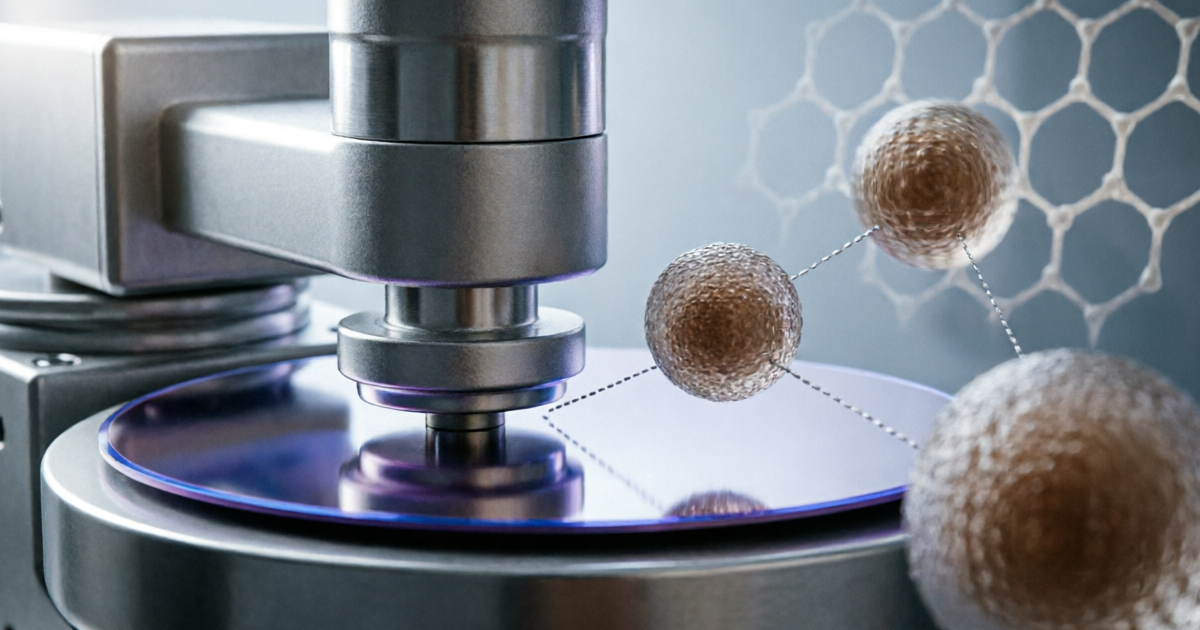
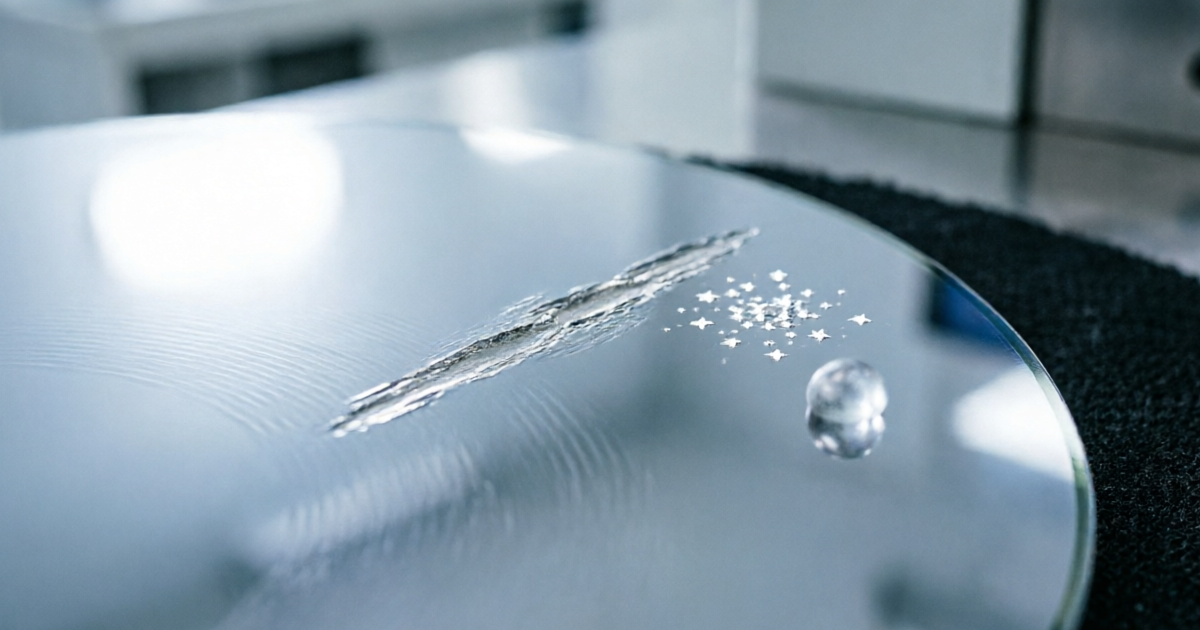
Blade dressing is the controlled abrasion of a dicing blade’s cutting rim against a softer, sacrificial material — the dresser board — to selectively erode the bond matrix and expose fresh diamond abrasive grains. The process serves three distinct purposes depending on when it is applied:
- Initial conditioning: New blades are manufactured with diamond grains partially buried in the bond matrix. An initial dress exposes the cutting surface to its designed geometry before any production cutting takes place.
- Performance restoration: During production, diamond grains gradually become worn (glazed) or the matrix clogs with swarf (loading). Dressing removes the compromised outer layer and exposes fresh, sharp diamond.
- Profile correction: Extended cutting can cause the blade edge to develop an uneven or rounded profile that worsens chipping and kerf width uniformity. Dressing restores a flat, square cutting face.
Without regular dressing, even a correctly specified blade will exhibit progressively worsening chipping — a phenomenon often misattributed to blade quality rather than maintenance. Understanding the relationship between dressing and blade performance is foundational to any dicing process, and complements the blade selection principles covered in our complete dicing blade guide.
2. When to Dress: Triggers and Indicators
Dressing frequency should be determined by process monitoring data, not by a fixed time interval. The following are reliable indicators that dressing is needed:
| Indicator | What It Signals | Action |
|---|---|---|
| Chipping trending upward over successive wafers | Gradual glazing — diamonds becoming polished | In-process dress; check frequency |
| Spindle load current increasing without parameter change | Increased cutting resistance — loading or glazing | In-process dress immediately |
| Audible change in cutting sound (higher pitch, scraping) | Blade loading — debris packed in matrix | Stop cutting; dress before resuming |
| Kerf width narrowing trend | Reduced diamond protrusion due to glazing | In-process dress; monitor after |
| New blade just installed | Diamond grains not yet exposed | Initial dress — always required |
| Blade idle for extended period (>24 hours mounted) | Possible surface oxidation on metal bond blades | Short dress pass before production use |
3. Dresser Board Selection
The dresser board material must be chosen to match the blade bond type. The board’s abrasiveness relative to the bond matrix determines how aggressively the bond is eroded during dressing. Common dresser board types:
- Silicon dresser board: Standard scrap silicon wafer material. Appropriate for resin bond blades on Si dicing applications — the silicon erodes the resin bond at a moderate rate. Simple and cost-effective to source from scrap wafer inventory.
- Alumina (Al₂O₃) ceramic dresser board: Harder and more abrasive than silicon. Used for metal bond blades, which require more aggressive bond erosion to expose fresh diamond. Alumina dresser boards are available in various grit ratings; match to the blade’s diamond grit size.
- Specialised dresser sticks: Pre-formed sintered abrasive sticks with defined hardness grades, used for precise dressing of electroformed or fine-pitch blades where geometry control during dressing is critical.
4. Initial Dressing of a New Blade
- Install the new blade and perform warm-up. Complete the standard spindle warm-up (5–10 minutes at operating RPM) before any dressing. The spindle must be at thermal equilibrium to ensure consistent dress geometry.
- Load the dresser board on the chuck. Place the dresser board — silicon scrap wafer or alumina board as appropriate — on the vacuum chuck and secure with vacuum. Ensure the board surface is flat and clean.
- Set dressing parameters. Use the same spindle speed as production. Set feed rate to 10–30 mm/s (slower than production feed rate to control aggressiveness). Cut depth: 5–20 µm per pass into the dresser board surface. Number of passes: typically 5–15 for initial dress, depending on blade bond type and thickness.
- Execute dress passes with coolant flowing. Coolant must flow at the standard production rate during dressing. Dry dressing will overheat the blade and damage the bond matrix. Make each dress pass as a straight single-line cut across the dresser board.
- Inspect blade and perform kerf check. After initial dressing, make one test cut on a scrap wafer of the production material. Measure kerf width and inspect edge quality. If chipping is within specification, the blade is ready for production.
5. In-Process Dressing Procedure
In-process dressing restores a blade that has been used in production and is showing signs of glazing or loading. The procedure is similar to initial dressing but typically uses fewer passes, as only surface reconditioning is needed rather than full exposure of the cutting geometry.
- Stop production cutting at the end of the current wafer. Do not interrupt a cut mid-street. Complete the current wafer, then stop before loading the next.
- Load dresser board and execute 3–8 dress passes. Use the same dressing parameters as initial dress. For mild glazing, 3–5 passes are usually sufficient. For severe loading or significant chipping escalation, 8–12 passes may be needed.
- Perform a kerf check on scrap material. After dressing, confirm kerf width and chipping are back within specification before resuming production. If chipping remains elevated after dressing, the blade may be approaching end of life.
6. Profile Correction Dressing
After extended cutting, the blade rim can develop a non-square profile — the edge becomes rounded or uneven, causing asymmetric chipping and kerf width variation. Profile correction dressing uses a higher number of passes (typically 15–30) at a slightly higher depth per pass than standard in-process dressing, with the goal of removing enough bond matrix to re-establish a flat, square cutting face.
After profile correction dressing, always perform a kerf check and chipping inspection before resuming production. Profile correction significantly reduces remaining blade life, so evaluate whether the blade still has sufficient life to justify the correction versus simply replacing it.
7. Over-Dressing: Risks and How to Avoid It
Over-dressing — applying more dress passes or deeper dress cuts than needed — is a common error that wastes blade life without delivering additional process benefit. Each dress pass removes a finite amount of the bond matrix and diamond-impregnated rim; unnecessary dressing shortens the total number of cuts available from each blade and increases consumable cost per die.
Signs of over-dressing include:
- Blade life measurably shorter than the process specification baseline
- Kerf width wider than expected after dressing (excessive diamond exposure)
- Blade profile visibly thinner at the rim versus a new blade of the same specification
Establish a documented dressing procedure with defined pass counts and trigger criteria, and audit dressing records regularly against blade life consumption data. If blade life is consistently shorter than the baseline, over-dressing is a common root cause. The relationship between dressing frequency and blade wear rate is also discussed in our article on excessive blade wear.
Need Dressing Parameter Recommendations for Your Blade?
Jizhi Electronic Technology provides application support including recommended dressing recipes for all blade types in our product range. Contact us with your blade specification and substrate details.
Request Dressing Parameters View Blade ProductsHäufig gestellte Fragen
↩ Return to the full guide: Diamond Dicing Blades — The Complete Guide