CMP-Pad-Konditionierer und der Konditionierungsprozess
Ein umfassendes technisches Nachschlagewerk über Diamant-Pad-Konditionierer - Scheibendesign, Kornauswahl, Konditionierungsmodi, Parameteroptimierung, Betriebskosten und wie Konditionierungsentscheidungen die Pad-Lebensdauer und MRR-Stabilität in der CMP-Fertigung mit hohen Stückzahlen beeinflussen.
1. Warum Pad-Konditionierung wichtig ist
CMP-Polierpads behalten während der Waferbearbeitung keinen konstanten Oberflächenzustand bei. Vom ersten Wafer an verändert die mechanische und chemische Umgebung des Polierens die Oberfläche des Pads nach und nach. Schleifpartikel und Reaktionsnebenprodukte werden in den Poren des Pads eingebettet. Die Pad-Polymeroberfläche wird durch die wiederholte Kontaktbelastung verdichtet und geglättet. Schlammreste und Polymerfragmente lagern sich an den Oberflächenunebenheiten ab. Das kumulative Ergebnis dieser Effekte ist Klotzverglasung - eine fortschreitende Glättung und Verdichtung der Pad-Oberfläche, die die tatsächliche Kontaktfläche zwischen Pad und Wafer verringert und dazu führt, dass die Materialabtragsrate (MRR) im Laufe eines Polierlaufs stetig abnimmt.
Ohne Konditionierung kann die MRR auf einem harten CMP-Pad innerhalb von 20-30 Wafer-Durchläufen vom anfänglichen Break-in-Zustand um 40-60% fallen. Diese MRR-Abnahme ist völlig unvereinbar mit den Produktionsanforderungen, bei denen die MRR von Durchlauf zu Durchlauf innerhalb von ±5% des Ziels gehalten werden muss. Pad-Konditionierung ist das Verfahren, das diesen Verfall durch kontinuierliches oder periodisches Auffrischen der Tamponoberfläche verhindert, indem die glasierte Oberflächenschicht mechanisch entfernt und frisches Tamponmaterial mit aktiven Unebenheiten und offenen Poren wieder freigelegt wird.
2. Der Konditionierungsmechanismus: Wie Diamant die Textur des Pads wiederherstellt
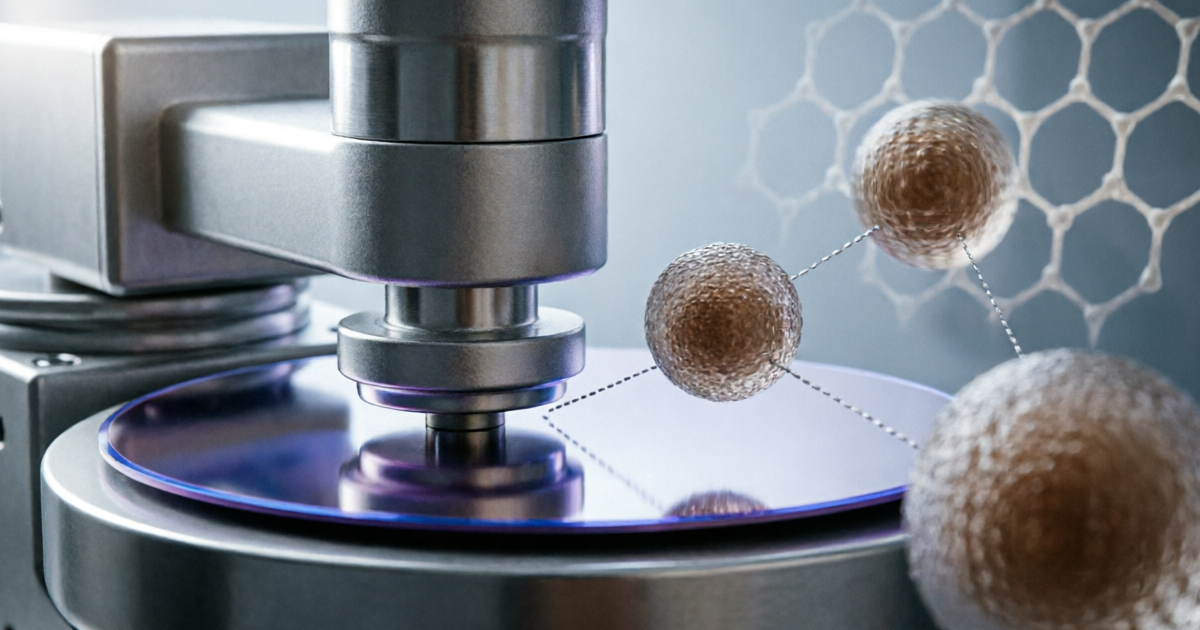
Bei der Konditionierung von Diamantpolstern wird die Oberfläche des Polyurethanpolsters mit einer harten, abrasiven Diamantoberfläche mikrogeschnitten, um die glasierte Außenschicht zu entfernen und eine neue Mikrotextur mit Unebenheiten, offenen Poren und Mikrokanälen zu erzeugen. Das Verfahren ist vergleichbar mit dem Abrichten einer Schleifscheibe, bei dem die stumpfe Oberfläche entfernt wird, um neues Schneidmaterial freizulegen.
Die Diamant-Konditionierscheibe wird mit einem kontrollierten Anpressdruck (typischerweise 5-60 N bei einer 100-mm-Scheibe) gegen die rotierende Pad-Oberfläche gepresst, während sich sowohl der Konditionierer als auch der Tiegel drehen. Die Schwenkbewegung des Konditionierers über den Pad-Radius in Kombination mit der relativen Drehung zwischen Konditionierer und Platte stellt sicher, dass jede Zone der Pad-Oberfläche mit der gleichen kumulativen Belastung konditioniert wird - eine Voraussetzung für eine radial gleichmäßige MRR über den Wafer.
Der Materialabtrag vom Pad durch den Konditionierer ist viel geringer als der Materialabtrag vom Wafer durch den Polierprozess - typischerweise 1-5 µm Padmaterial pro Stunde Polieren gegenüber 100-600 nm/min Waferfilmabtrag. Dennoch ist diese geringe, aber kontinuierliche Pad-Erosion der wichtigste Mechanismus zur Begrenzung der Lebensdauer von CMP-Pads in der Produktion, und die Konditionierungsparameter müssen so gewählt werden, dass eine angemessene Wiederherstellung der Textur gewährleistet ist, ohne den Pad-Verschleiß über die natürlichen Prozessanforderungen hinaus zu beschleunigen.
3. Arten von Pad Conditionern
Metallscheibe mit Diamantbesatz (Standard)
- Häufigster Konditionierer-Typ in der Halbleiter-CMP
- Synthetische Diamantpartikel eingebettet in Ni-Elektroplatte oder gelötete Metallmatrix
- Erhältlich in verschiedenen Korngrößen (typischerweise 50-200 µm mittlere Diamantgröße)
- Scheibendurchmesser: typischerweise 100-114 mm für 300-mm-Wafer-Plattformen
- Lebensdauer: 500-3.000 Pad-Konditionierungsstunden je nach Körnung und Anwendung
CVD-Diamant-beschichtete Scheibe
- Durch chemische Gasphasenabscheidung auf einem WC- oder Si-Substrat abgeschiedene Diamantschicht
- Gleichmäßigere Diamantoberfläche als galvanisierte Scheiben
- Bessere Reduzierung von Kratzern im Pad durch kontrollierte Überstandshöhe
- Höhere Anschaffungskosten, aber oft längere Lebensdauer und gleichmäßigere Leistung
- Bevorzugt für Anwendungen mit sehr geringen Defekten (Cu-Polieren, Vorbereitung der Bondschicht)
Bürsten-Conditioner
- Steife Bürste mit Polymer- oder Metallborsten anstelle einer Diamantscheibe
- Schonende Wiederherstellung der Textur - minimaler Abtrag von Polstermaterial
- Wird für weiche Politex-Pads verwendet, bei denen die Diamantbearbeitung zu aggressiv ist.
- Entfernt in erster Linie eingebettete Schlammreste, anstatt Unebenheiten nachzuschneiden
- Geringere Kosten; kürzerer Werkzeugeinsatz als bei der Diamantscheibe
Hochdruck-Wasserstrahl
- DI-Wasserstrahl mit 100-400 bar auf die Polsteroberfläche gerichtet
- Reinigt Schlammrückstände und öffnet verstopfte Poren ohne Diamantabrieb
- Einsatz als ergänzende Konditionierungstechnik neben der Diamantkonditionierung
- Stellt die Höhe der Oberflächenunebenheiten nicht wieder her - muss mit einer Diamantscheibe kombiniert werden
- Besonders wirksam zur Aufrechterhaltung der Sauberkeit von Cu-Güllepolstern
4. Diamant-Aufbereiter Scheibe Design
Die Konstruktion einer Diamantaufbereitungsscheibe bestimmt, wie aggressiv sie die Pad-Textur wiederherstellt, wie gleichmäßig sie über den Pad-Radius konditioniert, wie lange sie hält und ob sie das Risiko birgt, Diamantpartikel freizusetzen, die den Wafer verkratzen könnten. Die wichtigsten Konstruktionsparameter sind:
| Entwurfsparameter | Typische Spezifikation | Auswirkungen des Prozesses |
|---|---|---|
| Diamantkorngröße | 50-80 µm (fein); 100-150 µm (mittel); 150-200 µm (grob) | Größere Körnung = aggressivere Konditionierung, schnellere MRR-Erholung, schnellerer Belagverschleiß; feinere Körnung = sanfter, geringerer Belagverschleiß, bevorzugt für weiche Beläge |
| Diamantkonzentration (Dichte) | 40-120 Diamanten/cm² | Höhere Dichte = gleichmäßigere Verteilung der Aufbereitungslast; geringere Belastung pro Diamant; längere Lebensdauer der Aufbereiter |
| Höhe des Diamantvorsprungs | 20-60% des mittleren Diamantdurchmessers | Höherer Überstand = aggressiveres Schneiden; CVD-Beschichtungen bieten eine bessere Gleichmäßigkeit des Überstands als galvanisch beschichtete Scheiben |
| Matrix-Material | Ni-Elektroplatte; Cu/Ni-Lot; CVD-Diamant; PTFE-gebunden | Bestimmt die Haftfestigkeit von Diamanten; galvanische Beschichtung bietet eine gute Haftfestigkeit im Vergleich zu den Kosten; Hartlötung bietet eine höhere Haftfestigkeit für aggressive Anwendungen |
| Durchmesser der Scheibe | 100-114 mm (300 mm Werkzeuge); 50-75 mm (200 mm Werkzeuge) | Muss mit dem Schwenkbereich des Werkzeugarms übereinstimmen; eine größere Scheibe bietet mehr Aufbereitungsfläche pro Schwenkvorgang |
| Oberflächenmuster (Zoneneinteilung) | Gleichförmig; ringförmige Zonen; sektorale Zonen | Zonierte Layouts ermöglichen eine radiale Abstimmung der Aggressivität der Konditionierung, um eine ungleichmäßige radiale Abnutzung der Beläge zu kompensieren. |
5. In-Situ vs. Ex-Situ-Konditionierung
Die Pad-Konditionierung kann in zwei grundlegend verschiedenen Modi durchgeführt werden, die jeweils unterschiedliche Vorteile und Kompromisse aufweisen. Die Wahl zwischen beiden - oder die Entscheidung, beide zu kombinieren - hängt von der spezifischen Anwendung, der erforderlichen MRR-Stabilität und dem Ziel der Betriebskosten ab.
In-Situ (gleichzeitige) Konditionierung
- Konditionierscheibe fegt gleichzeitig über die Pad-Oberfläche, während der Wafer poliert wird
- Ständige Wiederherstellung der Polstertextur in Echtzeit
- Erzielt die stabilste Run-to-Run- und Within-Run-MRR
- Industriestandard für Hardpad-/Oxid- und W CMP-Anwendungen
- Höherer Belagverschleiß - Konditionierung ist 100% der Polierzeit aktiv
- Der Konditionierarm muss so eingestellt werden, dass eine Verunreinigung der Wafer durch Fremdkörper vermieden wird.
Ex-Situ-Konditionierung
- Konditionierung erfolgt zwischen den Waferläufen - nicht während des Polierens
- Geringere Abnutzungsrate der Beläge (Konditionierungsbetriebszyklus <100%)
- Ermöglicht eine präzisere Steuerung der Konditionierungsdosis pro Lauf
- Die MRR kann innerhalb eines Laufs abweichen, wenn das Intervall für die Anwendung zu lang ist.
- Verwendet für weiche Pads, Ultra-Low-k-Anwendungen und CMP mit Haftschicht
- Kann mit In-situ-Konditionierung für Hybridprotokolle kombiniert werden
Hybride Konditionierungsprotokolle
Viele fortschrittliche Prozessabläufe verwenden einen hybriden Ansatz: In-situ-Konditionierung bei reduziertem Anpressdruck (zur Aufrechterhaltung der MRR-Stabilität) kombiniert mit regelmäßiger intensiver Ex-situ-Konditionierung (zur Bewältigung der kumulativen Pad-Belastung, die in-situ allein nicht bewältigt werden kann). Diese hybride Strategie kann die Gesamtverschleißrate der Pads im Vergleich zur vollständigen In-situ-Konditionierung um 15-25% reduzieren und gleichzeitig die MRR-Stabilität aufrechterhalten - ein bedeutender Kostenvorteil im großen Maßstab.
6. Wichtige Parameter des Konditionierungsprozesses
| Parameter | Typischer Bereich | Auswirkungen auf die MRR | Auswirkung auf den Pad-Verschleiß |
|---|---|---|---|
| Konditionierter Anpressdruck (N) | 5-60 N | ↑ Abtrieb → ↑ MRR-Wiederherstellungsgeschwindigkeit | ↑ Anpressdruck → ↑ Belagverschleißrate (linearer Zusammenhang) |
| Drehzahl des Aufbereiters (RPM) | 10-100 UMDREHUNGEN PRO MINUTE | ↑ Drehzahl → ↑ Konditionierungsumfang pro Durchlauf | Mäßige Wirkung; interagiert mit dem Abtrieb |
| Armabtastrate (mm/s) | 5-50 mm/s | ↓ Sweep-Rate → mehr Verweildauer pro Zone → ↑ lokale MRR | Langsamerer Durchlauf = mehr Pad-Material pro Durchgang entfernt |
| Geschwindigkeit der Walzendrehung (RPM) | 30-120 UMDREHUNGEN PRO MINUTE | Höhere Walzendrehzahl → mehr Konditionierungskontakte pro Durchlauf | Geringer Effekt bei festem Konditioniererabtrieb |
| DI-Wasserdurchfluss während der Konditionierung (mL/min) | 200-500 mL/min | Wasser schmiert die Aufbereitung; zu wenig → aggressive Aufbereitung | Mehr Wasser → weniger Pad-Verschleiß pro Aufbereitungszyklus |
| Konditionierungszeit / Arbeitszyklus (%) | 25-100% der Polierzeit | Höhere Einschaltdauer → stabilere MRR | Höhere Einschaltdauer → proportional mehr Belagverschleiß |
7. Optimierung der Konditionierung: Erreichen einer stabilen MRR ohne übermäßigen Belagverschleiß
Die zentrale Herausforderung bei der Entwicklung des Konditionierungsprozesses besteht darin, die minimale Konditionierungsdosis zu finden - die Kombination aus Anpressdruck, Arbeitszyklus und Konditioniererkorn -, die die MRR innerhalb der Spezifikation hält und gleichzeitig den Pad-Materialverbrauch pro Wafer minimiert. Eine Überkonditionierung verschwendet Pad-Material, verkürzt die Lebensdauer des Pads und erhöht das Risiko von Diamantablösungen und konditionierungsbedingten Defekten. Eine Unterkonditionierung führt zu MRR-Drift und schließlich zu einer ertragsmindernden Prozessinstabilität.
Erstellen Sie eine MRR-Basiskurve im Vergleich zur Waferanzahl ohne Konditionierung: Führen Sie eine Reihe von Blanket-Wafern mit deaktivierter Konditionierung durch. Zeichnen Sie die MRR gegen die Waferanzahl auf, um die natürliche Verglasungsrate für Ihre spezifische Pad/Slurry-Kombination zu quantifizieren. Diese Kurve definiert das maximal zulässige Intervall zwischen den Konditionierungen.
Bestimmung der minimalen wirksamen Konditionierungsdosis: Variieren Sie systematisch die Konditionierungskraft und den Arbeitszyklus, während Sie die MRR an einem festen Referenzpunkt messen (z. B. Wafer 10 in einem Los mit 25 Wafern). Ermitteln Sie die niedrigste Konditionierungsdosis, die die MRR innerhalb von ±5% des Zielwerts am Referenzpunkt hält.
Charakterisierung der Belagverschleißrate bei optimierter Konditionierungsdosis: Messen Sie die Paddicke vor und nach einer festen Wafercharge mit den optimierten Konditionierungsparametern. Berechnen Sie die Pad-Abtragsrate pro Wafer. Verwenden Sie dies, um die Pad-Lebensdauer zu prognostizieren und den Auslöser für die Anzahl der zu ersetzenden Wafer festzulegen.
Validieren Sie WIWNU über die gesamte Lebensdauer des Pads: Bestätigen Sie, dass die Uniformität innerhalb des Wafers während der gesamten geplanten Pad-Lebensdauer mit der optimierten Konditionierungsrezeptur innerhalb der Spezifikation bleibt. WIWNU verschlechtert sich oft, bevor die MRR ihren Grenzwert überschreitet, und die Randgleichförmigkeit ist häufig der erste Parameter, der sich verschlechtert.
Implementieren Sie die adaptive Konditionierung (wenn das Werkzeug dies zulässt): Moderne CMP-Werkzeuge unterstützen Rezepte, die die Konditionierungsparameter auf der Grundlage von Prozessrückmeldungen variieren - sie erhöhen den Abwärtsdruck, wenn der Reibungsstrom den Beginn der Verglasung anzeigt, und reduzieren ihn, wenn die MRR stabil ist. Die adaptive Konditionierung kann die Lebensdauer von Pads um 20-30% gegenüber Ansätzen mit festen Rezepten verlängern.
8. Konditionierung und Betriebskosten
Konditionierungsentscheidungen haben einen kaskadenartigen Effekt auf die Gesamtkostenstruktur des CMP-Betriebs. Die wichtigsten zu quantifizierenden Kostenfaktoren sind:
- Pad-Verbrauchsrate (µm/Wafer-Durchgang): Wird direkt durch die Aggressivität der Aufbereitung bestimmt. Jede Verringerung des Konditionierungsdrucks um 10% reduziert den Belagverschleiß um 8-12%, was sich direkt in Kosteneinsparungen beim Belag niederschlägt.
- Lebensdauer der Konditionierscheibe (Stunden oder Wafer-Durchläufe): Diamantkonditionierer müssen ersetzt werden, wenn sie die Belagstextur nicht mehr innerhalb der angegebenen Konditionierungszeit wiederherstellen können. Die Lebensdauer der Scheibe wird in Konditionierungsstunden gemessen und anhand von Referenzmessungen der Belagrauheit nach einer Standardkonditionierungssequenz verfolgt.
- Ertragsrisiko durch Konditionierungsfehler: Ein übermäßig abgenutzter Konditionierer, der ein Diamantpartikel in den Schlammstrom freisetzt, verursacht einen tiefen Kratzer, der eine ganze Wafercharge zerstören kann. Die Ertragskosten eines einzigen solchen Ereignisses übersteigen bei weitem die Kosten für den Austausch des Conditioners. Dies ist das stärkste Argument für ein konservatives Management der Konditioniererlebensdauer.
- Auswirkungen der Werkzeugnutzung: Eine zu aggressive In-situ-Konditionierung verlängert die effektive Polierzykluszeit, da der Konditionierungsarm seine Durchlaufsequenz abschließen muss, bevor der nächste Wafer geladen werden kann. Die Minimierung der Konditionierungs-Sweep-Zeit bei gleichzeitiger Aufrechterhaltung der MRR-Stabilität maximiert den Werkzeugdurchsatz.
9. Ausfallmodi und Erkennung von Klimaanlagen
| Fehlermodus | Symptom | Erkennungsmethode | Abhilfemaßnahmen |
|---|---|---|---|
| Diamantabwurf | Tiefe vereinzelte Kratzer auf dem Wafer; plötzliche Kratzerspitze bei der Inspektion | Fehlerprüfung nach dem Polieren (KLA/Hitachi); Sichtprüfung der Belagoberfläche auf tiefe Furchen | Konditionierer sofort austauschen; Slurry-Leitungen überprüfen und reinigen; Dummy-Wafer vor Wiederaufnahme der Produktion laufen lassen |
| Matrixverschleiß / Diamantauszug | Allmählicher MRR-Abfall, der nicht durch Rezepturanpassung korrigiert werden kann; verringerte Belagrauhigkeit nach der Konditionierung | Pad-Ra-Messung nach Standard-Konditionierungssequenz; Vergleich mit dem Ausgangswert | Austausch des Klimageräts bei Erreichen der geplanten Lebensdauer; proaktiver Austausch vor Leistungsverschlechterung |
| Belastung der Scheibe (eingebettete Tamponreste) | Reduzierte Konditionierungseffektivität; ungleichmäßige MRR über den Waferradius | Sichtprüfung der Scheibenoberfläche unter dem Lichtmikroskop; Spülungstest mit DI-Wasser | Reinigen Sie die Scheibe mit DI-Wasser und bürsten Sie sie sauber; wenn die Belastung bestehen bleibt, ersetzen Sie die Scheibe. |
| Ungleichmäßigkeit des Armschwungs | Radialer MRR-Gradient über den Wafer; Kante WIWNU-Verschlechterung | Blanket-Wafer MRR-Mapping; Pad-Profilometrie zeigt radiale Dickenschwankungen | Neukalibrierung des Armabtastprofils; Überprüfung auf Verschleiß der Armlager; Aktualisierung des Abtastrezepts |
| Konditionierer Neigung / Wackeln | Ungleichmäßige Pad-Konditionierung; kreisförmige Abnutzungsspuren auf der Pad-Oberfläche | Messung der Ebenheit der Auflage; optische Prüfung der Auflagefläche | Kardanische Aufbereitung prüfen und ersetzen; Anzugsmoment der Aufbereitungsanlage prüfen |
10. Fortgeschrittene Konditionierungsstrategien für Sub-7-nm-Knoten
Mit dem Voranschreiten der CMP-Prozesse zu Sub-7-nm-Knoten und 3D-IC-Anwendungen werden die Konditionierungsanforderungen immer strenger. Die folgenden fortschrittlichen Strategien werden in führenden Fabriken eingesetzt, um die verschärften Spezifikationen dieser Prozesse zu erfüllen.
Ultra-Low-Force-Konditionierung für Soft-Pad-Anwendungen
Für weiche Politex-Pads, die bei der CMP von Kupferschwabbeln und Haftschichten verwendet werden, ist die herkömmliche Diamantkonditionierung mit Standard-Downforce (20-40 N) viel zu aggressiv. Die Konditionierung mit ultraniedriger Kraft (5-10 N) unter Verwendung von feinkörnigen CVD-Diamantscheiben bietet gerade genug Texturerneuerung, um die Schlammrückhaltung und MRR aufrechtzuerhalten, ohne das Material des weichen Pads schnell zu verbrauchen. Dieser Ansatz wird immer wichtiger für die CMP in der modernen Verpackungsindustrie, wo der Einsatz von Softpads zunimmt.
Elektrochemische Konditionierung (ECC)
Bei der elektrochemischen Konditionierung wird eine vorgespannte Elektrode, die in die Konditionierer-Baugruppe integriert ist, verwendet, um das Oberflächenmaterial des Belags selektiv aufzulösen oder neu abzulagern. Diese Technik, die noch hauptsächlich in der Forschung und Entwicklung eingesetzt wird, bietet das Potenzial für eine feinere MRR-Kontrolle und einen geringeren Pad-Verschleiß im Vergleich zur rein mechanischen Diamantkonditionierung. Sie ist von besonderem Interesse für die dielektrische CMP mit extrem niedrigem k-Wert, bei der die mechanische Kraft minimiert werden muss.
Echtzeit-Pad-Oberflächenmesstechnik
Moderne CMP-Werkzeuge beginnen mit der In-situ-Messung der Pad-Oberfläche - mit Laser-Speckle, Weißlicht-Interferometrie oder akustischen Emissionssensoren - um die Pad-Rauheit und die Höhe der Unebenheiten während der Konditionierung in Echtzeit zu messen. Diese Daten schließen den Regelkreis der Konditionierung, so dass sich die Rezeptur an den tatsächlichen Zustand der Pad-Oberfläche anpassen kann, anstatt nach einem festen zeitbasierten Programm zu laufen. Die Echtzeit-Messtechnik hat bei den ersten Anwendern Verbesserungen der Pad-Lebensdauer von 25-40% gezeigt.
Zu den spezifischen Herausforderungen an CMP-Materialien für fortgeschrittene Knoten, einschließlich der veränderten Anforderungen an die Konditionierung für Kobalt-, Ruthenium- und Hybridbindungsprozesse, siehe unseren Leitfaden CMP-Materialien für fortgeschrittene Knoten (unter 14 nm).
11. FAQ
Woher weiß ich, wann ich eine Diamantaufbereiterscheibe ersetzen muss?
Der primäre Auslöser für einen Austausch ist ein messbarer Rückgang der Konditionierungseffektivität - in der Regel quantifiziert als die Belagrauheit (Ra), die nach einer Standardkonditionierungssequenz an einer Referenzbelagsprobe erreicht wird, verglichen mit dem Ausgangswert für eine neue Scheibe. Eine Verringerung des erreichbaren Pad-Ra um 20-30% zeigt an, dass die Diamantschneidefläche unter ihren effektiven Grenzwert abgenutzt ist. In den meisten Fabriken wird unabhängig von den Leistungsdaten als Präventivmaßnahme eine Höchstgrenze für die Lebensdauer des Conditioners (z. B. 1.000 Konditionierungsstunden) festgelegt, um das Risiko der Diamantablösung zu minimieren.
Wie hoch ist der korrekte Anpressdruck für meine Anwendung?
Die Konditionierungskraft sollte der Mindestwert sein, der die MRR über die gesamte Lebensdauer des Pads innerhalb von ±5% des Zielwerts hält. Das Optimum wird experimentell ermittelt, indem MRR-Stabilitätsexperimente mit verschiedenen Anpresskräften durchgeführt werden und die niedrigste Kraft ermittelt wird, die einen MRR-Abfall bis zur Spezifikationsgrenze innerhalb des Waferzählintervalls zwischen den Konditionierungszyklen verhindert. Typische Werte liegen zwischen 10-25 N für Oxid- und W-CMP mit harten Pads und 5-15 N für weiche Pads bei Kupfer-Buff-Anwendungen.
Kann ich die Lebensdauer der Aufbereiterscheibe durch Reinigung verlängern?
In begrenztem Umfang. Die DI-Wasser-Bürstenreinigung kann eingebettete Pad-Polymer-Reste entfernen und die Schneidleistung teilweise wiederherstellen, wenn die Scheibe zwar belastet, aber noch nicht mechanisch abgenutzt ist. Die Reinigung kann jedoch weder abgenutzte Diamantschneidkanten wiederherstellen noch abgelöste Diamanten neu einbetten. Wenn sich die Scheibe so weit abgenutzt hat, dass sie nach der Reinigung nicht mehr den Ra-Spezifikationen entspricht, muss sie ersetzt werden. Verwenden Sie niemals chemische Reinigungsmittel, die die Ni-Matrix oder die Diamantbindungen angreifen könnten.
Warum variiert mein MRR trotz In-situ-Konditionierung über den Waferradius?
Radiale MRR-Ungleichmäßigkeiten bei der In-Situ-Konditionierung sind meist auf eine ungleichmäßige Konditionierungsintensität über den Pad-Radius zurückzuführen. Die Mitte der Platte hat eine geringere tangentiale Geschwindigkeit als der Rand, was bedeutet, dass der Konditionierer mehr Zeit (pro Einheit Plattenumdrehung) in den inneren Pad-Zonen verbringt, was zu einer höheren Konditionierungsintensität in der Mitte führt. Die meisten CMP-Werkzeuge lösen dieses Problem, indem sie ein nichtlineares Arm-Sweep-Profil implementieren, d. h. sie verbringen proportional mehr Zeit in größeren Radien, um eine gleichmäßige Konditionierungsabdeckung zu erreichen. Wenn sich WIWNU mit einer zentrums- oder kantenschnellen Signatur verschlechtert, sollten Sie als ersten Schritt zur Korrektur das Konditionierungsprofil überprüfen und optimieren.
Konsultieren Sie einen JEEZ CMP-Konditionierungsexperten
Die Optimierung der Konditionierung ist eine der größten Möglichkeiten zur Kostensenkung bei CMP. Unsere Anwendungsingenieure können Ihr aktuelles Konditionierungsrezept und die Daten zur Pad-Lebensdauer überprüfen, um Verbesserungsmöglichkeiten zu identifizieren - ohne Verpflichtung.
Sprechen Sie mit einem Konditionierungsexperten ← Vollständiger Leitfaden für CMP-Materialien