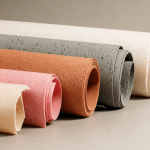
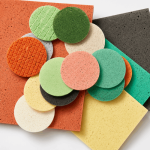
JIZHI Electronics — Polyurethane Polishing Pad / Cork Polishing Pad
Polyurethane Polishing Pad / Cork Polishing Pad
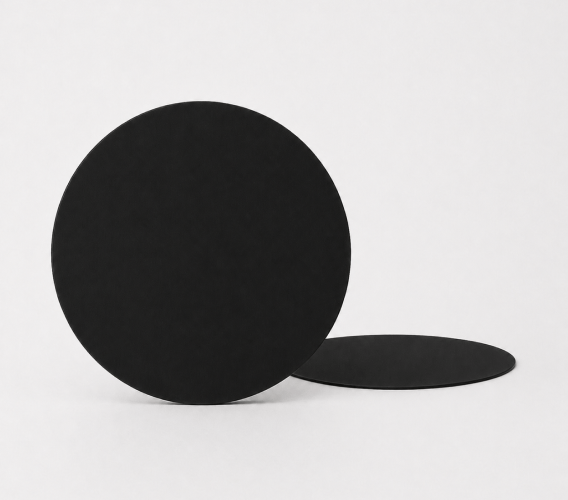
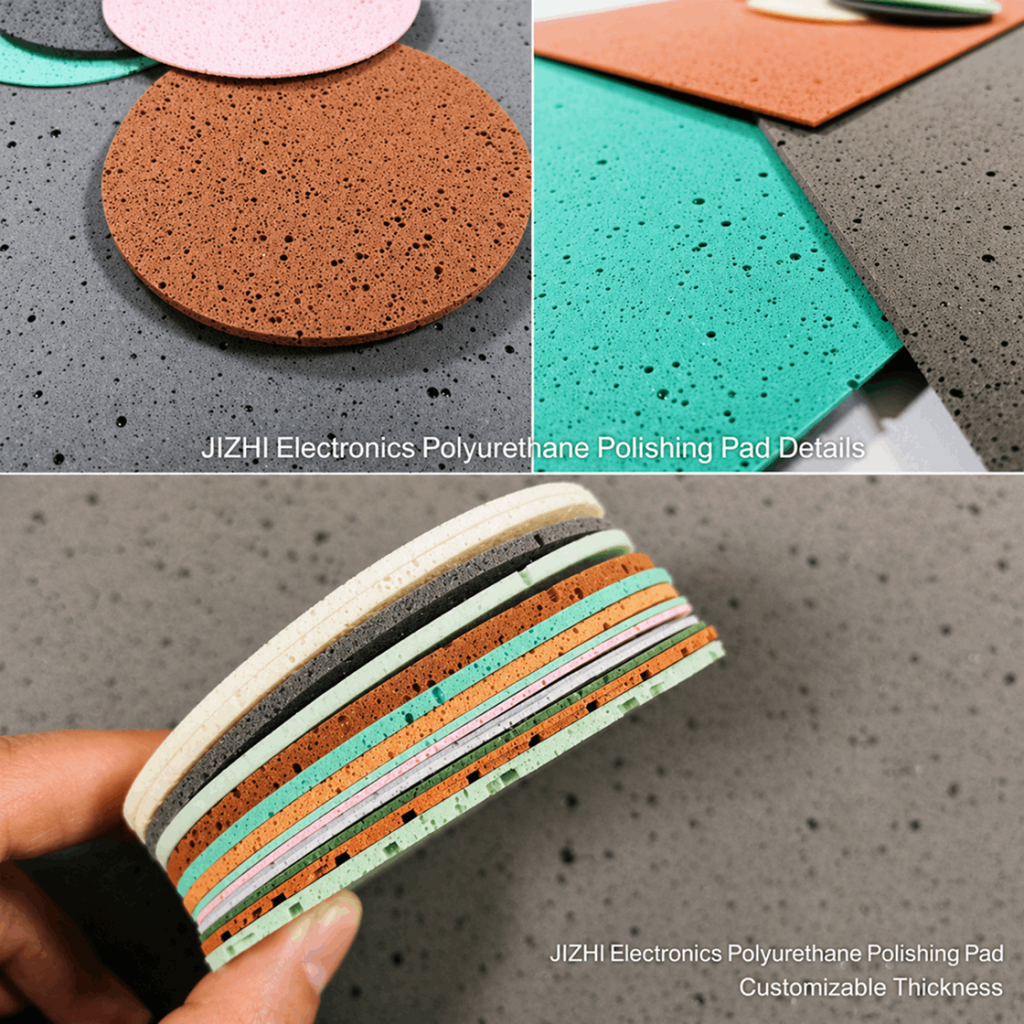
Product Thickness: 0.5–4 mm (Customizable) Groove Specifications: 5 × 5–50 × 50 (Customizable) Product Diameter: φ100–φ1600 mm (Customizable)

Wesentliche Merkmale
- High wear resistance and long service life
- Good density and high water permeability
- Excellent elasticity and high cost performance
Produktname
Polyurethane Polishing Pad / Cork Polishing Pad
Produktkategorie
JIZHI Electronics · Polishing Pads
Produktdicke
0.5–4 mm (Customizable)
Groove Specifications
5 × 5–50 × 50 (Customizable)
Produkt-Durchmesser
φ100–φ1600 mm (Customizable)
Produktmerkmale
JIZHI Electronics polyurethane polishing pads feature high flatness and high stability.
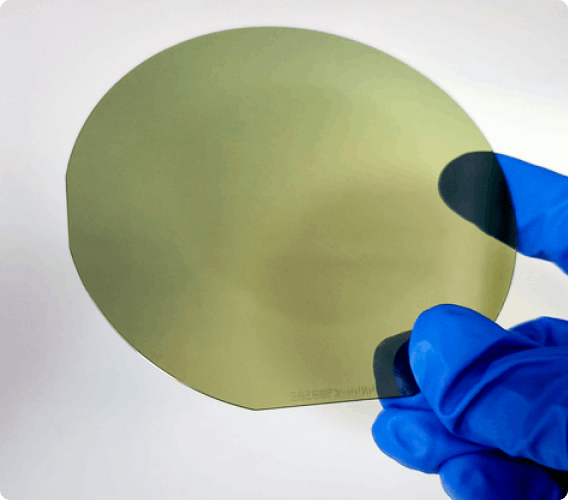
Product Process and Applications: Made primarily of polyurethane and processed through multiple manufacturing steps, this high-elasticity and highly wear-resistant polishing material is suitable for surface polishing of precision components such as metals, optics, glass, ceramics, and semiconductor chips.
Other Parameters:
Cerium oxide-containing polishing leather — mainly improves polishing efficiency;
Zirconium oxide-containing polishing leather — mainly improves surface finish;
Filler-free polishing leather — mainly ensures aperture stability during the polishing process.
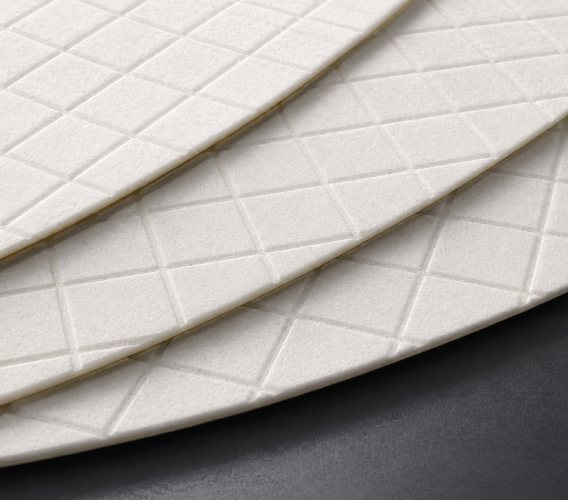
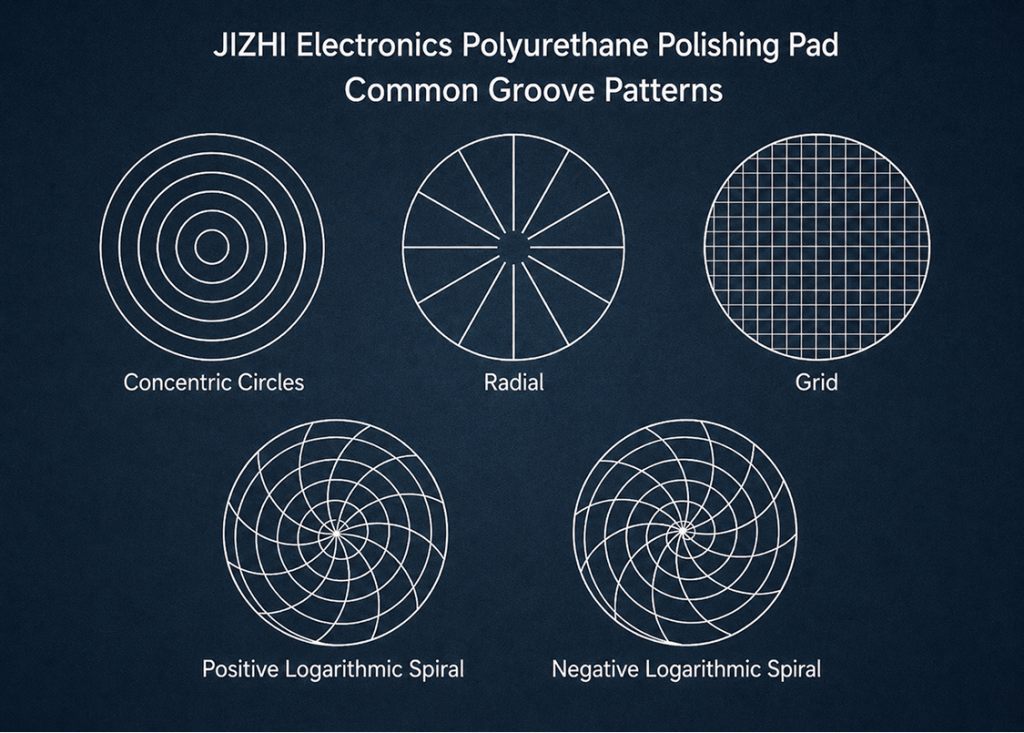
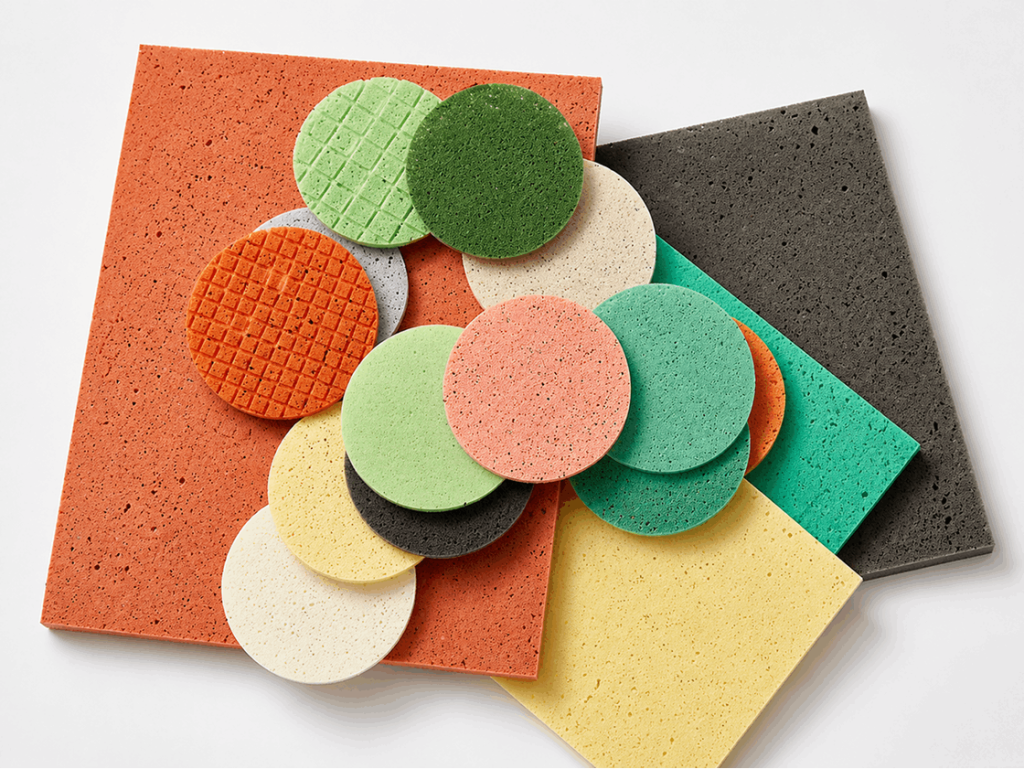
Polyurethane Polishing Pad · Groove Patterns
JIZHI Electronics polishing pads can be grooved in various patterns. The grooves help improve slurry flow and remove fine cutting debris.
The standard groove depth is 1/2 of the polishing pad thickness and can be customized according to different customer grooving requirements.
Product Details
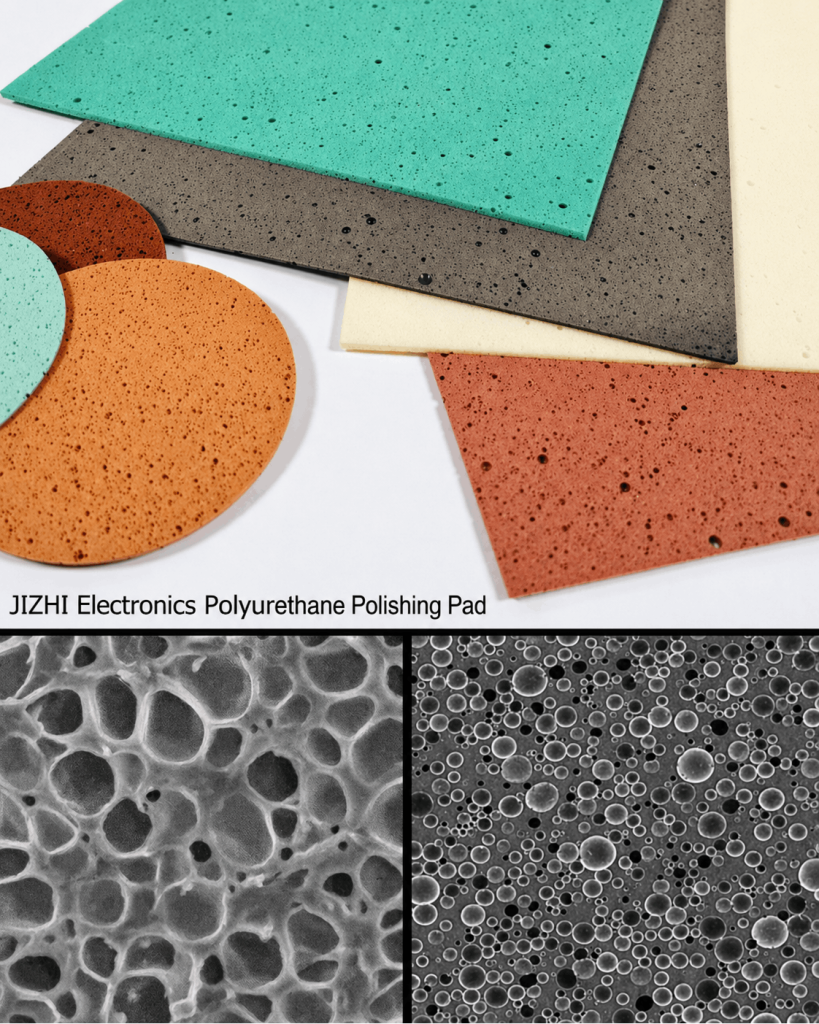
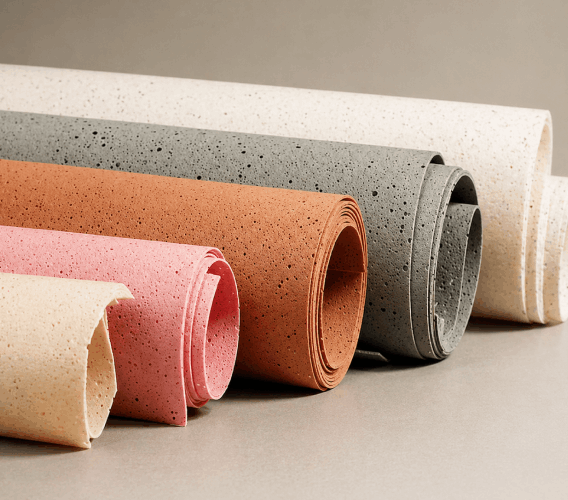
Effects of Different Foaming Pores in Polyurethane Polishing Leather
More foaming pores in the polishing leather help improve the flowability of polishing powder and provide a better polishing rate.
Fewer foaming pores in the polishing leather provide stronger hydrophilic performance.
Advantages of Perforated Polyurethane Polishing Leather
To increase the flowability of polishing slurry and improve polishing efficiency, perforated polyurethane polishing leather is used.
The general pore size is around 2 mm. According to the lens diameter, equipment rotation speed, and different R values, the pore arrangement patterns can be divided into 90°, 60°, and 45°, making it more suitable for spherical surface processing.
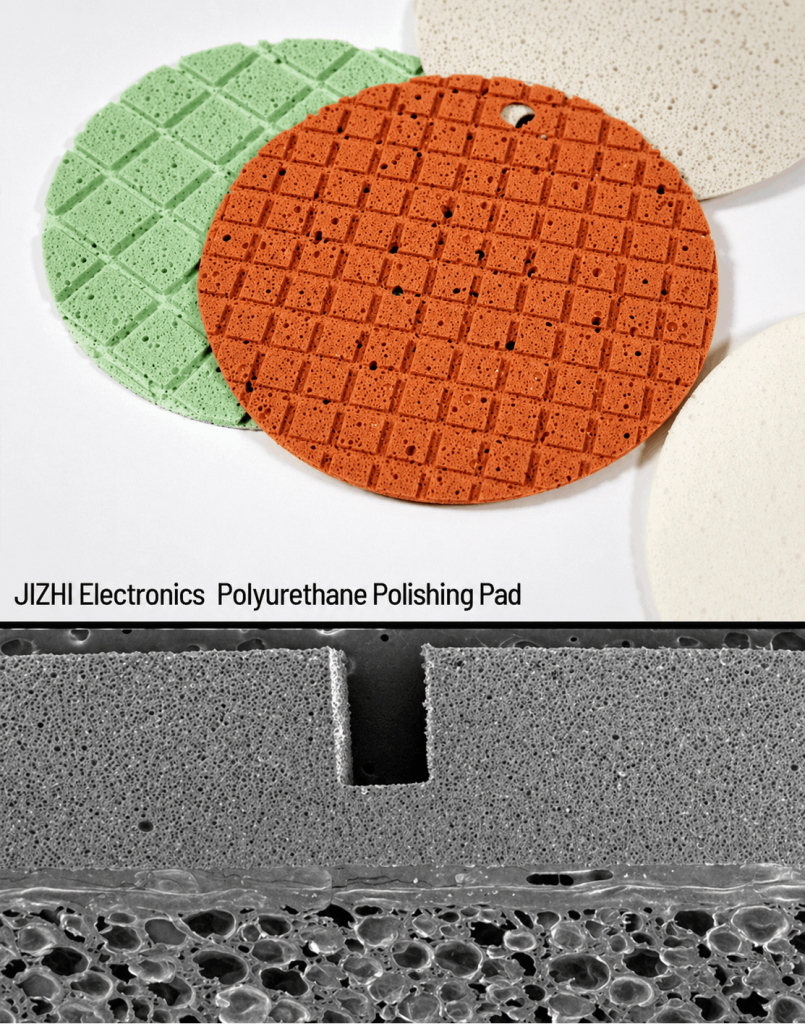
Advantages of Grooved Polyurethane Polishing Leather
Grooving the polishing leather helps increase the flowability of polishing slurry and improve the polishing rate.
Grooved polyurethane polishing leather can be selected, generally with a thickness of over 1.5 mm. The groove models are typically 20 mm and 30 mm.
Grooved polishing leather can reduce scratches on lenses caused by larger particles in the polishing powder and is mainly used for flat surface processing.
Product Details
Material Parameters
Polishing Pad Back Adhesive:
Each JIZHI Electronics polishing pad can be supplied with back adhesive according to customer requirements, including 3M or domestic adhesive options. The adhesive provides firm bonding during use and can be easily peeled off from the platen surface after use.
Applications of Back Adhesive:
Fixing grinding cloth and grinding pads for LCD glass substrates.
Fixing grinding cloth for wafers, hard disk substrates, and other materials.
Fixing CMP pads.
Fixing rubbing cloth and other related materials.
High-Elastic Cushion Pads and Adsorption Pads:
Cushion pads and adsorption pads can be provided according to customer requirements. The cushion pad is made of high-foam silicone sponge developed through advanced polymer industrial technology. With features such as heat resistance, cold resistance, and low flammability that ordinary foam does not have, it can be laminated with polishing damping cloth to produce polishing pads of different thicknesses, thereby improving the polishing effect and better protecting the workpiece during polishing.
JIZHI Electronics SiC polishing pads offer cost-effective pricing
JIZHI Electronics polishing pads are manufactured using imported technology and can match the performance of imported polishing pads, PAD products, and damping cloth polishing pads, including Politex, Fujiba, SUBA, and Universal alternatives, with stable and reliable quality.
Choose JIZHI Electronics polishing pad products for more competitive pricing, lower costs than imported polishing pads/fine polishing pads, stable delivery times, and higher cost performance!
Storage Method for JIZHI Electronics Polyurethane Polishing Pads
- Store in a cool, dry, well-ventilated place away from direct sunlight, heat sources, ignition sources, and incompatible materials.
- Storage facilities should be constructed with fire-resistant materials.
- The storage area should be clearly marked, free of obstructions, and separated from the working area.
- Do not place heavy objects on the product. Do not stack more than three layers.
Safe Handling:
- Remove all ignition sources and keep away from heat and incompatible materials.
- “No Smoking” signs should be posted in the working area.
- Keep aisles and exits clear and unobstructed.
- Wear appropriate personal protective equipment to avoid contact with this product or contaminated equipment.
- When using the product in large quantities for extended periods or during processing, a dust mask should be worn.
Shelf Life: 6 months
Packaging: 20 pieces per carton, 2 pieces per packaging bag
Manufacturing Standard: Product quality complies with ISO 9001 standards.
Storage Conditions: Temperature range: 10°C–30°C; humidity range: ≤70%
Hazard Characteristics: The product itself has no hazardous characteristics and is harmless to the human body.
Waste Disposal: Dispose of in accordance with applicable national and local regulations.
Warum Jizhi Electronics wählen?
10 Jahre Erfahrung im Bereich CMP für optische Materialien
10 Jahre Erfahrung im Bereich CMP für optische Materialien
Polierlösungen und -rezepturen werden flexibel angepasst
Ungiftige, biologisch abbaubare Formel, die den internationalen
Kostenloses Prozess-Debugging
40% schnellere Bearbeitungszeit im Vergleich zu konventionellen Produkten
Einführung ausländischer Produktionstechnologien und Ausrüstungen
Optimierte Verbrauchsrate reduziert die Gesamtbetriebskosten