CMPのスラリーは何を含むのか?完全なエンジニアリングレベルの説明
1.はじめに
In chemical mechanical planarization (CMP), slurry is not a simple polishing liquid. It is a carefully engineered multiphase system where mechanical abrasion, chemical reactions, and interfacial transport must remain in precise balance.
Understanding what slurry in CMP contains is essential for controlling material removal rate (MRR), within-wafer non-uniformity (WIWNU), defectivity, and long-term process stability.
This document dissects CMP slurry at the component level, explaining not only what each ingredient is, but why it exists, how it is quantified, and what happens when it deviates from its designed window.
For a complete overview, see:
半導体製造用CMPスラリー
2. High-Level Component Overview
| Component Category | Primary Function | Critical Risk if Uncontrolled |
|---|---|---|
| Abrasives | Mechanical material removal | Scratches, erosion |
| 酸化剤 | Surface reaction initiation | Corrosion, pitting |
| Complexing Agents | Metal ion stabilization | Residue, redeposition |
| Inhibitors | Selective passivation | Dishing, erosion |
| pH Buffers | Chemical stability | MRR drift |
| Surfactants | Dispersion & wetting | Agglomeration |
| Stabilizers | Shelf life control | Particle growth |
3. Abrasive Particles
3.1 Common Abrasive Materials
- コロイダルシリカ(SiO₂)
- Fumed Silica
- アルミナ(Al₂O₃)
- セリア
| 研磨剤タイプ | Typical Size (nm) | Hardness (Mohs) | 申し込み |
|---|---|---|---|
| コロイダル・シリカ | 30–80 | 6 | Oxide, Cu CMP |
| アルミナ | 100–300 | 9 | W CMP |
| セリア | 50-150 | 6–7 | Dielectric CMP |
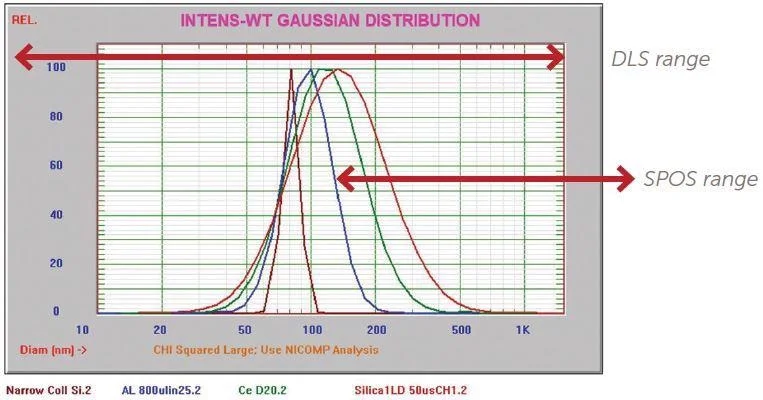
Abrasive concentration typically ranges from 1–10 wt%, but tail particles above 3× D50 dominate scratch risk.
4. Oxidizers and Reactive Species
Oxidizers initiate surface reactions, converting hard metals into softer, removable layers.
| 酸化剤 | Typical Concentration | 申し込み |
|---|---|---|
| H₂O₂ | 0.1–5 wt% | Cu CMP |
| Ferric Nitrate | ppm–0.1 wt% | W CMP |
| 過硫酸塩 | ppm range | Advanced metal CMP |
5. Complexing & Chelating Agents
Complexing agents bind dissolved metal ions, preventing redeposition.
- グリシン
- クエン酸
- アンモニウム塩
| Agent | Binding Strength | Risk if Overused |
|---|---|---|
| グリシン | 中程度 | MRR suppression |
| Citric Acid | 高い | Corrosion |
6. Corrosion Inhibitors & Passivation Additives
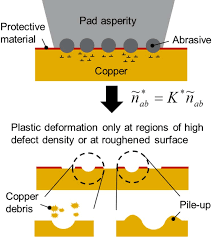
Inhibitors selectively slow removal in recessed areas.
- BTA (Benzotriazole)
- Tolyltriazole
7. pH Buffers and Ionic Control
| pH範囲 | プロセスへの影響 |
|---|---|
| Acidic (<4) | High reactivity, corrosion risk |
| Neutral (6–8) | Stable oxide CMP |
| Alkaline (>9) | Silica dissolution |
8. Surfactants & Dispersion Agents
Surfactants prevent abrasive agglomeration and improve wetting.
- Non-ionic surfactants
- Low-foaming agents
9. Stabilizers & Shelf-Life Additives
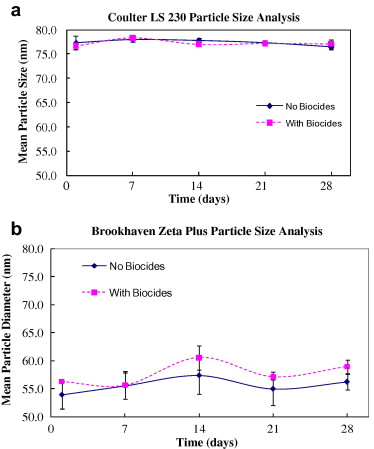
Stabilizers suppress Ostwald ripening and pH drift.
10. Trace Impurities & Contamination Risks
Even ppm-level impurities can impact yield.
- Metal ions (Fe, Na, K)
- Organic residues
- Microplastics
11. Component Interaction & Coupled Effects
CMP slurry components do not act independently. Changing oxidizer concentration alters abrasive surface charge, complexation equilibrium, and inhibitor adsorption simultaneously.
12. Defect Mechanisms Caused by Component Imbalance
| Imbalance | Observed Defect |
|---|---|
| Oversized abrasives | 傷 |
| Excess oxidizer | Pitting |
| Low inhibitor | ディッシング |
13.エンジニアリング・サマリー
Slurry in CMP contains a precisely balanced combination of abrasives, chemicals, and stabilizers. Process success depends not on individual components, but on their controlled interaction within a narrow process window.