Blade Dicing vs. Laser Dicing vs. Plasma Dicing: Which Singulation Technology Is Right for Your Process?
A comprehensive technology comparison across all three major wafer singulation methods — covering kerf width, capital cost, throughput, material compatibility, die strength, and application-specific decision criteria to guide your investment and process technology choices.
1. Three Technologies, One Decision
Wafer singulation — the separation of a semiconductor wafer into individual die — can be accomplished by three fundamentally different physical mechanisms: mechanical grinding (blade dicing), photonic ablation (laser dicing), and reactive ion etching (plasma dicing). Each technology has been refined over decades of semiconductor manufacturing to meet specific combinations of substrate type, die geometry, throughput, and cost requirements. The choice between them is not one of quality preference but of matching technology characteristics to application requirements.
As of May 2026, blade dicing remains the dominant technology across the global semiconductor manufacturing industry by unit volume. Laser dicing has achieved strong adoption in ultra-thin silicon and advanced packaging. Plasma dicing is deployed at volume in a small number of leading-edge memory and logic facilities. Understanding the precise conditions under which each technology is advantageous — and where it is not — is the foundation of an informed singulation technology strategy. For a deeper look at blade dicing technology specifically, see: Wafer Dicing Blade: The Complete Buyer’s Guide.
⚙️ Blade Dicing
Diamond abrasive blade on high-speed spindle. Mechanical grinding through substrate. Most mature, widest material compatibility, lowest capital cost. Dominant at volume.
🔆 Laser Dicing
Focused laser pulse ablates or cleaves substrate. No mechanical contact. Narrow kerf, excellent for ultra-thin silicon. Heat-affected zone (HAZ) requires management.
⚡ Plasma Dicing
Deep reactive ion etching (DRIE) removes substrate material. Highest die mechanical strength, finest kerf. Very high capital cost, limited to Si and compound semiconductor.
2. Blade Dicing: How It Works and Where It Excels
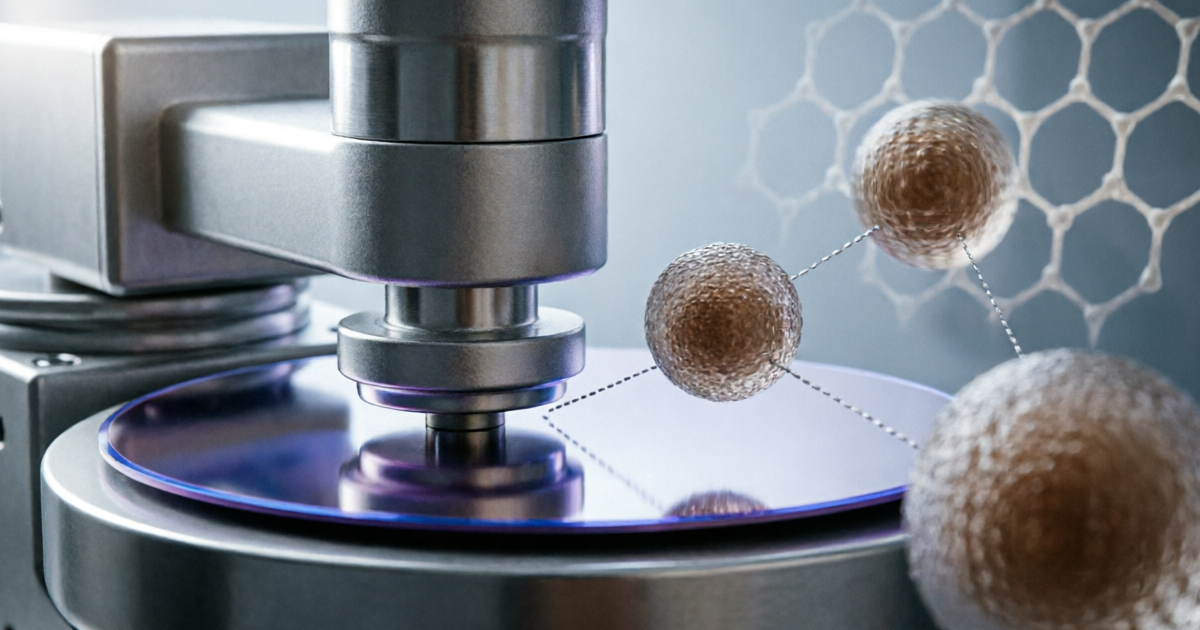
In blade dicing, an ultra-thin diamond blade rotating at 15,000–60,000 RPM traverses the wafer along pre-programmed street lines, grinding through the substrate thickness in a single or multi-pass operation. DI water coolant is delivered continuously into the cut zone to manage heat, remove swarf, and protect device surfaces. The process is entirely mechanical — the blade physically removes material in the form of fine swarf particles carried away by the coolant stream.
Blade dicing’s fundamental strengths are its broad material compatibility, low capital cost relative to laser and plasma, and its extensive process knowledge base. The technology has been the industry standard for over 40 years and is supported by an extensive ecosystem of equipment suppliers, blade manufacturers, process documentation, and qualified process engineers. For the large majority of semiconductor substrates — silicon, GaAs, SiC, sapphire, glass, ceramics, and package substrates — blade dicing can be effectively applied with the correct blade specification and process parameters.
Where Blade Dicing Is the Preferred Choice
- Standard to thick silicon wafers (200–775 µm): best economics, highest throughput
- Mixed-substrate production lines: one equipment type handles all substrates
- GaAs, SiC, sapphire, glass, and ceramic substrates
- Package singulation (QFN, BGA, LED arrays)
- Any application where capital cost justification for laser/plasma is not achievable
- Research and development environments where process flexibility is essential
Where Blade Dicing Has Limitations
- Street widths below approximately 15–20 µm — beyond minimum hubless blade capability
- Ultra-thin silicon below ~50 µm total thickness where mechanical forces cause die breakage
- Applications requiring die mechanical strength at the absolute maximum possible (plasma dicing may be superior)
3. Laser Dicing: How It Works and Where It Excels
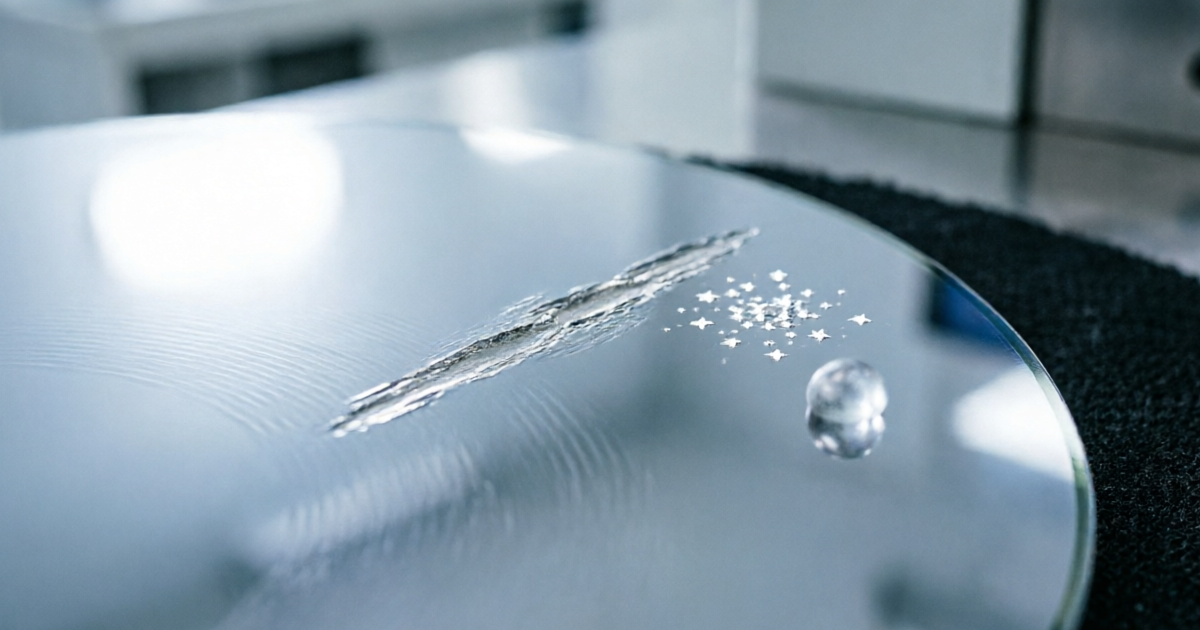
Laser dicing uses a focused, pulsed laser beam to ablate or modify substrate material along the scribe line. Two principal laser dicing approaches are in production use. Laser ablation dicing uses a high-intensity laser to directly vaporise substrate material, creating a narrow kerf in a single or multi-pass process. Stealth dicing (also called laser stealth dicing or SD) focuses the laser below the substrate surface without ablating the top surface, creating a modified region along the scribe line; the wafer is then expanded on a stretching tape to propagate fractures along the modified zone and complete singulation without material removal.
Laser dicing’s primary advantages are its narrow kerf capability (down to 5–10 µm for ablation; near-zero material loss for stealth dicing), its suitability for ultra-thin wafers, and its elimination of mechanical contact forces that could fracture fragile thin-wafer substrates. For silicon wafers below 100 µm total thickness, laser dicing has become the dominant technology in many advanced packaging and mobile device applications where die size and weight reduction are design requirements.
Where Laser Dicing Is the Preferred Choice
- Ultra-thin silicon wafers below 100 µm total thickness
- Applications where street width must be below 30–40 µm
- 2.5D and 3D packaging where die density maximisation is critical
- Substrates sensitive to mechanical cutting forces (some MEMS structures)
Where Laser Dicing Has Limitations
- Thick wafers (above ~250 µm): laser penetration depth limits single-pass cutting capability, requiring multiple passes that reduce throughput advantage
- Substrates with high reflectivity or poor laser absorption (certain metals, some ceramics)
- Heat-affected zone (HAZ): laser ablation creates a thermally damaged layer at the kerf wall that may affect device performance in some applications — particularly for photonic and optoelectronic devices where optical sidewall quality is critical
- Higher capital cost: laser dicing equipment typically costs 2–4× a comparably capable blade dicing saw
4. Plasma Dicing: How It Works and Where It Excels
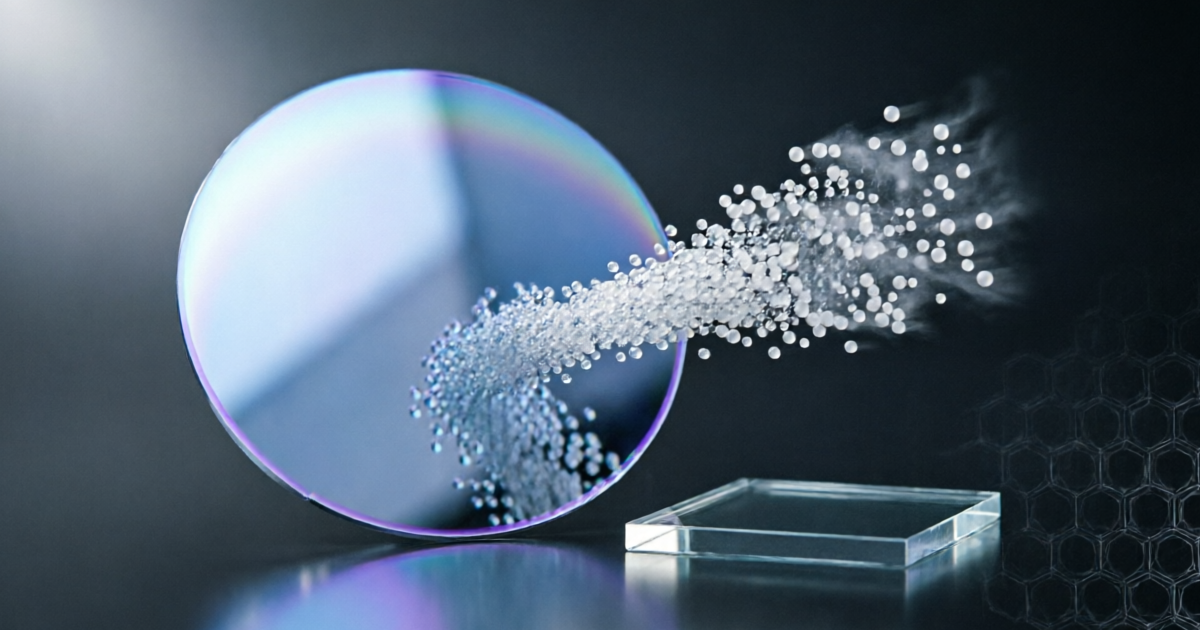
Plasma dicing uses deep reactive ion etching (DRIE) — the same technology used for MEMS fabrication — to chemically etch through the wafer along scribe lines defined by a patterned mask. The wafer is mounted on a carrier, a photoresist or hard mask is deposited and patterned to expose the street areas, and the wafer is then placed in a plasma etcher where reactive fluorine chemistry (for silicon) or chlorine chemistry (for III-V compounds) etches the exposed substrate material at high rate.
Plasma dicing produces the narrowest achievable kerf (2–5 µm, etch-process defined), the highest die mechanical strength of any singulation method (because the etch produces smooth vertical sidewalls with no sub-surface mechanical damage layer), and the highest throughput for ultra-thin silicon (because an entire wafer is etched simultaneously in batch mode rather than processed street-by-street).
Where Plasma Dicing Is the Preferred Choice
- Ultra-thin silicon (<50 µm) in mobile device applications where maximum die mechanical strength is required for drop-test reliability
- Applications where minimum street width is a design constraint (memory die, logic die in mobile SoC)
- High-volume production environments where the very high capital cost is justified by scale
Where Plasma Dicing Has Limitations
- Very high equipment capital cost (typically 5–10× blade dicing)
- Limited material compatibility: optimised for silicon and compound semiconductors; less applicable to glass, ceramics, packages
- Complex process qualification: masking, etch recipe, and post-etch cleaning all require separate qualification
- Not suitable for thick wafers: etch rate economics favour wafers below ~200 µm
- Emerging technology with a smaller installed base and engineering support ecosystem than blade or laser dicing
5. Full Attribute Comparison Table
| Attribute | Нарезка лезвиями | Лазерное напыление | Plasma Dicing |
|---|---|---|---|
| Singulation mechanism | Mechanical grinding | Photonic ablation / sub-surface modification | Reactive ion etching (DRIE) |
| Minimum kerf width | ~15 µm (hubless) | ~5–10 µm (ablation); ~0 µm (stealth) | ~2–5 µm (etch-defined) |
| Equipment capital cost | Low–Medium ($200K–$600K) | High ($600K–$1.5M) | Very High ($2M–$5M+) |
| Consumable cost per wafer | Medium (blade cost) | Low (no blade; laser maintenance) | Low (no blade; mask cost) |
| Throughput (standard Si) | High — 30–80 wafers/hr | Medium — 20–50 wafers/hr | Very High — batch mode, >100 WPH equivalent for ultra-thin |
| Wafer thickness range | 50 µm – 5 mm+ | 20 µm – 250 µm (optimal) | 20 µm – 200 µm |
| Material compatibility | Excellent — virtually all substrates | Good — Si, GaAs, glass; limited on reflective metals | Limited — Si, III-V compounds primarily |
| Die mechanical strength | Medium — sub-surface damage layer present | Medium — HAZ introduces micro-defects | High — smooth vertical etch walls, minimal sub-surface damage |
| Heat-affected zone (HAZ) | Minimal (water-cooled) | Present — requires management | None — chemical etch |
| Process qualification effort | Low — well-documented industry standard | Средний | High — masking, etch, clean all require separate qualification |
| Technology maturity | Very mature — 40+ years in production | Mature — 15+ years in production | Emerging — 5–10 years in volume production |
| Industry installed base | Very large | Large | Small |
6. Cost Structure Analysis
Total cost of ownership (TCO) for singulation technology includes equipment capital (amortised over equipment life), consumables, maintenance, floor space, and process engineering overhead. The ranking of the three technologies by total cost changes depending on production volume and wafer specification.
| Cost Component | Нарезка лезвиями | Лазерное напыление | Plasma Dicing |
|---|---|---|---|
| Equipment capital (amortised/wafer at 50K WPY) | Низкий | Medium–High | Очень высокий |
| Consumables (blade / laser source / mask) | Средний | Low–Medium | Low (mask) + High (etch gases) |
| Maintenance | Низкий | Medium (laser source lifetime) | High (DRIE chamber maintenance) |
| Floor space | Низкий | Low–Medium | High (full fab bay required) |
| Process engineering overhead | Low (standard recipes) | Средний | High (etch recipe, mask, clean) |
| Breakeven volume for laser vs blade | — | ~100K–200K WPY depending on spec | — |
For the majority of semiconductor manufacturers — particularly those running below 300,000 wafer starts per year across multiple substrates — blade dicing delivers the lowest total cost of ownership. The capital cost premium of laser dicing is only justified when street widths are below blade capability or when wafer thickness is below the blade dicing viable range. Plasma dicing TCO is only competitive at very high volumes of ultra-thin silicon with tight die geometry.
7. Kerf Width and Die Count Economics
Kerf width directly determines die count per wafer for a given die size and street width design rule. Narrower kerf enables either more die per wafer (for a fixed street width) or a narrower street width design rule (allowing smaller die or denser integration). The economic impact of kerf reduction is most significant on small die with tight pitches at large wafer sizes.
For a 300 mm silicon wafer with 5 mm × 5 mm die and 80 µm streets, the approximate die count improvement from reducing kerf from 60 µm (blade) to 10 µm (laser ablation) is approximately 2–4% depending on edge exclusion zone. This is a meaningful but not transformative improvement for most products. For die dimensions below 2 mm × 2 mm, the proportional kerf area per die increases, making the kerf reduction benefit more significant. At 1 mm × 1 mm die size, moving from 60 µm to 10 µm kerf can represent a 6–10% increase in die count per wafer.
8. Die Mechanical Strength Comparison
Die mechanical strength — the force required to fracture a singulated die in a three- or four-point bend test — is affected by the quality of the die sidewall. Mechanical damage, sub-surface cracks, and thermal damage (HAZ) at the sidewall surface act as stress concentrators that reduce fracture initiation force. The three technologies produce different sidewall quality profiles:
- Blade dicing: Creates a thin layer of sub-surface mechanical damage (grinding-induced micro-cracks) at the kerf wall. This damage layer is typically 5–15 µm deep and reduces die break strength by 20–40% relative to a theoretical damage-free surface. Edge polishing after dicing can partially recover strength but adds process complexity.
- Laser dicing (ablation): Creates a heat-affected zone (HAZ) at the kerf wall where material properties are modified by rapid thermal cycling. The HAZ depth depends on laser parameters but is typically comparable to the mechanical damage layer of blade dicing. Stealth dicing minimises surface damage but may introduce sub-surface modification zones at the stealth layer depth.
- Plasma dicing: Produces vertical, crystallographically defined etch walls with minimal sub-surface damage. Die break strength from plasma-diced wafers consistently exceeds that of blade or laser diced equivalents in controlled studies — by 30–80% depending on substrate and test geometry. This strength advantage is the primary technical driver of plasma dicing adoption in mobile die applications where drop-test reliability is a key product requirement.
9. Hybrid Approaches: Combining Technologies
An increasingly common approach in advanced semiconductor manufacturing is to combine two singulation technologies to leverage the strengths of each. The most widely deployed hybrid approaches in production as of May 2026 are:
- Laser scribe + blade break: A laser scribes a shallow groove or sub-surface modification line along the street, and a blade (or mechanical roller) then completes fracture along this weakened path. This approach requires significantly less laser depth than full laser dicing, increases laser throughput, and can be applied to substrates where laser ablation through the full thickness is slow (e.g., thick silicon, sapphire).
- Laser ablation + blade: A laser ablation pass removes the upper layers (metal stack, low-k dielectric) that are prone to delamination under blade cutting forces, and a blade then cuts through the remaining silicon substrate. This protects fragile interconnect structures at the die top surface while using blade dicing’s proven economics for the bulk silicon cut.
- Plasma etch + tape expansion (stealth-like): A partial plasma etch through silicon followed by mechanical tape expansion to complete fracture, reducing plasma etch time and overall process cost while retaining much of the die strength benefit.
10. Application Decision Matrix
11. Часто задаваемые вопросы
Is laser dicing replacing blade dicing in mainstream production?
No — not in mainstream production as of May 2026. Laser dicing has achieved strong adoption in specific segments: ultra-thin silicon for mobile devices, advanced 2.5D/3D packaging, and some MEMS applications. However, the installed base of blade dicing equipment globally exceeds laser dicing by a substantial margin, and blade dicing remains the default choice for the broad middle of semiconductor manufacturing where wafer thickness and street width specifications are within blade capability. The two technologies are more complementary than competitive across most production environments.
Can plasma dicing be used for glass or ceramic substrates?
Standard DRIE plasma dicing is optimised for silicon (fluorine chemistry) and III-V compound semiconductors (chlorine chemistry). Glass and ceramic substrates require different etch chemistries and present significantly more complex process qualification challenges. Plasma dicing is not currently a practical production technology for glass or ceramic substrates, and blade dicing remains the standard approach for these materials.
What is the minimum street width achievable with a hubless blade?
With nickel electroformed hubless blades, street widths of 20–30 µm are achievable in optimised production processes on silicon. Below approximately 15–20 µm street width, even the thinnest commercially available hubless blades cannot be reliably specified for production use, and laser or plasma dicing becomes the only viable option. For detailed hubless blade dimensional specifications, see: Wafer Dicing Blade Specifications: Dimensions & Parameters.
Does stealth laser dicing produce zero kerf?
Stealth dicing does not remove material in the conventional sense — instead, a sub-surface modification zone is created and fracture propagates along this zone when the tape is expanded. Because material is not removed at the top surface during laser processing, the resulting die size matches the design layout more precisely than ablation-based dicing. However, the fracture propagation is not perfectly controlled at the micro-scale, and the resulting die edge has its own roughness characteristics that differ from cut-edge quality. In practice, stealth dicing is evaluated on die strength and die count economics rather than on a direct kerf width comparison with ablation or blade methods.