The choice of polishing methods and polishing liquids varies depending on the material and production process of metal workpieces. For stainless steel polishing, several common methods are currently used: Mechanical Polishing, Chemical Polishing, Electrolytic Polishing, and Chemical Mechanical Polishing (CMP).
-
Mechanical Polishing: Utilizes very fine polishing powder for grinding and rolling actions to remove a thin layer of metal from the workpiece surface. Its advantages are good flatness and high brightness after processing. The disadvantages include inability to process complex shapes, inconsistent gloss, non-long-lasting gloss (prone to dulling and rusting). It is more suitable for simple, small to medium-sized products.
-
Chemical Polishing: Its advantages are low investment in equipment, high speed, high efficiency, good corrosion resistance, and the ability to handle stainless steel workpieces with relatively complex shapes. Its disadvantages are relatively poor brightness, gas emission requiring ventilation equipment, and difficulty in heating.
-
Electrolytic Polishing: The workpiece to be polished acts as the anode, and an insoluble metal acts as the cathode. Both are immersed in an electrolytic cell, and a direct current is applied to induce an electrolytic reaction. This causes selective anodic dissolution, achieving the removal of micro burrs and increased brightness on the workpiece surface. The disadvantage is high initial investment in equipment, and the need for fixtures/auxiliary electrodes for complex parts.
-
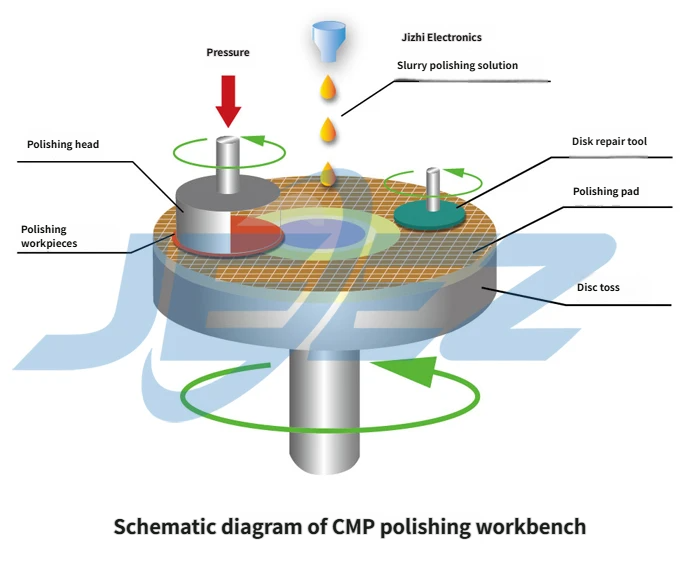
Chemical Mechanical Polishing (CMP): Combines chemical and mechanical actions. The polishing liquid oxidizes a soft layer on the stainless steel workpiece surface, which is then removed by abrasives and a polishing pad. Polishing is achieved through alternating chemical and mechanical processes. Advantages include high speed, excellent results, long-lasting brightness, making it suitable for precision workpieces.
The surface finish of metal parts after polishing can be categorized into 5 grades:
① Surface has a white oxide film, no gloss.
② Slightly bright, outlines are unclear.
③ Good brightness, outlines are visible.
④ Surface is bright, outlines are clearly visible.
⑤ Workpiece surface has a mirror-like brightness.
Polishing of stainless steel materials, such as 304 Apple logos or 316 mobile phone frames, can achieve a very fine surface through Chemical Mechanical Polishing (CMP). The essential consumables for CMP are polishing slurry and polishing pads.
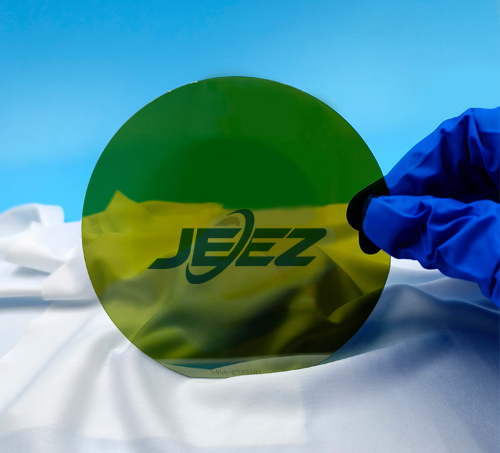
Gize Electronics Stainless Steel Polishing Slurry
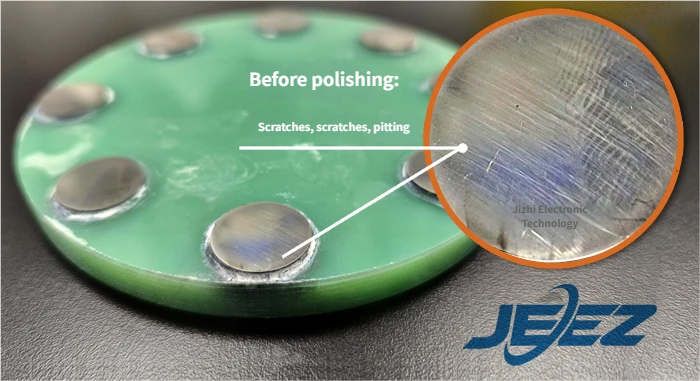
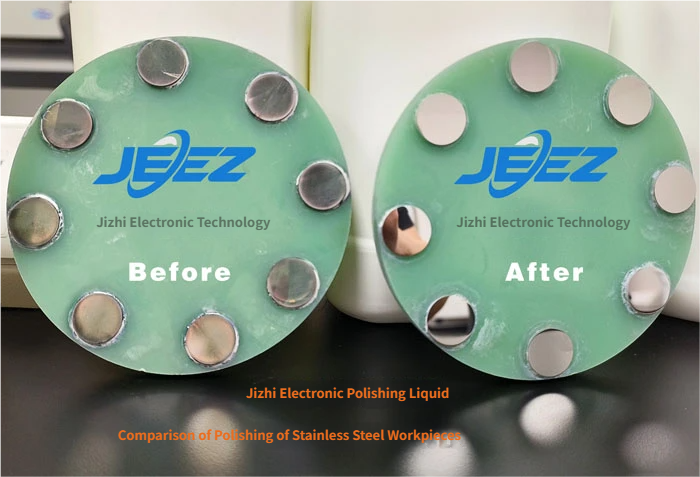
Factors such as slurry concentration, abrasive type, size, shape and concentration, viscosity, pH value, flow rate, and flow path all affect the removal rate and results. Gize Electronics’ stainless steel polishing slurry is a metal polishing liquid prepared according to a special chemical formula. The product has good dispersibility, uniform emulsion, no agglomeration, improves polishing rate, reduces the probability of micro-scratches, enhances polishing precision, and can solve most stainless steel polishing challenges. After polishing, the workpiece surface achieves high gloss with good uniformity. The manufacturer’s patented formula is non-toxic, environmentally friendly, and provides good lubrication and cooling effects. It can polish stainless steel logos to a mirror finish. After polishing, the surface is smooth like a mirror, with no rounded edges (R-angle), no pitting, no scratches, no polishing lines, achieving the desired surface finish.
-
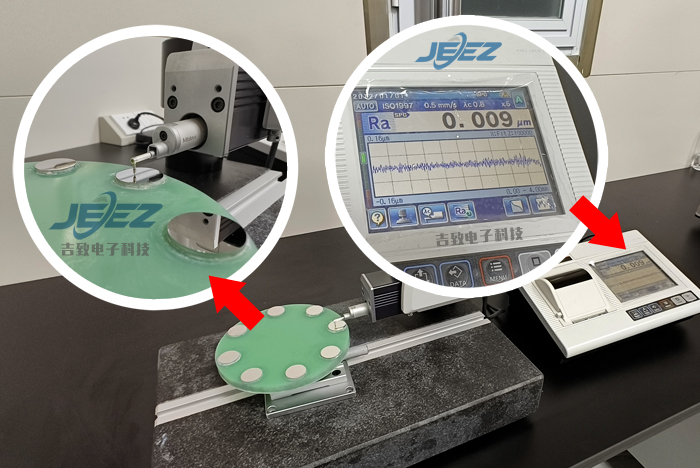
Gize Electronics Stainless Steel Polishing Slurry: Planar Ra value can reach below 0.009 μm.
-
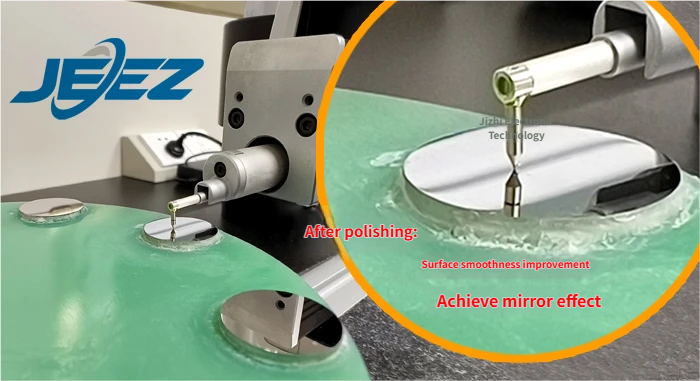
Gize Electronics Polishing Slurry – Stainless Steel Polishing Inspection
-
Stainless Steel Polishing – Mirror Polishing
-
Gize Electronics Stainless Steel Polishing Slurry Effect
-
Stainless Steel Polishing Comparison
The material, structure, hardness, compressibility, slurry retention capacity, and surface roughness of the polishing pad also significantly affect the polishing quality of stainless steel workpieces. Harder pads yield better surface flatness, while softer pads yield surfaces with fewer defects. A higher surface roughness on the polishing pad generally leads to higher polishing efficiency.
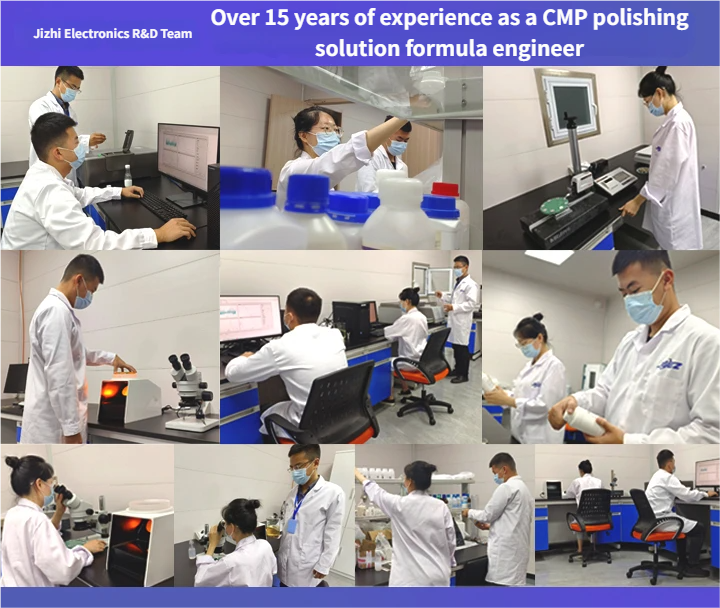
By combining different polishing pads with grinding slurries or high-brightness polishing slurries, the different requirements for rough, medium, and fine polishing stages of stainless steel workpieces can be met. Gize Electronics’ professional technical team oversees every step from liquid formulation, experimentation, sampling, testing, production, to shipment, strictly configuring solutions according to the customer’s workpiece material and requirements. Resident engineers provide one-on-one on-site guidance and detailed operational instructions. Creating value for our customers and achieving mutual success is the driving force behind our development!