What Is a CMP Polishing Pad? The Ultimate Guide
A clear, technically grounded explanation of CMP polishing pads — what they are, what they are made of, how they fit into the semiconductor fabrication process, and why they are among the most consequential consumables in modern chip manufacturing.
Verified
If you have ever asked “what is a CMP polishing pad?” — whether you are a process engineer new to planarization, a procurement professional evaluating suppliers, or a researcher entering the semiconductor materials field — this guide provides the definitive, technically accurate answer. We cover not just the object itself but the broader context that makes it so important: why semiconductor devices need planarization, how the pad interacts with slurry and wafer to achieve atomically smooth surfaces, and what differentiates one pad from another.
CMP (chemical mechanical planarization, sometimes called chemical mechanical polishing) polishing pads are the workhorses of modern chip manufacturing. They are used at dozens of steps in the fabrication of logic chips, memory devices, power semiconductors, and compound semiconductor substrates. Yet they remain largely invisible to the public — unrecognized consumables inside the multi-billion-dollar machines that make the electronics era possible.
1. Defining a CMP Polishing Pad
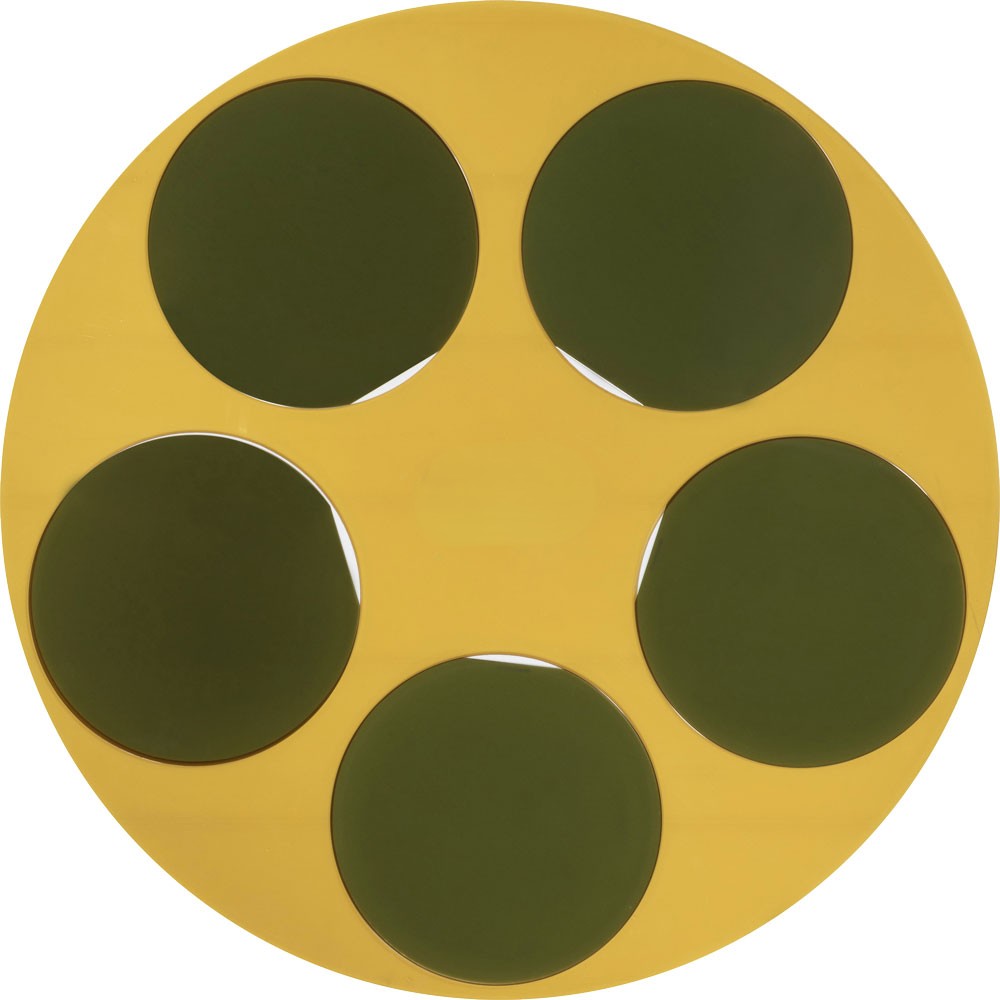
A CMP polishing pad is a precision-engineered consumable disc, typically made from polyurethane or a polyurethane-composite material, that is mounted on the rotating platen of a chemical mechanical planarization tool. It provides the working surface against which a semiconductor wafer is pressed and rotated in the presence of a chemically reactive abrasive slurry, removing material from the wafer surface to achieve nanometer-scale planarity.
Breaking that definition down:
Precision-engineered
Every physical property of the pad — hardness, porosity, surface texture, groove geometry — is deliberately controlled during manufacturing, not incidental. Small changes in pad properties directly shift process outcomes.
Consumable disc
Pads are single-use items that wear out over hundreds to thousands of wafer polishing cycles and must be periodically replaced — a significant and recurring cost in fab operations.
Mounted on a rotating platen
The pad is bonded (via pressure-sensitive adhesive) to a large rotating platen — typically 20–30 inches in diameter on 300 mm production tools — which provides the controlled rotational motion.
Nanometer-scale planarity
The end goal of CMP is a surface flat enough for the next lithography exposure step — deviations of even a few nanometers in surface height across a 300 mm wafer can put features outside the depth of focus of the lithography tool.
2. CMP in Semiconductor Manufacturing: Why Planarization Matters
To understand a CMP polishing pad, you first need to understand the problem it solves. Semiconductor devices are built up in three dimensions by depositing and patterning dozens of thin film layers on a silicon wafer. Each deposition step adds material that conforms to and amplifies the topography already present on the wafer surface. After just a few process layers, the wafer surface is no longer flat — it has hills and valleys corresponding to underlying device structures, with height variations that can range from a few tens of nanometers to several micrometers.
This topography creates two serious manufacturing problems:
🔬 Lithography Depth of Focus
- Modern DUV and EUV lithography tools have extremely shallow depth of focus — often less than 100 nm for sub-10 nm nodes
- If the wafer surface has height variations larger than the depth of focus, parts of the pattern will be out of focus and print incorrectly
- CMP is the primary technique for flattening the surface between lithography levels, ensuring every exposure prints on a flat, in-focus surface
🔩 Metal Line Continuity
- Metal interconnect layers are deposited into trenches and vias etched into dielectric films
- After metal deposition, the surface is covered with excess metal that must be removed — leaving metal only inside the trenches and vias
- CMP removes the excess metal selectively, leaving a flat surface with embedded metal lines — a process called damascene metallization
- Without CMP, there would be no reliable way to build multi-level copper interconnects
3. Anatomy of a CMP Polishing Pad
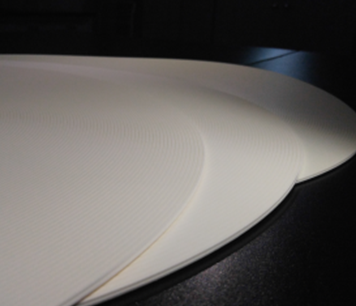
A CMP polishing pad is deceptively simple in appearance — a flat disc of polymeric material, typically 20–30 inches in diameter and 1–3 mm thick. But its internal structure is precisely engineered at the microscale. Understanding the anatomy of a pad explains why not all pads perform the same way, even when made from superficially similar materials.
The Polymer Matrix
The bulk of a standard CMP pad consists of a closed-cell polyurethane foam. Polyurethane (PU) is synthesized by reacting a diisocyanate with a polyol in the presence of a chain extender, forming a cross-linked polymer network. The mechanical properties — stiffness, hardness, elasticity, creep resistance — are tunable over a wide range by adjusting the PU formulation. For CMP pads, the key control parameters are the isocyanate-to-polyol ratio (NCO/OH index), the type of polyol (polyester vs. polyether vs. polycarbonate), and the cross-link density.
The Pore Structure
Within the PU matrix, hollow microspheres (typically 20–50 µm in diameter) are dispersed during the casting process. These microspheres expand or remain intact during curing, creating a network of closed-cell micro-pores throughout the pad volume. The pores serve a critical functional role: they act as micro-reservoirs that hold slurry at the pad-wafer interface during polishing. As the pad surface wears during conditioning, new pores are exposed, continuously replenishing the surface’s slurry-holding capacity.
The Surface Texture and Asperities
The polishing surface of the pad is not perfectly smooth. At the microscale, it is covered with asperities — small protrusions of polymer material that constitute the true contact points with the wafer. Asperity height, density, and sharpness determine how effectively the pad transmits force to abrasive particles in the slurry and how aggressively it abrades the wafer surface. Fresh pads have a relatively compact, smooth skin layer that must be removed during the break-in (conditioning) process to expose the underlying asperity-rich sub-surface.
The Groove Network
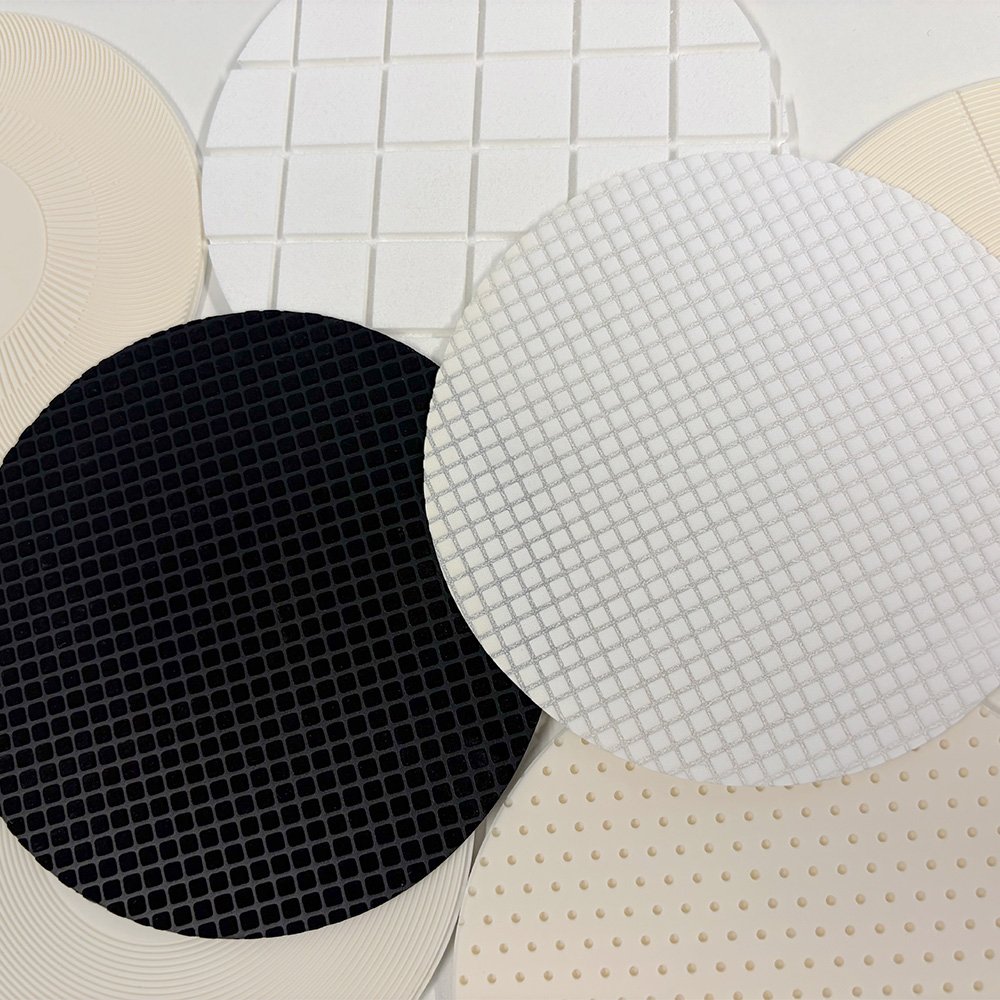
Machined into the top surface of the pad is a network of grooves — channels typically 0.3–0.8 mm deep and 0.25–1.0 mm wide, arranged in patterns such as concentric rings (K-groove), XY grids, or Archimedean spirals. Grooves serve as highways for slurry transport: they channel fresh slurry from the pad edge to the center of the wafer-pad contact zone and carry spent slurry and removal byproducts outward and away. Groove design is a major differentiator between pad types — for a full analysis, see our article on CMP Pad Groove Design and Slurry Distribution.
The Backing Layer and PSA
Most production pads include a backing layer — a thin film of polyethylene terephthalate (PET) or a foam subpad material — laminated to the bottom of the polishing layer. The backing provides dimensional stability and a flat mounting surface. A pressure-sensitive adhesive (PSA) on the bottom of the backing bonds the pad to the platen. PSA quality and peel strength are critical: pad delamination during polishing is a serious process excursion that can scratch or contaminate wafers.
4. The Four Main Types of CMP Polishing Pads
CMP polishing pads are not one-size-fits-all. The industry has developed four distinct pad architectures, each optimized for different aspects of the planarization challenge. For a detailed comparison of pad selection criteria, see our guide: Hard vs. Soft CMP Polishing Pads: Selection Guide.
| Type | Shore D Hardness | Primary Strength | 典型用例 |
|---|---|---|---|
| Hard polyurethane (Type I) | 55–65 | High planarization efficiency, stable MRR | Oxide ILD, W plug, STI — any step needing aggressive step-height removal |
| Soft polyurethane / subpad (Type II) | 30–45 | Within-wafer uniformity, low shear on fragile films | Cu BEOL, low-k dielectric, barrier metal, final finishing |
| Composite / stacked (Type III) | Combined stack: effective 45–58 | Best of both: planarization efficiency + uniformity | 300 mm production with bow/warp correction requirements |
| Specialty / poreless (Type IV) | 60–70 | Ultra-low defect density, highly consistent Kp | Advanced nodes (<7 nm), EUV-layer CMP, SiC substrates |
Jizhi Electronic Technology manufactures all four pad types, with in-house R&D capabilities for custom formulations targeting non-standard substrates including SiC, GaN, and sapphire. For our SiC-specific pad technology, see: SiC CMP Polishing Pads for Third-Generation Semiconductors.
5. The Pad’s Role in the Complete CMP Polishing System
A CMP polishing pad does not operate in isolation. It is one component in a tightly coupled system, and its performance cannot be fully understood apart from the other elements. The four primary system components are:
The Polishing Tool (CMP Equipment)
Industrial CMP tools from Applied Materials (Reflexion), Ebara (FREX), or SKC (now Kctech) provide the mechanical motion: counter-rotating platen and carrier head, controlled down-force (1–6 psi), and slurry delivery system. The pad is mounted on the platen. Tool geometry and process recipe parameters (pressure, velocity, slurry flow rate) define the operating conditions the pad must perform under.
The CMP Slurry
Slurry is a colloidal suspension of abrasive particles (silica, ceria, alumina, or diamond, depending on the application) in a chemically reactive aqueous medium. The slurry is continuously dispensed onto the pad surface during polishing. Slurry chemistry — pH, oxidizer type and concentration, complexing agents — controls the chemical softening of the target film, while the abrasive particles provide mechanical cutting. Pad-slurry compatibility is critical: the wrong combination can cause MRR collapse or defect spikes. To understand how slurry and pad interact, see: How CMP Polishing Pads Work.
The Polishing Pad
The pad is the mechanical intermediary between the tool and the wafer. It transmits the applied force, distributes the slurry, and provides the asperity surface that engages abrasive particles with the wafer film. The pad’s hardness, porosity, and groove pattern determine how effectively it does each of these things.
The Pad Conditioner
A diamond disk dresser, pressed against the pad surface either during or between wafer polishes, continuously abrades the pad surface to remove glazed material, re-open pores, and restore the asperity height distribution. Without conditioning, pad performance decays rapidly. The conditioning process is inseparable from pad management — for the full picture, read: CMP Pad Conditioning and Lifespan Management.
6. Key Physical Properties of a CMP Polishing Pad — Explained
When engineers specify or compare CMP polishing pads, they use a set of standard physical property measurements. Understanding what these properties mean — and why they matter — is essential for anyone selecting or qualifying a pad. For a deep dive into how these properties influence material removal rate, see: CMP Material Removal Rate and Pad Parameters.
| 财产 | 测量方法 | 典型范围 | 过程影响 |
|---|---|---|---|
| Hardness (Shore D) | ASTM D2240 durometer | 30–70 Shore D | Controls asperity contact force, planarization efficiency, and scratch risk. Higher = more aggressive. |
| Compressibility (%) | % thickness change under 25 kPa load | 0.5–8% | Governs wafer-scale conformance. Higher compressibility improves edge-to-center uniformity on bowed wafers. |
| Elastic recovery (%) | % recovery after load removal | 55–90% | Low recovery = creep and pad drift during long polishing runs, leading to MRR drift over a campaign. |
| Pore size (µm, mean) | Optical cross-section image analysis | 20–80 µm | Larger pores increase slurry retention but reduce contact area. Must be matched to slurry particle size. |
| Surface roughness (Ra) | Profilometer or AFM on conditioned surface | 1–10 µm (conditioned) | Higher Ra = more asperities = higher MRR and higher scratch risk. Controlled via conditioning protocol. |
| 厚度(毫米) | Contact gauge, 5-point measurement | 1.2–3.0 mm | Determines total usable pad life. Minimum usable thickness (end-of-life) is typically 0.5–0.8 mm above backing. |
| Groove depth / width (mm) | Profilometer trace across groove cross-section | Depth: 0.3–0.8 mm; Width: 0.25–1.0 mm | Controls slurry transport rate, uniformity of slurry film, and thermal dissipation. See groove design guide. |
7. Pad Lifespan, End-of-Life Indicators, and Replacement
A CMP polishing pad is a consumable with a finite and measurable useful life. Understanding how pad performance evolves over its lifetime — and recognizing the indicators that signal end-of-life — is as important as selecting the right pad in the first place.
The Three Phases of Pad Life
Break-In Phase (Wafers 1–50 approximately)
The pad surface skin is progressively removed by conditioning, exposing the asperity-rich sub-surface. Removal rate rises from a low initial value to a stable working level. This phase produces high process variability and should be performed using dummy (non-product) wafers or low-value monitor wafers. Skipping proper break-in is one of the most common causes of early-pad-life yield excursions.
Stable Working Phase (Majority of Pad Life)
The pad delivers consistent, repeatable removal rates and within-wafer uniformity. Conditioning maintains the asperity surface in a stable state. This is the phase where production wafers should be polished. The duration of this phase — measured in wafer count — is the primary pad life metric.
End-of-Life Phase
As total pad thickness decreases toward the minimum usable threshold, the pad’s mechanical response changes — reduced compressibility, altered asperity distribution — leading to drifting removal rate and degraded uniformity. Key end-of-life signals: MRR decline >15% from stable-state baseline; WIWNU increase >2% (1σ); pad thickness below minimum specification; increasing scratch density on post-CMP inspection.
8. A Brief History of CMP Pad Development
The history of CMP polishing pads mirrors the history of semiconductor device scaling — each new generation of technology has demanded something the existing pad could not fully deliver, driving a new wave of materials innovation.
1990s — The Birth of Production CMP
IBM’s introduction of CMP for inter-layer dielectric planarization at the 0.35 µm node catalyzed a new industry. The first production pads were non-woven fiber composites — essentially industrial polishing felts — adapted from the optics and magnetic disk polishing industries. These early pads delivered acceptable results for oxide CMP at mature design rules but lacked the hardness and uniformity control needed for the decade ahead.
Late 1990s – 2000s — Polyurethane Becomes the Standard
Rodel’s IC1000™ polyurethane pad established the template that remains dominant today. The closed-cell PU foam provided higher hardness, tunable porosity, and — critically — better lot-to-lot consistency than fiber composites. As copper damascene replaced aluminum metallization (starting at the 0.18 µm node), new softer pad formulations were developed to protect the fragile low-k dielectrics used in Cu BEOL processes.
2010s — Stacked Pads and Sub-20 nm Challenges
The transition to 300 mm wafers and sub-20 nm nodes raised the bar for within-wafer uniformity and defect control beyond what single-layer pads could reliably achieve. Two-layer stacked pad configurations — hard top pad bonded to soft subpad — became standard at leading fabs. Simultaneously, the emergence of 3D NAND and FinFET architectures introduced new topography profiles and film stacks that required custom groove designs and pad formulations. For information on how today’s semiconductor fabs use CMP pads across their process flows, visit our overview of Semiconductor CMP Polishing Pads.
2020s — SiC, Advanced Nodes, and Domestic Supply Chain Development
The current era is defined by three converging pressures. First, the explosive growth of SiC power devices — driven by EV adoption and industrial electrification — demands pad formulations for materials far harder and more chemically inert than silicon. Second, gate-all-around (GAA) transistor architectures at 3 nm and below create planarization challenges — step heights, film stresses, and selectivity requirements — that push conventional pads to their limits. Third, geopolitical supply chain diversification is driving rapid qualification of domestically produced pads across Asia, with companies like Jizhi Electronic Technology investing heavily in R&D and manufacturing scale to meet this demand.
For material-by-material comparisons of modern pad options, see: CMP Pad Materials: Polyurethane vs Other Options.