logo

About semiconductor

This author has not yet filled in any details.
So far semiconductor has created 41 blog entries.

Metal Polishing Slurry — Apple Logo Mirror Polishing Slurry

The Apple Logo is highly tactile, with its sparkling mirror-like effect showcasing the charm and aesthetic of the Apple brand. The creation of a perfect Apple Logo requires polishing through chemical mechanical polishing (CMP) technology. The CMP process delivers higher surface smoothness and more stable efficiency, ensuring a high yield rate while also building a better brand image. The Apple Logo is made of 6063 aluminum alloy or stainless steel. It is first CNC-cut into the logo shape, then polished with a surface polishing machine. Composite coarse polishing pads and CMP polishing slurry are used for coarse polishing and leveling, ...

By |2025-12-16T11:39:06+08:002025年12月9日|Application|0 Comments

Jade Polishing Slurry—CMP Polishing Process for Jade Watch Dials

A jade wristwatch designed by a client exudes elegance and sophistication, embodying the noble character of jade. The rough surface removal and polishing of the Hetian jade dial are achieved through CMP (Chemical Mechanical Polishing) technology. With the combined application of Gizhil Electronic’s CMP polishing slurry and polishing pads, uneven scratches on the raw material surface are eliminated, restoring the natural luster and inherent texture of the jade. After polishing, the dial workpiece appears dense, smooth, and exhibits a waxy, oily texture. The advantages of using CMP for polishing jade include rapid thickness reduction, high polishing efficiency, exceptional brightness, minimal ...

By |2025-12-16T11:39:26+08:002025年12月9日|Application|0 Comments

Semiconductor Polishing Slurry—Ceramic Copper-Clad Substrate DPC Polishing Slurry / DBC Grinding Fluid

Gizhil Electronic's ceramic copper-clad substrate grinding fluid / DPC polishing slurry / DBC grinding fluid typically involves two processes: coarse polishing and fine polishing. Depending on the customer's requirements for workpiece polishing and surface roughness, different DPC grinding fluids or fine polishing slurries are selected. The coarse polishing process for ceramic copper-clad DPC/DBC substrates primarily focuses on rapid thickness reduction and improved polishing efficiency. For DPC substrates requiring higher quality, a secondary fine polishing step is necessary to remove surface defects and imperfections. After using Gizhil Electronic's ceramic copper-clad substrate grinding fluid / fine polishing slurry, the surface roughness (Ra) ...

By |2025-12-16T11:39:57+08:002025年12月9日|Application|0 Comments

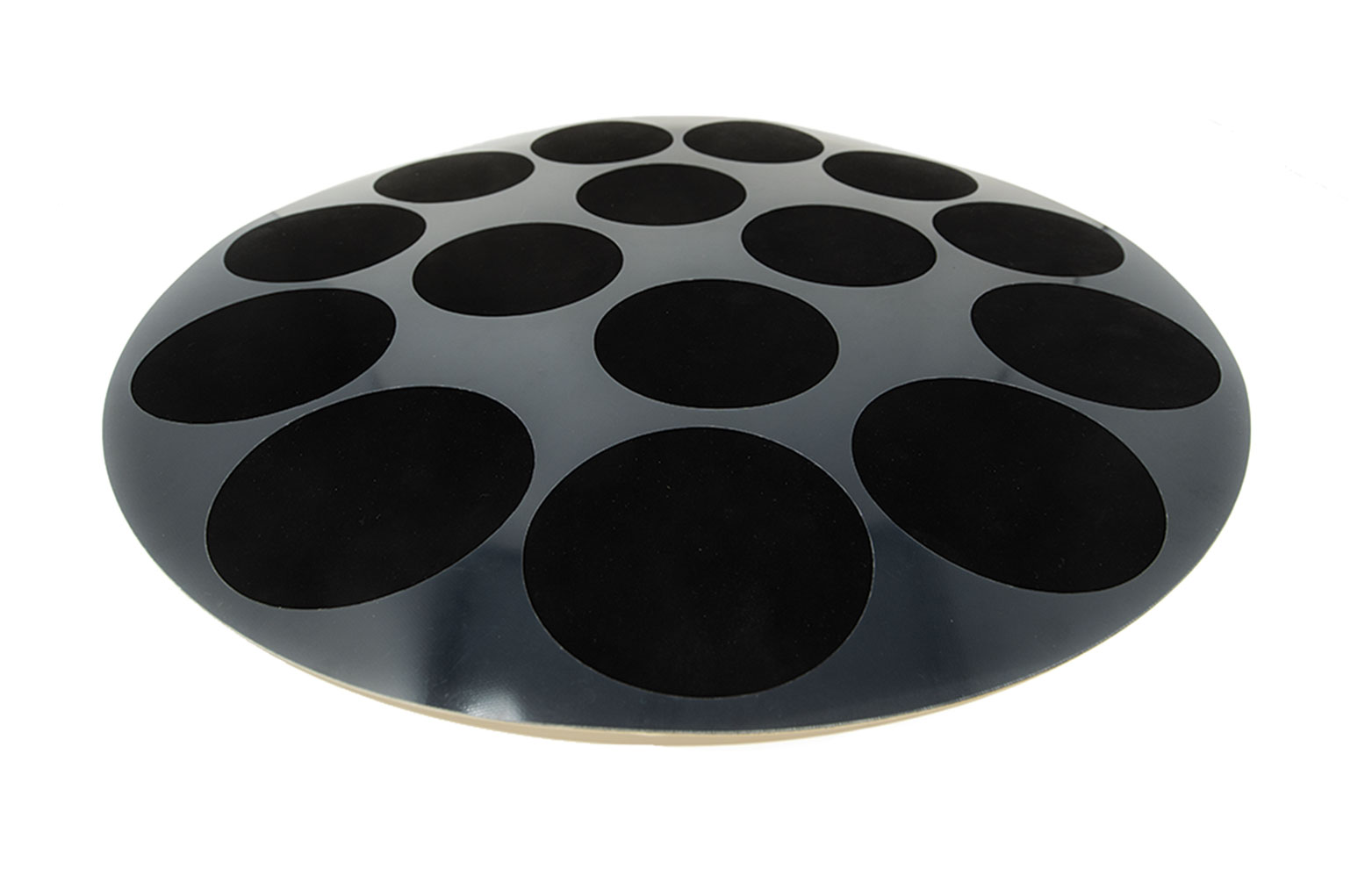
Metal Polishing Slurry—CMP Polishing of Hydraulic Component Return Plates / Nine-Hole Plates

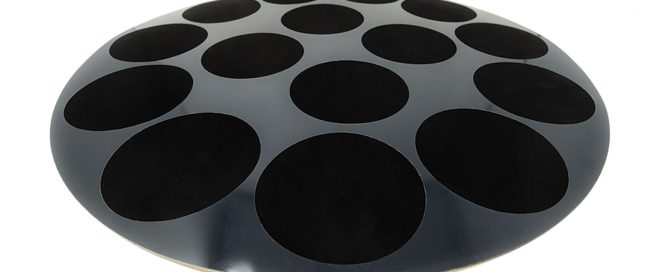
The power components of hydraulic systems are driven by engines or motors, which draw oil from the hydraulic tank, generate pressurized oil, and deliver it to the actuators. Hydraulic pumps are categorized by structure into gear pumps, piston pumps, vane pumps, and screw pumps. Hydraulic pump accessories include port plates, return plates, variable heads, drive shafts, piston slippers, and more. These hydraulic castings require processing via CMP (Chemical Mechanical Polishing) technology, utilizing polishing pads and polishing slurry to achieve a flat, smooth metal surface, free of burrs and cutting marks. This process reduces wear after component assembly, lowers noise, and ...

By |2025-12-16T11:42:04+08:002025年12月9日|Application|0 Comments

Sapphire Wafer Grinding and Polishing

The purpose of polishing sapphire wafers is to reduce the final thickness of the substrate to the desired target value, achieving a TTV (Total Thickness Variation) of better than ±2 μm and a surface roughness of less than 2 nm. These operational requirements demand machinery and processes with high precision, efficiency, and stability. Using Gizhil Electronic’s sapphire polishing slurry and polishing pads for CMP (Chemical Mechanical Polishing) grinding and polishing enables the realization of this process. By employing CMP polishing techniques, sapphire workpieces can achieve the desired surface roughness. Each polished sapphire wafer undergoes uniform material removal during processing, ensuring ...

By |2025-12-16T11:42:41+08:002025年12月9日|Application|0 Comments

Aluminum Alloy Polishing Slurry — Mirror Polishing for Aluminum Workpieces

Aluminum alloy is relatively soft and has low hardness, making it highly susceptible to mechanical damage such as scratches and abrasions during processing, as well as corrosion and poor chemical stability on the surface. To eliminate defects from the machining process, the CMP (Chemical Mechanical Polishing) method is commonly employed to achieve excellent surface smoothness. With the advancement of high-tech processes, Gizhil Electronic's aluminum alloy polishing slurry now offers mature technical support, enabling ultra-precise and nearly defect-free planarization of CMP-polished materials. CMP truly achieves global planarization of aluminum alloy substrates, delivering near-perfect surfaces with extremely low roughness while significantly improving ...

By |2025-12-16T11:43:07+08:002025年12月9日|Application|0 Comments

Silicon Carbide Wafer Polishing Slurry

Gizhil Electronic's silicon carbide fine polishing slurry is suitable for the surface planarization of SiC silicon carbide wafer substrates during precision machining. The slurry used for wafer polishing exhibits high polishing efficiency and low surface roughness. After polishing with Gizhil Electronic's SiC substrate polishing slurry, the wafer surface is free from defects such as scratches and haze, ensuring excellent flatness of the silicon carbide wafers. Developed by Gizhil Electronic, this silicon carbide polishing slurry offers a high dilution ratio and easy post-polishing cleaning, making it widely applicable in the manufacturing of semiconductor integrated circuit substrates. Gizhil Electronic's SiC slurry for ...

By |2025-12-16T11:43:32+08:002025年12月9日|Application|0 Comments

Hard Alloy Polishing Slurry—Mirror Polishing of Tungsten Steel Blades

Hard alloy blades possess a series of excellent properties, including high hardness, good toughness, heat resistance, and corrosion resistance. Particularly, their high hardness and wear resistance allow them to maintain significant hardness even at 1000°C. Tungsten steel workpieces made of hard alloy are considered a challenging material for many polishing processes. Currently, tungsten steel blades can be polished using CMP (Chemical Mechanical Polishing) technology combined with specialized metal polishing slurries to achieve an ideal surface finish. Hard alloy blades, also known as tungsten steel blades, often exhibit surface defects such as rust spots, scratches, and pitting on the raw workpiece. ...

By |2025-12-16T11:43:53+08:002025年12月9日|Application|0 Comments

Silicon Carbide (SiC) Polishing Process

Depending on the specific semiconductor industry processes, CMP (Chemical Mechanical Polishing) slurries can be categorized into dielectric layer CMP slurries, barrier layer CMP slurries, copper CMP slurries, silicon CMP slurries, tungsten CMP slurries, TSV (Through-Silicon Via) CMP slurries, shallow trench isolation CMP slurries, and others. SiC CMP slurry is one of the essential materials required in the semiconductor wafer manufacturing process. It plays a crucial role in the polishing of silicon carbide material workpieces. Factors such as the type of slurry, particle dispersion, particle size, physicochemical properties, and stability are closely related to the polishing outcome. In recent years, driven ...

By |2025-12-16T11:44:19+08:002025年12月9日|Application|0 Comments

Analysis of Key Polishing and Lapping Processes for InP (Indium Phosphide) Substrates

Indium Phosphide (InP), as a core material of the third-generation semiconductor, holds an irreplaceable position in high-end fields such as optical communications, millimeter-wave radar, and quantum communications due to its excellent electron mobility, wide bandgap, and superior optoelectronic properties. The surface quality of InP substrates directly determines the precision and reliability of subsequent epitaxial growth and device fabrication, with polishing and lapping processes being the critical steps in controlling this core metric. Drawing on years of practical experience in semiconductor material processing, Gizhi Electronics provides a systematic analysis of the key polishing and lapping processes for InP substrates, along with ...

By |2025-12-25T10:48:50+08:002025年12月5日|Blog, Industry|0 Comments
Go to Top