Chemical Mechanical Planarization (CMP) Equipment: The Complete Guide
Índice
- What Is Chemical Mechanical Planarization (CMP) Equipment?
- How CMP Equipment Works
- Core Components of CMP Equipment
- Types of CMP Equipment
- Applications of CMP Equipment
- CMP Equipment Market Trends in 2026
- How to Choose a CMP Equipment Supplier
- CMP Equipment Maintenance and Consumables
- Why Work With JEEZ for CMP Equipment and Consumables
- Preguntas frecuentes
What Is Chemical Mechanical Planarization (CMP) Equipment?
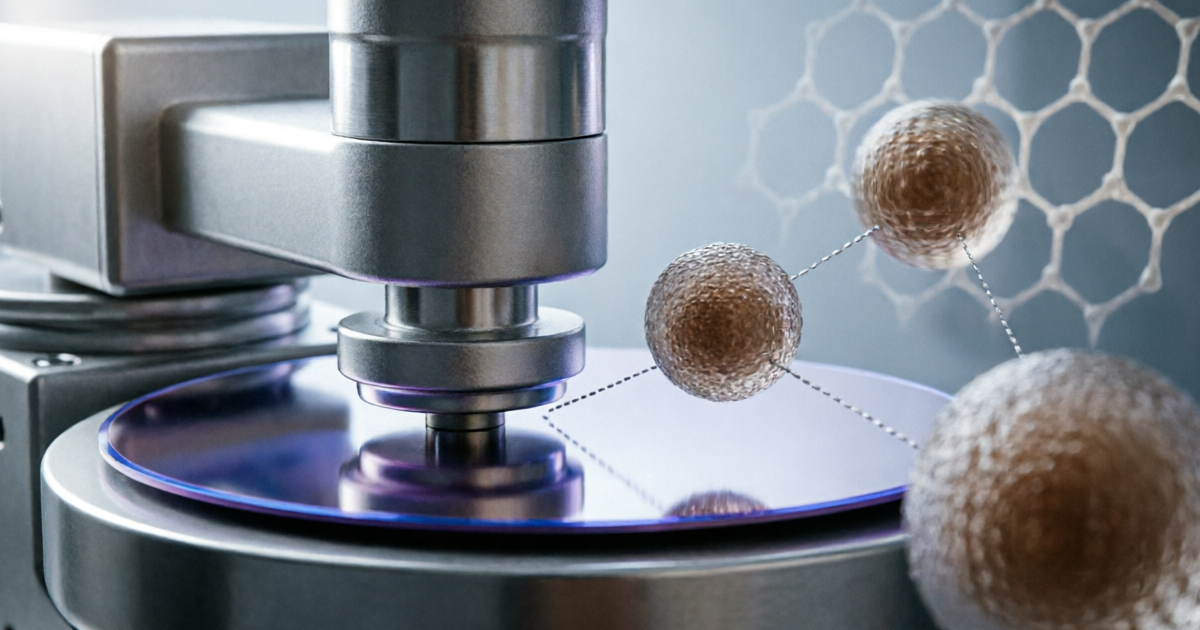
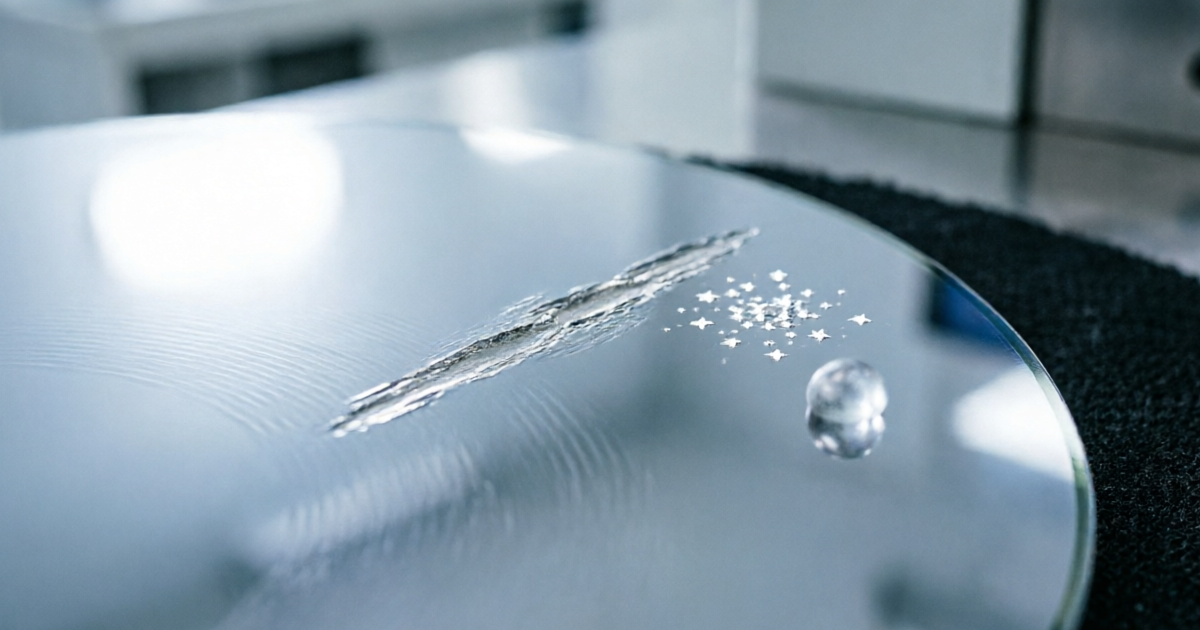
Chemical mechanical planarization equipment — sometimes called a CMP polisher, CMP tool, or wafer planarization system — is a piece of semiconductor process equipment used to remove material from the surface of a wafer through a combination of chemical reaction and mechanical abrasion. The goal is to leave the wafer surface globally flat (planar) and locally smooth, at tolerances measured in nanometers.
The underlying CMP process was first introduced into volume semiconductor manufacturing by IBM in the late 1980s to solve a planarization problem that etch-back and reflow techniques could not handle: multilevel metal interconnects and inter-layer dielectric (ILD) stacks that needed a flat starting surface for the next layer of lithography. Since then, chemical mechanical planarization equipment has become a mandatory step in essentially every advanced wafer fabrication flow, supporting the transition from 200 mm to 300 mm wafers and, more recently, enabling the multilayer, 3D, and heterogeneous integration structures used in today’s most advanced chips.
At a high level, a typical piece of CMP equipment combines several subsystems — a polishing module, a slurry delivery system, an endpoint detection system, and integrated cleaning and wafer-handling stations — into a single platform. The equipment may be configured as a standalone single-wafer polisher, a multi-platen system for sequential polishing steps, or a fully integrated cluster tool that combines polishing, cleaning, drying, and metrology in one footprint.
How CMP Equipment Works
CMP equipment works by pressing a wafer face-down against a rotating polishing pad while a chemically reactive slurry is continuously dispensed onto the pad surface. The process unfolds in a repeating cycle of chemical softening and mechanical removal:
First, the wafer is loaded onto a polishing head (also called a carrier head), which holds it with a retaining ring and applies controlled downward pressure. The polishing platen below rotates a polishing pad, and a slurry arm dispenses an abrasive, chemically active slurry onto the pad. The oxidizers and chemical additives in the slurry react with the exposed film on the wafer surface — whether that is copper, tungsten, oxide, or a barrier layer — forming a softened reaction layer that is far easier to remove than the underlying bulk material.
Second, as the wafer and pad rotate relative to one another, the abrasive nanoparticles suspended in the slurry, together with the texture of the polishing pad itself, mechanically remove this softened layer. Because high points on the wafer surface make first and most contact with the pad, they are removed faster than recessed areas, which is what produces the global planarization effect. The chemical and mechanical actions alternate continuously — soften, remove, expose, soften again — until the target film thickness and flatness are reached.
Throughout the process, an in-situ endpoint detection system monitors film thickness or other signals in real time, so the tool can stop polishing at exactly the right moment and avoid both under-polishing (leaving residual film) and over-polishing (eroding the underlying structure). For a deeper, step-by-step breakdown of this process — including the chemistry behind the reaction layer and how different film types behave during polishing — see our dedicated guide, How CMP Equipment Works.
Core Components of CMP Equipment
While designs vary between equipment manufacturers, almost every chemical mechanical planarization equipment platform is built around the same set of core subsystems. Understanding what each one does makes it much easier to compare tools, troubleshoot process issues, and plan a consumables strategy. We cover all of these in full detail in CMP Equipment Key Components Explained — below is a summary of the six components every buyer should understand.
Polishing Platen / Table
The rotating base onto which the polishing pad is mounted. Platen size, rotation speed range, and temperature control directly affect removal rate, uniformity, and process repeatability across the wafer.
Polishing Head / Wafer Carrier
Holds the wafer face-down against the pad and applies downward pressure, often through individually controllable pressure zones that allow fine-tuning of the removal profile across the wafer radius.
Polishing Pad and Pad Conditioner
The pad provides the mechanical interface between wafer and slurry, while the conditioner — typically a diamond-embedded disc — continuously refreshes the pad surface texture to maintain consistent removal rates over the pad’s lifetime.
Slurry Delivery System
Supplies precisely metered, chemically active slurry to the pad surface through a dispense arm, with flow rate, concentration, and point-of-use mixing all tightly controlled to keep removal rates stable.
Endpoint Detection System
Uses optical, motor current, or other in-situ sensing methods to detect when the target film thickness has been reached, enabling the tool to stop polishing at the correct moment automatically.
Cleaning, Drying and Wafer Transfer Modules
Post-polish modules remove residual slurry particles and chemical residue from the wafer surface and back side, then dry the wafer before it is transferred out of the tool — critical for avoiding defects and contamination downstream.
The pad and conditioner subsystem and the slurry delivery subsystem are usually where the largest ongoing consumable spend sits, and where small process changes have an outsized impact on yield. We go into much greater depth on selecting and managing these in CMP Polishing Pads and Conditioners Explained y CMP Slurry Delivery Systems Explained.
Types of CMP Equipment
Not all CMP equipment is built the same way, and the right configuration depends heavily on wafer size, throughput requirements, and the specific film being polished. Broadly, chemical mechanical planarization equipment can be categorized along three dimensions:
By platen configuration: Single-platen tools perform one polishing step per wafer pass and are common in lower-volume or R&D environments. Multi-platen tools (commonly two to four platens) allow a wafer to move through a sequence of polishing steps — for example, bulk removal followed by a softer finishing polish — within a single tool, which improves throughput and reduces handling-related defects.
By processing mode: Single-wafer CMP equipment, which is now the industry standard for advanced nodes, processes one wafer at a time with tightly controlled pressure and slurry conditions. Batch-style polishing systems, which process multiple wafers simultaneously, are still used in some legacy and lower-precision applications such as compound semiconductor substrate preparation.
By wafer size compatibility: CMP equipment is generally designed around a specific wafer diameter — most commonly 200 mm or 300 mm in mainstream IC manufacturing, with smaller platforms available for 100 mm, 150 mm, and compound semiconductor substrates such as SiC and GaN. The mechanical tolerances, carrier design, and slurry distribution requirements differ significantly between 200 mm and 300 mm platforms. We compare these differences in detail — including how they affect retrofitting decisions and consumable sizing — in 300mm vs 200mm CMP Equipment Differences.
Finally, some chemical mechanical planarization equipment is sold as a standalone polishing module that must be integrated with separate cleaning and metrology tools, while other platforms are sold as fully integrated systems that combine polishing, post-CMP cleaning, drying, and in-line metrology into a single footprint — a configuration that has become increasingly common as fabs look to minimize wafer handling and reduce defect-related yield loss.
Applications of CMP Equipment
Chemical mechanical planarization equipment is used wherever a wafer surface needs to be made flat enough for the next process step — which, in practice, covers almost every segment of the semiconductor industry:
| Application Area | Typical CMP Use Case |
|---|---|
| Logic devices | Shallow trench isolation (STI), inter-layer dielectric, and copper interconnect planarization across multiple metal layers |
| Memory devices (DRAM / NAND) | Planarization of dense, high-aspect-ratio structures between repeated process layers in 3D NAND and DRAM stacks |
| MEMS | Surface preparation and bonding-layer planarization for wafer-to-wafer bonding processes |
| Power semiconductors | Substrate and epitaxial layer polishing for SiC and GaN power devices |
| Advanced packaging | Through-silicon via (TSV) reveal, redistribution layer (RDL) planarization, and hybrid bonding surface preparation |
As chip designs move toward 3D structures, chiplets, and heterogeneous integration, the demands placed on CMP equipment continue to grow — both in terms of the number of planarization steps per device and the precision required at each step. We look specifically at how chemical mechanical planarization equipment is evolving to support 7 nm and below process nodes, as well as advanced packaging architectures, in CMP Equipment for Advanced Node Manufacturing.
CMP Equipment Market Trends in 2026
Demand for chemical mechanical planarization equipment continues to expand in 2026, driven by several converging trends across the semiconductor supply chain. The buildout of new fabrication capacity for AI accelerators and high-performance computing chips is increasing demand for CMP steps per wafer, since these devices typically use a higher number of metal interconnect layers than previous generations. At the same time, the rapid growth of advanced packaging — including 2.5D and 3D integration, TSV-based designs, and hybrid bonding — has created an entirely new category of CMP applications focused on surface preparation for bonding rather than traditional interconnect planarization.
Electric vehicle and industrial electronics growth is also driving increased demand for power semiconductor substrates such as SiC and GaN, both of which require specialized CMP equipment and consumable formulations distinct from those used for silicon logic and memory wafers. On the supply side, equipment manufacturers continue to focus on improving uniformity control, reducing defect rates, and extending consumable life — all areas where the polishing pad, conditioner, and slurry delivery subsystems play a central role.
For buyers and process engineers, one practical implication of these trends is that consumable strategy is becoming a bigger part of the total cost of ownership conversation than it was a decade ago — a topic we explore further below and in our dedicated guide on CMP Equipment Maintenance and Consumables Guide.
How to Choose a CMP Equipment Supplier
Selecting a chemical mechanical planarization equipment supplier is rarely just about the machine itself — it is about the long-term relationship that determines uptime, process stability, and total cost of ownership over the equipment’s lifetime. A few factors consistently separate a good fit from a poor one:
Process compatibility: Does the equipment support the specific films, wafer sizes, and removal rate ranges your process requires, both today and for the roadmap you expect over the next few years?
Consumable availability and quality: Polishing pads, conditioner discs, and slurry are consumed continuously, and inconsistent consumable quality is one of the most common causes of process drift. A supplier — or a reliable consumable partner — that can deliver consistent, qualified pads, conditioners, and slurry on predictable lead times is just as important as the equipment manufacturer itself.
Technical support and spare parts: CMP equipment downtime is expensive. Suppliers who can provide responsive technical support, readily available spare parts, and documented preventive maintenance schedules reduce the risk of extended unplanned outages.
Customization and scalability: Whether you are running a pilot line or a high-volume fab, the ability to adjust platen configurations, slurry delivery setups, and consumable specifications to match your specific process window matters more than generic spec-sheet performance.
We expand on each of these criteria — including a practical checklist you can use during supplier evaluation — in How to Choose a CMP Equipment Supplier.
CMP Equipment Maintenance and Consumables
Even the best chemical mechanical planarization equipment depends on a disciplined maintenance and consumables program to maintain consistent process results. The main consumable items requiring regular replacement or replenishment include polishing pads, which wear and lose their surface texture over a defined number of polishing cycles; conditioner discs, whose diamond surface dulls over time and affects pad refresh efficiency; slurry, which must be supplied at consistent concentration and chemistry; and cleaning chemistries and brushes used in post-polish modules.
Routine maintenance activities typically include scheduled pad and conditioner replacement based on cycle counts rather than calendar time alone, periodic calibration of the polishing head pressure zones, inspection and cleaning of slurry delivery lines to prevent particle buildup, and verification of endpoint detection sensor performance. Fabs that track these activities closely tend to see fewer unplanned excursions and more predictable consumable spend.
Because consumable quality has such a direct impact on defect levels and removal rate stability, many fabs treat their consumable supplier relationship as an extension of their equipment maintenance program rather than a separate purchasing decision. Our full guide, CMP Equipment Maintenance and Consumables Guide, covers recommended replacement intervals, inspection checklists, and how to build a consumable qualification process.
Why Work With JEEZ for CMP Equipment and Consumables
JEEZ is the brand of Jizhi Electronic Technology Co., Ltd., a manufacturer focused on precision polishing and surface-preparation products for the semiconductor industry, including polishing slurries, pads, and related consumables used across chemical mechanical planarization processes. We work with industrial buyers globally — from process engineers qualifying new consumables to procurement teams managing multi-fab supply chains — and our role is to support the CMP equipment you already operate with consistent, well-documented consumables and responsive technical support.
Whether you are scaling up a new CMP equipment installation, qualifying an alternative consumable source, or simply trying to understand how a specific component fits into your existing process, our team is happy to walk through the details with you directly.
Have a Question About CMP Equipment or Consumables?
Get in touch with the JEEZ team for product information, samples, or technical support tailored to your process.
Contacte con nosotrosPreguntas frecuentes
What does CMP equipment actually do?
Chemical mechanical planarization equipment removes material from a wafer’s surface using a combination of a chemically reactive slurry and mechanical abrasion from a rotating polishing pad, leaving the surface flat and smooth enough for subsequent lithography, deposition, or bonding steps.
What is the difference between CMP equipment and CMP slurry?
CMP equipment refers to the physical tool — the platen, polishing head, slurry delivery system, and related modules — used to perform the polishing process. CMP slurry is a consumable chemical formulation, containing abrasive particles and reactive chemistries, that is dispensed by the equipment onto the polishing pad during the process. The equipment and the slurry work together, but they are supplied separately and often by different companies.
¿Cuánto dura un disco de pulir CMP?
Pad lifetime varies significantly depending on the process, pad material, and conditioning regimen, and is typically measured in polishing cycles rather than calendar time. Fabs generally track pad wear closely and replace pads on a scheduled basis to avoid drift in removal rate and uniformity. Our guide on CMP polishing pads and conditioners covers typical wear patterns in more detail.
Can CMP equipment handle both 200mm and 300mm wafers?
Most CMP equipment is designed around a specific wafer diameter, and the polishing head, carrier hardware, and slurry distribution are sized accordingly. Some platforms offer interchangeable hardware kits to support both 200 mm and 300 mm wafers, but this typically requires a hardware changeover rather than a simple software setting. Our comparison of 300mm vs 200mm CMP equipment goes into the practical implications for fabs running mixed wafer sizes.
What industries use CMP equipment besides logic and memory chip manufacturing?
Beyond mainstream logic and memory production, chemical mechanical planarization equipment is used in MEMS fabrication, power semiconductor manufacturing (including SiC and GaN substrates for electric vehicles and industrial power systems), compound semiconductor and optoelectronic substrate preparation, and increasingly in advanced packaging applications such as TSV reveal and hybrid bonding surface preparation.
Chemical mechanical planarization equipment is a foundational part of modern semiconductor manufacturing, and getting the most out of it depends as much on the surrounding ecosystem — pads, conditioners, slurry, cleaning chemistries, and maintenance practices — as it does on the equipment itself. Use the links throughout this guide to explore each topic in more depth, and reach out to the JEEZ team via our contact page if you have a specific application or consumable question we can help with.