Colloidal Silica vs Fumed Silica Slurry: Which Abrasive Is Right for Your CMP Process?
An engineer’s guide to the fundamental differences between colloidal and fumed silica slurry—covering synthesis, morphology, MRR, defectivity, pH stability, and cost—with a clear decision framework for selecting the right abrasive for your specific CMP application.
Both colloidal silica and fumed silica are amorphous SiO₂—the same chemical formula, the same general surface chemistry, and superficially similar roles as CMP abrasives. Yet in practice, these two materials behave very differently at the polishing interface, producing distinct trade-offs in material removal rate, defect density, process window, and total cost of ownership. Choosing incorrectly between them can mean failing to meet surface roughness specifications, exceeding scratch defect budgets, or paying a significant cost premium for performance that your process does not actually require.
This article provides a rigorous, side-by-side technical comparison to help process engineers and procurement specialists make an informed decision.
1. Two Synthesis Routes, Two Very Different Materials
Despite sharing the same chemical formula (SiO₂), colloidal silica and fumed silica are produced by fundamentally different manufacturing processes that result in radically different particle structures. These structural differences persist all the way to the polishing interface and are the root cause of every performance difference between the two materials in CMP.
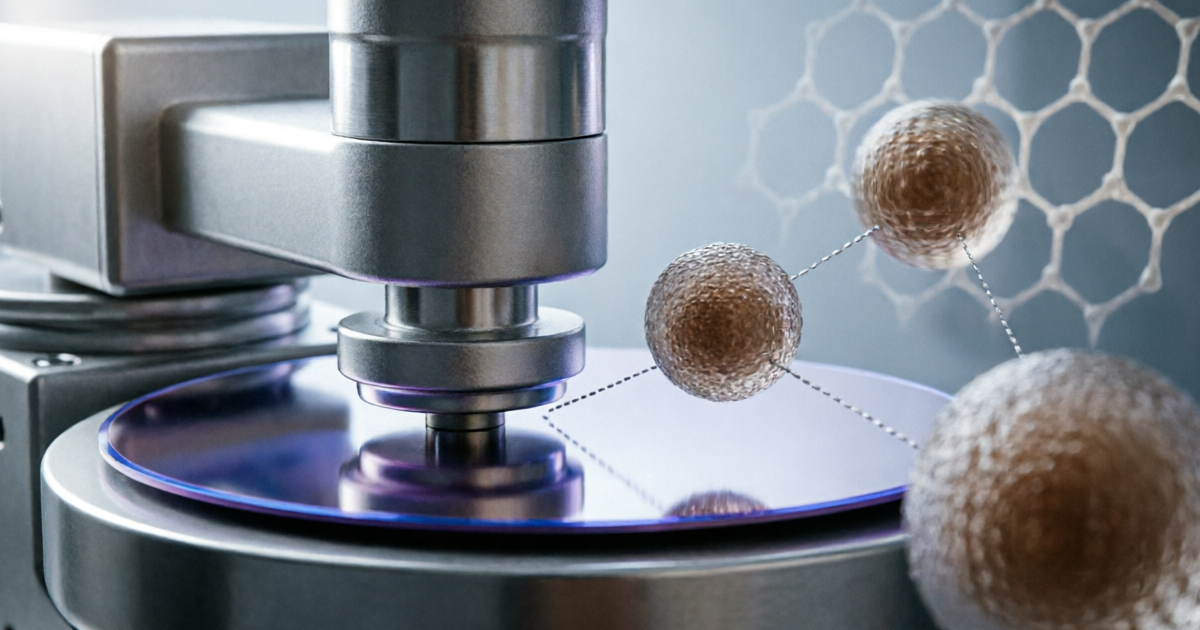
Colloidal silica is produced by wet-chemical synthesis: either the Stöber process (hydrolysis of silicon alkoxide precursors in alcohol/water/ammonia) or the ion-exchange seeded-growth process (controlled condensation of silicic acid from de-ionized sodium silicate). Both wet routes build up SiO₂ particles gradually in a liquid medium, allowing precise control of particle size and shape. The result is a stable aqueous dispersion of discrete, nearly spherical particles with narrow, controllable size distributions.
Fumed silica is produced by high-temperature gas-phase synthesis: silicon tetrachloride (SiCl₄) is combusted in a hydrogen/oxygen flame at temperatures above 1,000°C. The resulting SiO₂ vapor instantly nucleates into tiny primary particles (5–30 nm), which immediately collide, fuse, and sinter into branched three-dimensional aggregate structures before the gas stream cools. These aggregates—not the primary particles—are the fundamental abrasive unit in fumed silica slurry, and they cannot be broken apart into individual primary particles by any practical dispersing force.
2. Synthesis and Morphology: The Root Difference
The contrasting synthesis routes produce strikingly different particle architectures:
| Characteristic | Colloidal Silica | Fumed Silica |
|---|---|---|
| Primary particle shape | Discrete spheres | Fused aggregate chains |
| Abrasive unit | Individual sphere (20–150 nm) | Branched aggregate (100–400 nm) |
| Particle surface texture | Smooth, continuous | Irregular, with sharp edge geometries at fusion points |
| Aggregation state | Non-aggregated (discrete) | Irreversibly aggregated; cannot be de-aggregated |
| Dispersibility in water | Stable aqueous dispersion; no special dispersing required | Requires high-shear mixing; forms meta-stable dispersion |
| BET surface area | 20–150 m²/g | 100–380 m²/g (high, due to primary particle size) |
The most important morphological difference for CMP is the abrasive unit shape. Colloidal silica presents a smooth spherical surface to the substrate; fumed silica presents an irregular, angular aggregate with protrusions at the junction points of fused primary particles. These protrusions create stress-concentrating contact geometries that are the root cause of fumed silica’s higher scratch defectivity.
3. Particle Size Distribution: The Numbers That Matter
Particle size distribution (PSD) parameters—D50, D90, and large particle count (LPC)—determine MRR and defectivity. The two materials differ significantly in all three:
- D50: Colloidal silica D50 can be precisely tuned from 20 nm to 150+ nm during synthesis. Fumed silica aggregate D50 is less precisely controlled and typically falls in the 100–400 nm range depending on dispersing conditions—meaningfully larger than comparable colloidal silica grades.
- D90/D50 ratio: Colloidal silica produced by modern synthesis achieves D90/D50 ratios of 1.5–2.0. Fumed silica’s aggregate size distribution is intrinsically broader, with D90/D50 ratios of 2.5–5.0 or higher in typical dispersions.
- Large Particle Count (LPC): Both materials contain a large-particle tail above 0.5 µm that is the primary defect driver. For equivalent lot quality, colloidal silica typically exhibits lower LPC because its discrete particle synthesis does not generate the branched aggregate superstructures that contribute to fumed silica’s LPC tail.
The LPC measurement caveat: Many suppliers report PSD by laser diffraction, which underestimates both the aggregate size of fumed silica and the large-particle tail of either material. Single-particle optical sensing (SPOS) is the required measurement method for LPC at >0.5 µm. Always specify SPOS-measured LPC in your purchase specification.
4. Material Removal Rate: How Do They Compare?
On an oxide substrate (SiO₂) under equivalent process conditions—same pH, same pressure, same relative velocity, and same solids content—colloidal silica and fumed silica deliver broadly comparable material removal rates when compared on a D50-equivalent basis. Both abrasives function through the same tribochemical mechanism: OH⁻-catalyzed surface hydration followed by mechanical shear of the hydrated layer. The key MRR variables are:
- Effective abrasive size: Fumed silica’s larger aggregate D50 tends to produce higher MRR than a colloidal silica of similar nominal D50, simply because the larger aggregate contacts the surface with greater effective area and applies more shear force per particle encounter.
- pH sensitivity: Both materials show increasing MRR with alkaline pH. However, colloidal silica’s more uniform particle size distribution makes its MRR more predictable and controllable across a range of pH values. Fumed silica’s broader aggregate distribution can cause more variable MRR response across lots.
- Concentration dependence: Both materials show increasing MRR with solids content up to a saturation point (typically around 15–20 wt% effective abrasive concentration); beyond this, pad saturation limits further gains.
In practical terms, the MRR difference between colloidal and fumed silica at comparable working concentrations is typically within ±20% for equivalent D50 values. MRR is rarely the deciding factor in the colloidal vs. fumed silica selection—defectivity almost always is.
5. Defectivity: Where Colloidal Silica Wins Decisively
The most significant and consequential difference between colloidal and fumed silica in CMP is defectivity—specifically scratch count and average scratch depth on the polished surface. This is where the morphological difference between discrete spheres and angular aggregates translates directly into process yield impact.
Contact Mechanics Explanation
When a polishing abrasive particle contacts a substrate surface under the compressive force of the pad, the contact stress is determined by the particle’s effective radius at the contact point (smaller effective radius = higher peak pressure for the same applied load). For a smooth spherical colloidal silica particle of radius R, the contact distributes over a well-defined Hertzian contact area. For a fumed silica aggregate, the same applied force is channeled through the sharpest protrusion of the aggregate—modeled as an effective radius orders of magnitude smaller than the aggregate D50—producing a dramatically higher peak contact stress. This concentrated stress exceeds the plastic yield strength of the SiO₂ surface (even the harder bulk SiO₂ beneath the hydrated layer), producing plastic deformation—visible as a scratch.
Empirical Evidence
In comparative CMP experiments under controlled conditions (matched D50, pH, pressure, and velocity), colloidal silica consistently produces 3–10× fewer scratch defects per unit area than fumed silica, and the average scratch depth for colloidal silica scratches is 30–60% lower than for fumed silica scratches of equivalent count density. As device nodes have advanced and scratch/LPD specifications have tightened proportionally, this defectivity advantage has become the primary driver of colloidal silica adoption in final polish and increasingly in oxide CMP applications.
6. pH Stability and Process Window
Both colloidal and fumed silica dispersions are stabilized primarily by electrostatic repulsion at alkaline pH, and both are unstable near the isoelectric point of SiO₂ (pH ~2–3). However, their stability behaviors differ in important practical ways:
- Stability window breadth: Colloidal silica dispersions remain stable across a broader pH range, from approximately pH 7 to pH 12, with excellent stability above pH 9. Fumed silica dispersions in water tend to be more sensitive to ionic strength and pH fluctuations because the aggregate structure provides a larger surface area for ion adsorption that can neutralize the surface charge.
- Recovery from dilution errors: Colloidal silica dispersions are more tolerant of brief pH excursions (such as during dilution) because the discrete spherical particles have a more uniform, predictable response to charge neutralization. Fumed silica aggregates can form larger secondary agglomerates when electrostatic stability is compromised, producing a permanent increase in effective particle size and LPC that does not fully reverse when pH is restored.
- Process window for oxide/nitride selectivity: Both abrasive types require pH control within ±0.2–0.3 units for reproducible oxide/nitride selectivity in STI CMP. Colloidal silica’s more predictable aggregate-free particle behavior makes it somewhat easier to maintain consistent selectivity from lot to lot.
7. Decision Guide: Which Abrasive for Which Application
| Aplicación | Recommended Abrasive | Primary Reason |
|---|---|---|
| Prime Si wafer final polish | Colloidal silica only | Sub-ångström RMS and ultra-low LPD require spherical, narrow-PSD abrasive; fumed silica cannot meet spec |
| ILD oxide CMP (BEOL) | Colloidal silica preferred | Low micro-scratch budget for via-fill quality; fumed silica’s defectivity is marginal for advanced nodes |
| STI oxide CMP (FEOL, advanced) | Colloidal silica or ceria | High throughput + selectivity requirements; ceria preferred for highest MRR, colloidal silica for lower defect targets |
| Commodity oxide CMP (mature nodes) | Fumed silica acceptable | Looser defect spec allows lower-cost abrasive; verify scratch spec is not tightening with node migration |
| Cu barrier / Ta CMP | Sílice coloidal | Metal-dielectric interface requires low-defect abrasive; fumed silica too abrasive for recessed Cu protection |
| Sapphire / optical glass polish | Sílice coloidal | Surface roughness requirements (<0.3 nm RMS) are incompatible with fumed silica aggregate morphology |
The general principle: choose fumed silica when your process can tolerate its higher defect density and your budget is constrained; choose colloidal silica when surface quality, scratch count, or LPD count is a binding specification. In the semiconductor industry of 2026, colloidal silica is the abrasive of choice for the majority of CMP steps in advanced node and final polish applications, with fumed silica remaining viable primarily in lower-precision commodity oxide polishing at mature nodes.
For the complete picture of colloidal silica applications and selection criteria, see our pillar reference: Colloidal Silica Slurry: The Complete Guide to CMP Applications, Properties, and Selection.
8. Frequently Asked Questions
Not with current commercial fumed silica products. The irreversibly aggregated morphology of fumed silica creates contact stress concentrations that produce scratch defects at a fundamental level—this cannot be resolved by tighter filtering or additive optimization. Final silicon polish specifications (sub-0.1 nm RMS, LPD <50 at >0.09 µm) have never been achieved with fumed silica abrasive and represent a structurally incompatible combination of requirements. Colloidal silica is the only commercially available abrasive that currently meets these specifications in production.
Not necessarily. The MRR comparison depends heavily on the D50 chosen for each material. A colloidal silica with D50 = 100 nm will typically achieve higher MRR than a fumed silica with aggregate D50 = 100 nm at equivalent solid loadings. The common perception that colloidal silica has lower MRR stems from its dominance in final polish applications where fine particles (20–40 nm D50) are deliberately chosen to minimize MRR and maximize surface quality. When colloidal silica is formulated with 80–120 nm particles for oxide CMP, its MRR is fully competitive with fumed silica.
The wet-chemical synthesis routes for colloidal silica (Stöber process or seeded ion-exchange growth) are inherently more capital-intensive and require more processing steps than flame hydrolysis, which is a continuous, high-throughput gas-phase process. Additionally, the post-synthesis processing steps required for CMP-grade colloidal silica—multi-stage filtration, cleanroom-grade filling, LPC testing by SPOS—add cost. However, when total cost of ownership (CoO) is calculated at the fab level—accounting for the yield loss from scratch defects caused by fumed silica’s higher defectivity—colloidal silica’s higher per-liter cost is typically offset by better yield outcomes in any application with meaningful scratch specifications.
A direct drop-in substitution (same pH, same concentration, same process parameters) typically produces different MRR because the effective particle size and morphology have changed. A proper substitution involves re-qualifying the slurry concentration and pH to match the original MRR target, then verifying the defectivity and surface roughness outcomes. The re-qualification typically reveals that a lower solids loading of colloidal silica achieves the same MRR as the fumed silica formulation, with lower defectivity. Plan for 4–8 weeks of lab qualification and 2–4 additional weeks of tool-level CMP process qualification when substituting between these abrasive types.
Compare JEEZ Colloidal Silica to Your Current Slurry
JEEZ offers colloidal silica slurry in CS-20 (final polish), CS-60 (low-defect oxide CMP), and CS-100 (high-MRR oxide CMP) grades. Our technical team can help you design a qualification protocol to benchmark against your existing fumed or colloidal silica process.
Request a Comparison Sample →Published by Jizhi Electronic Technology Co., Ltd. (JEEZ) · August 2026. For process-specific advice, contact our application engineering team.