What Is Chemical Mechanical Planarization (CMP)?The Complete Semiconductor Guide
A definitive, engineer-ready reference covering every dimension of CMP — from fundamental physics to advanced-node challenges, consumables selection, defect control, and process optimization.
What Is Chemical Mechanical Planarization (CMP)?
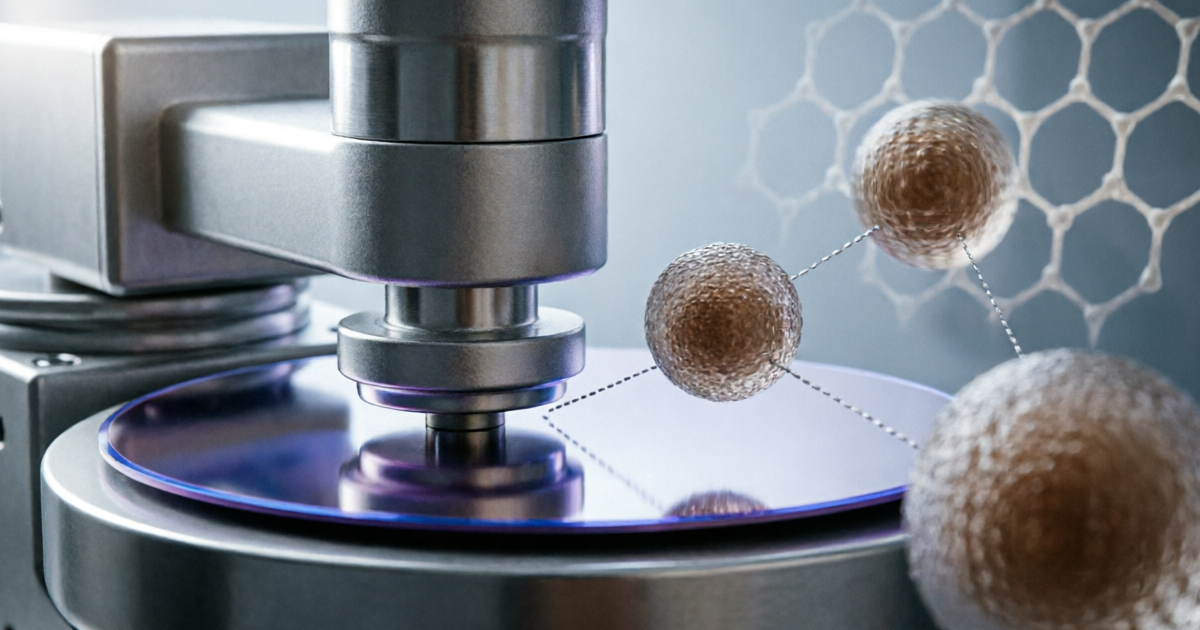
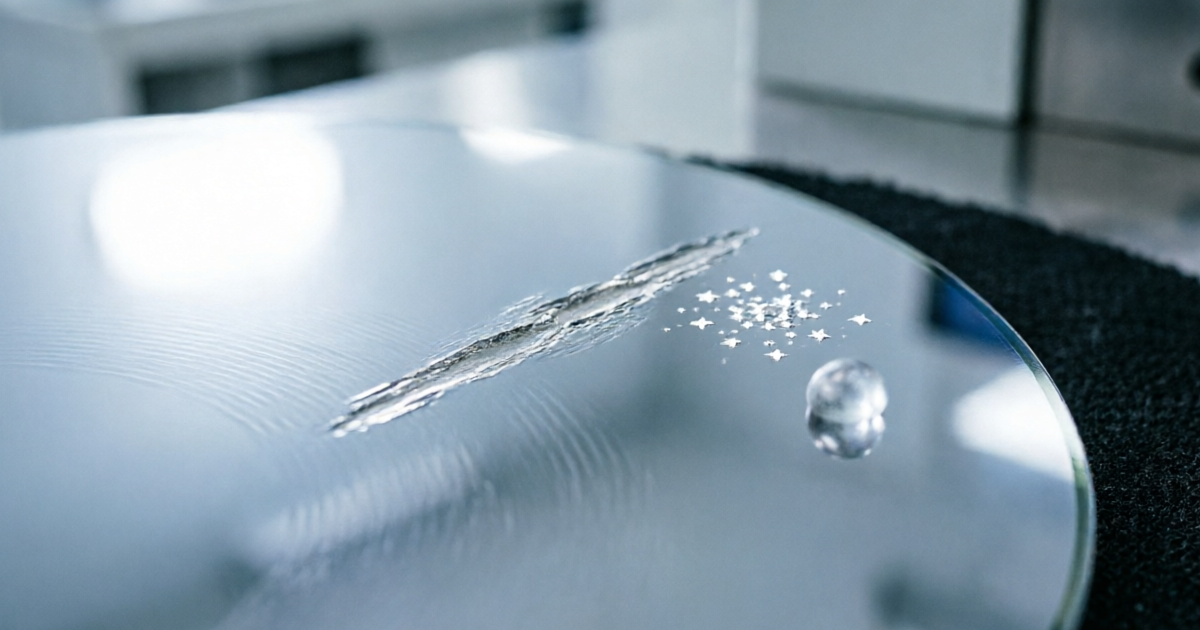
Chemical Mechanical Planarization (CMP) — also referred to as Chemical Mechanical Polishing — is a semiconductor wafer fabrication process that uses the synergistic action of chemical reactions and mechanical abrasion to remove excess surface material and achieve an exceptionally flat, planar topography across an entire 300 mm or 200 mm wafer. In simple terms, it is a precisely controlled hybrid of chemical etching and free-abrasive polishing, designed to meet the sub-nanometer surface uniformity requirements demanded by modern integrated circuit (IC) manufacturing.
Without CMP, successive layers of metal, dielectric, and gate materials deposited on a wafer would accumulate increasingly severe surface irregularities — bumps, troughs, and step heights — that would prevent the fine lithographic patterning required at 28 nm nodes and below. CMP solves this problem at every critical stage of the fab process, from front-end-of-line (FEOL) shallow trench isolation through back-end-of-line (BEOL) copper interconnect formation.
History of CMP in Semiconductor Manufacturing
The roots of CMP reach back to 1961, when Bob Walsh at Monsanto first developed the use of colloidal silica slurry to polish bare single-crystal silicon wafers — a technique borrowed from the optical glass industry. For the following two decades, the process was confined to raw wafer preparation, polishing saw-damaged silicon surfaces before device fabrication could begin.
The breakthrough came in the late 1980s, when IBM’s research teams recognized that the worsening topography of multi-level metal structures was making photolithographic patterning unreliable. Conventional BPSG reflow and resist etch-back techniques could only achieve local planarization; they could not deliver the global flatness needed by deep-UV steppers operating at sub-micron resolution. IBM’s engineers adapted the slurry-and-pad polishing concept to inter-level dielectric (ILD) planarization and demonstrated that CMP could reliably flatten entire 200 mm wafers to within tens of nanometers.
By the mid-1990s, the industry’s transition from aluminum to copper interconnects — driven by copper’s lower resistivity and higher electromigration resistance — made CMP not merely advantageous but essential. Copper cannot be etched by standard dry plasma processes; it must instead be deposited into patterned trenches (the Damascene process) and the excess copper removed exclusively by CMP. This copper interconnect revolution cemented CMP as a permanent, irreplaceable fixture in every leading-edge semiconductor fab worldwide.
Today, as of April 2026, a single cutting-edge logic chip at the 3 nm or 2 nm node may require over 25 individual CMP steps, encompassing STI oxide, gate dielectric, tungsten contact plug, copper wiring at up to 15 metal levels, and multiple low-k dielectric layers. CMP is no longer a back-end finishing operation — it is woven into the very architecture of the fabrication sequence.
How CMP Works: Step-by-Step Process
At its core, CMP involves pressing a wafer face-down against a rotating polishing pad that is continuously wetted with a chemical slurry. The combination of chemical softening and mechanical abrasion removes material preferentially from the high points of the wafer surface — a self-planarizing mechanism rooted in the Preston equation, which states that material removal rate (MRR) is proportional to the product of applied pressure and relative velocity.
The full CMP sequence comprises five distinct phases:
Wafer Loading & Carrier Head Engagement
The wafer is vacuum-loaded onto a carrier head (polishing head) and pressed face-down against the rotating polishing platen with a precisely controlled downforce — typically expressed in pounds per square inch (psi) or kilopascals (kPa). A retaining ring prevents lateral movement and applies additional edge pressure to compensate for the natural edge-fast or edge-slow polishing profile of the pad.
Slurry Dispense
A chemically engineered slurry — comprising abrasive nanoparticles (typically cerium oxide, colloidal silica, or alumina, sized 50–250 nm), oxidizing agents, pH buffers, chelating agents, and corrosion inhibitors — is dispensed onto the pad surface at a controlled flow rate. The chemical formulation is tailored to the specific material being polished (oxide, copper, tungsten, or low-k dielectric), ensuring optimal removal rate and selectivity.
Rotational Polishing
Both the carrier head and the polishing platen rotate — often at different speeds and sometimes in the same or opposite directions — creating a complex relative motion that exposes every point on the wafer surface to statistically uniform polishing conditions. The slurry’s chemical agents react with and soften the surface layer, while the abrasive particles mechanically remove the weakened material. High surface topography points experience greater local pressure, yielding a higher removal rate and progressively flattening the surface.
Endpoint Detection
Knowing precisely when to stop polishing is critical. Overpolishing removes too much material and causes dishing or erosion; underpolishing leaves residual topography. Modern CMP tools use in-situ optical interferometry or motor current (friction-based) monitoring to detect the endpoint in real time — for example, the change in optical reflectivity as the polishing transitions from copper to the barrier metal layer signals that copper removal is complete.
Post-CMP Cleaning
Immediately after polishing, the wafer surface is contaminated with residual slurry particles, organic byproducts, metallic ions, and polishing debris. A dedicated post-CMP cleaning module removes these contaminants using PVA brush scrubbing, megasonic cleaning, dilute chemistry (SC1, citric acid, or proprietary formulations), and DI water rinse — before the wafer proceeds to the next process step. For a deep dive, see our dedicated guide on Post-CMP Cleaning: Methods, Challenges, and Best Practices.
Key Components of a CMP System
Every CMP operation depends on the precise integration of five primary hardware and consumable elements. Optimizing one in isolation without considering the others leads to suboptimal results — successful CMP requires a system-level approach to pad, slurry, and conditioner selection.
🧪 CMP Slurry
The chemical engine of CMP. A colloidal suspension of abrasive nanoparticles in an aqueous chemical medium. Slurry formulation determines material removal rate, selectivity, and surface quality. Particle size distribution is a critical quality metric.
🟦 Polishing Pad
A polyurethane or composite pad mounted on the rotating platen. Pad hardness, groove pattern, and porosity govern slurry transport and contact mechanics. Hard IC1000-type pads favor planarization; soft Polytex-type pads favor surface finish.
💎 Pad Conditioner
A diamond-embedded disc that continuously or periodically re-textures the pad surface to prevent glazing. Maintains consistent pad surface roughness (~40–80 μm Ra) and ensures stable removal rates throughout the pad lifetime.
🔧 Carrier Head
Holds and rotates the wafer against the pad with independently controlled pressure zones across the wafer radius. Multi-zone pressure control corrects for center-to-edge non-uniformity and compensates for wafer bow.
📏 Retaining Ring
A plastic ring surrounding the wafer within the carrier head that prevents the wafer from sliding off the pad and equalizes edge pressure. Ring wear affects edge uniformity; regular replacement is essential for yield maintenance.
🌡️ Platen & Temperature Control
The rotating platen provides the mechanical platform. Active temperature control of the platen (typically 20–40°C) is critical because slurry reaction rates are temperature-dependent; thermal drift causes removal rate instability.
CMP Slurry: The Chemical Engine
The slurry is the most chemically complex and performance-sensitive consumable in any CMP process. Its formulation must accomplish three competing objectives simultaneously: rapidly remove the target material, stop reliably at the correct underlying layer (selectivity), and avoid introducing defects. JEEZ engineers its CMP slurry portfolio around these three axes, offering oxide, metal, and specialty slurries engineered for specific applications.
Slurry Composition
- Abrasive particles: Colloidal silica (SiO₂, 50–150 nm) for oxide and STI; cerium dioxide (CeO₂) for high-selectivity STI; alumina (Al₂O₃) for tungsten and barrier metals.
- Oxidizing agents: Hydrogen peroxide (H₂O₂) is the most common for copper CMP, converting metallic Cu to Cu²⁺ oxide that is more readily abraded.
- Complexing/chelating agents: Glycine, BTA (benzotriazole), or citric acid chelate metal ions, preventing re-deposition and controlling corrosion rate.
- pH buffers: Acidic (pH 2–5) for copper; neutral-to-alkaline (pH 9–12) for oxide and STI slurries.
- Surfactants & dispersants: Prevent agglomeration of abrasive particles, which is the leading cause of macro-scratch defects.
| Тип шлама | Primary Abrasive | Target Material | Типичный pH | Key Metric |
|---|---|---|---|---|
| Оксид (ILD) | Коллоидный SiO₂ | TEOS, PETEOS | 10-11 | Removal rate >200 nm/min |
| STI (High Sel.) | CeO₂ | SiO₂ over Si₃N₄ | 5-8 | SiO₂:Si₃N₄ selectivity >100:1 |
| Copper Bulk | Коллоидный SiO₂ | Cu interconnects | 3-5 | Cu RR >500 nm/min, low dishing |
| Barrier/Plug | Alumina | Ta, TaN, TiN | 7–9 | Cu:barrier selectivity ~5–20:1 |
| Вольфрам (W) | Alumina or SiO₂ | W contact plugs | 2-4 | High W MRR, low erosion |
| Low-k Dielectric | Colloidal SiO₂ (soft) | Porous low-k <2.5 | 10-12 | Ultra-low pressure, no delamination |
CMP Polishing Pads
The polishing pad is the mechanical counterpart to the slurry’s chemical action. Its surface texture, hardness, and groove architecture collectively determine how slurry is distributed across the wafer, how much contact area is generated, and how uniformly material is removed. Understanding pad behavior — and managing pad degradation over time — is one of the most important practical skills in CMP process engineering.
Pad Classification
- Hard polyurethane pads (e.g., IC1000 type): High modulus, excellent global planarization efficiency. Preferred for BEOL copper and ILD applications where step height reduction is paramount. More aggressive wear on low-k films.
- Soft polyurethane pads (e.g., Polytex type): Lower modulus, conforms to local topography, delivers excellent final surface finish (Ra <0.3 nm). Commonly used as the second-step pad in two-step copper CMP sequences.
- Fixed-abrasive pads: Abrasive particles are embedded directly into the pad matrix, eliminating the need for slurry abrasives. Used in select advanced-node applications requiring ultra-tight uniformity.
Кондиционирование поверхности
Over dozens of wafer runs, pad surface pores become clogged with polishing byproducts and the surface glazes over, dramatically reducing slurry uptake and removal rate. A diamond pad conditioner — a rotating disc embedded with industrial diamond grit — is used either in-situ (simultaneously with polishing) or ex-situ (between wafer runs) to cut fresh microchannels into the pad surface and restore its texture. Optimal conditioning is critical: too aggressive conditioning wears the pad prematurely; too gentle conditioning leads to rate decay and non-uniformity drift. For a complete technical discussion, refer to our detailed article on CMP Polishing Pad: Types, Conditioning, and Lifetime Management.
Applications of CMP in IC Manufacturing
Modern logic and memory chip fabrication employs CMP at virtually every major structural formation step. The following are the most critical and widely deployed CMP applications in a state-of-the-art semiconductor fab as of April 2026.
STI Planarization
Shallow Trench Isolation CMP uses high-selectivity ceria slurry to remove excess TEOS oxide deposited over silicon nitride stop pads, creating the isolation structures between active transistor regions. A key FEOL step.
Copper Interconnect (Damascene)
The most demanding and commercially critical CMP application. Removes electroplated copper overburden and barrier metal (Ta/TaN) in a two-step sequence, defining the sub-14 nm copper wiring that connects every transistor on the chip.
ILD / Oxide Planarization
Flattens TEOS or PETEOS inter-layer dielectric deposited between metal levels. Essential for maintaining photolithographic depth of focus across all metal layers above M1.
Tungsten (W) CMP
Removes excess CVD tungsten deposited to fill contact holes connecting the transistor source/drain to the first metal layer. Requires aggressive alumina-based slurry at low pH.
Gate & Channel CMP
Used in gate-last (replacement metal gate) processes to expose the dummy poly-silicon gate after ILD deposition, enabling insertion of high-k metal gate stacks. Critical for FinFET and GAA transistors.
3D Integration / TSV
Through-Silicon Via (TSV) reveal CMP thins the backside of bonded wafers to expose copper TSV tips for vertical chip stacking. A growing application driven by HBM and 3D-IC packaging demand.
For the most in-depth technical treatment of two specific applications, see our focused guides on Copper CMP (Cu-CMP): Process, Challenges, and Advanced Nodes и Shallow Trench Isolation (STI) CMP: Process and Optimization.
CMP Defects, Challenges & Prevention
CMP is one of the most defect-sensitive processes in the fab. A single polishing run on a 300 mm wafer processes thousands of die simultaneously; a systematic defect mode can instantly yield a large portion of them. Understanding the root causes and prevention strategies for the primary CMP defect types is essential for every process and yield engineer.
| Defect Type | Описание | Root Causes | Prevention Strategy |
|---|---|---|---|
| Micro-scratches | Visible surface scratches under inspection | Oversize slurry particles (1–10 µm agglomerates); pad debris; contaminated delivery lines | Point-of-use filtration; slurry shelf-life control; regular delivery line purge |
| Блюда | Concave erosion of metal lines below the surrounding dielectric | Excess polish time; slurry over-selectivity; soft pad over-compliance | Tight endpoint control; use of hard pad for bulk removal; optimized slurry selectivity |
| Erosion | Thinning of dielectric in regions of dense metal pattern | Overpolishing; high pattern density locally; non-uniform pressure distribution | Dummy fill insertion in layout; multi-zone carrier head pressure profiling |
| Delamination | Film-to-film or film-to-substrate separation | Excessive downforce; weak adhesion in ultra-low-k dielectrics; slurry pH mismatch | Low-pressure CMP protocol for low-k films; adhesion-promoting liner layers; slurry pH optimization |
| Corrosion / Pitting | Galvanic or chemical attack on metal features | Slurry pH too low; insufficient corrosion inhibitor (BTA) concentration; static etch during dwell | BTA loading optimization; immediate slurry rinse after endpoint; slurry pH monitoring |
| Non-Uniformity (WIWNU) | Radial or azimuthal removal rate variation across the wafer | Pad glazing; conditioner wear; wafer bow; carrier membrane pressure drift | Regular conditioning; carrier head membrane replacement schedule; SPC on MRR |
A comprehensive root-cause framework and corrective action tree for every major defect mode is covered in our specialist article: CMP Defects: Types, Root Causes, and Prevention Strategies.
Post-CMP Cleaning
No CMP process is complete without a rigorous cleaning step. After polishing, the wafer surface carries a complex mixture of contaminants that, if not fully removed, will cause severe yield loss in downstream lithography, CVD, and plating steps. In advanced node processing (≤10 nm), post-CMP cleaning has arguably become as technically challenging as the CMP polishing step itself.
What Must Be Removed
- Residual slurry abrasive particles: Even sub-100 nm silica or ceria particles remaining on the wafer surface will scatter EUV or DUV photons during lithography, creating pattern defects.
- Organic residues: Slurry surfactants, chelating agents, and polishing byproducts adsorb strongly to the wafer surface and must be oxidatively removed.
- Metallic contaminants: Cu²⁺, Fe³⁺, and other metal ions from slurry chemistry and polishing hardware can diffuse into gate dielectrics and cause transistor leakage failures.
- Physical debris: Pad fragments and retaining ring wear particles must be flushed from the wafer surface before inspection and transport.
Primary Cleaning Methods
- PVA brush scrubbing: Polyvinyl alcohol (PVA) brushes rotating in the opposite direction to the spinning wafer physically dislodge and remove particles. The most widely deployed post-CMP cleaning technique.
- Megasonic cleaning: High-frequency acoustic energy (0.7–2 MHz) transmitted through the cleaning chemistry generates streaming forces that dislodge particles without mechanical contact. Critical for copper post-CMP where corrosion risk must be minimized.
- Chemical cleaning: Dilute SC1 (NH₄OH + H₂O₂) for particle lift-off; citric acid or EDTA for metallic ion removal; proprietary formulations matched to specific slurry chemistry.
Full methodology, chemistry compatibility matrices, and process integration considerations are detailed in our guide: Post-CMP Cleaning: Methods, Challenges, and Best Practices.
CMP at Advanced Nodes (≤7 nm)
Every new process node generation narrows the tolerance bands for CMP performance while simultaneously introducing new materials that are mechanically fragile or chemically reactive. The challenges facing CMP engineers working on 7 nm, 5 nm, 3 nm, and 2 nm logic processes in April 2026 are qualitatively different from those at 28 nm and beyond.
Low-k and Ultra-Low-k Dielectric CMP
Advanced BEOL interconnect schemes use porous low-k materials with dielectric constants as low as 2.0–2.4. These materials have mechanical hardness roughly 10× lower than TEOS oxide, making them extremely vulnerable to CMP-induced delamination and cracking at conventional polishing pressures. Ultra-low downforce (<1 psi), soft pads, and specially formulated aqueous slurries without corrosive oxidizers are required.
Cobalt and Ruthenium Liner CMP
At 7 nm and below, cobalt (Co) and ruthenium (Ru) are replacing tungsten and TaN as liner and barrier materials due to their lower resistivity at thin-film dimensions. Both require new slurry chemistries developed specifically for their unique oxidation kinetics and different corrosion inhibitor requirements compared to copper-centric formulations.
GAA Nanosheet and 3D DRAM
Gate-All-Around (GAA) nanosheet transistors — the device architecture used at 3 nm and 2 nm by leading foundries — require CMP steps to precisely define nanosheet channel stack thickness. Similarly, the emerging 3D DRAM architectures require controlled CMP of complex oxide/nitride multilayer stacks. Selectivity requirements at these steps often exceed 500:1 — virtually impossible with conventional slurries.
For an in-depth technical discussion of advanced node challenges and JEEZ’s solutions, read our specialist article: CMP in Advanced Nodes: Challenges at 7 nm and Beyond.
CMP vs. Alternative Planarization Methods
CMP is not the only planarization technique available to process engineers, and understanding its strengths and limitations relative to alternatives helps contextualize why it has become the dominant method at advanced nodes. The following comparison covers the most commonly employed alternatives.
| Method | Global Planarization | Material Compatibility | Риск дефектов | Scalability to Advanced Nodes |
|---|---|---|---|---|
| CMP | ✔ Excellent (<5 nm range) | Broad (metals, oxides, low-k) | Medium (scratch, dishing) | ✔ Proven to 2 nm |
| Resist Etch-Back (REB) | ✘ Local only | Dielectrics only | Низкий | ✘ Inadequate beyond 350 nm |
| BPSG Reflow | ✘ Local, temperature-dependent | Borosilicate glass only | Низкий | ✘ Not compatible with Cu BEOL |
| Spin-On Glass (SOG) | Partial (gap-fill) | Dielectrics only | Низкий | Limited; used as gap-fill only |
| Electrochemical Planarization (ECP) | Moderate (electrolyte-dependent) | Copper only | Very low | Experimental; not in HVM use |
None of the alternatives delivers the combination of global planarization, broad material compatibility, and manufacturable repeatability that CMP provides. This is precisely why CMP has remained unchallenged as the dominant planarization method for more than three decades. For a detailed side-by-side analysis, see our article: CMP vs. Other Planarization Techniques: A Comparison.
CMP Metrology & Process Control
The ability to measure, monitor, and control CMP process parameters in real time is what separates a high-yield production process from an unpredictable one. Modern CMP metrology integrates three layers of measurement: in-situ endpoint detection within the CMP tool, ex-situ post-CMP wafer metrology on standalone measurement tools, and statistical process control (SPC) dashboards that track trends across thousands of wafer runs.
Key Metrology Techniques
- Optical interferometry (in-situ): Measures film thickness through the pad using broadband light; provides real-time MRR and endpoint signals without breaking process vacuum.
- Friction/motor current monitoring: Changes in pad-wafer friction as different material layers are exposed generate characteristic current signatures, enabling layer-change endpoint detection.
- X-ray fluorescence (XRF): Post-CMP measurement of residual metal film thickness (e.g., copper overburden) with angstrom-level precision.
- Atomic Force Microscopy (AFM): Characterizes post-CMP surface roughness (Ra, Rq, Rz) and measures dishing/erosion profiles on test structures. Reference technique for process qualification.
- Particle count & size analysis (QCM-D, SPOS): Characterizes slurry particle size distribution and monitors for agglomeration events in slurry delivery systems. For details, see our article on CMP Metrology and Process Control: Yield Optimization.
CMP Equipment Overview
The CMP tool — also called a CMP polisher or CMP system — integrates the polishing platen, carrier heads, slurry delivery, pad conditioning, endpoint detection, and post-CMP cleaning module into a single automated platform. Understanding the architecture of CMP equipment helps procurement teams and process engineers select the right configuration for their fab’s volume and technology requirements.
Tool Architecture
Modern 300 mm CMP platforms (e.g., from Applied Materials, Ebara, or KLA) typically feature 3–4 polishing heads operating in parallel on 2–3 platens of different pad/slurry configurations, enabling a two-step bulk-then-finish Cu CMP sequence in a single tool without wafer transfer. An integrated cleaning module (two-sided PVA brush + megasonic rinse + drying) processes wafers immediately after polishing before returning them to the FOUP.
Slurry Delivery System (SDS)
The slurry delivery system is as critical as the polisher itself. It must maintain slurry homogeneity (no settling), prevent agglomeration through continuous recirculation, filter out oversize particles at the point of use, and deliver slurry at a stable flow rate and temperature to within ±0.5°C. A poorly designed SDS can introduce the majority of a tool’s defect population independently of the polishing conditions. Our dedicated deep-dive on CMP Equipment and Tool Vendors: Selection Guide covers SDS design, vendor comparison, and total-cost-of-ownership analysis.
For semiconductor fab procurement teams evaluating JEEZ’s CMP consumables (slurry, pads, pad conditioners, and post-CMP cleaning chemistry), JEEZ offers a free process compatibility evaluation and can supply representative sample quantities for qualification testing. Contact our applications engineering team to get started.
📚 Deep-Dive Guides: Complete CMP Knowledge Library
This pillar page provides a comprehensive overview of Chemical Mechanical Planarization. Each topic covered here is explored in full technical depth in the following dedicated articles — all researched and authored by the JEEZ process engineering team.
Frequently Asked Questions About CMP
There is no technical difference — both terms describe the identical semiconductor wafer processing step. “Chemical Mechanical Polishing” (CMP) emphasizes the surface-smoothing mechanism, while “Chemical Mechanical Planarization” (also abbreviated CMP) highlights the outcome: achieving a globally flat, planar wafer surface. In semiconductor manufacturing, the terms are completely interchangeable. The acronym CMP most commonly refers to Chemical Mechanical Planarization in the context of IC fabrication.
CMP can planarize a wide range of materials used in IC fabrication, including: silicon dioxide (SiO₂ / TEOS) for ILD and STI applications; copper for BEOL interconnects; tungsten for contact plugs; aluminum; cobalt and ruthenium (liner metals at advanced nodes); silicon nitride stop layers; polysilicon; titanium and tantalum barrier metals; and various low-k and ultra-low-k dielectric films. Each material requires a specifically formulated slurry chemistry and optimized polishing conditions.
Dishing — the formation of a concave depression in wide copper features (typically >5 µm wide) after CMP — is caused by the mechanical compliance of the polishing pad conforming to the copper recess that forms as the metal polishes faster than the surrounding oxide. The primary contributing factors are: overpolishing past the endpoint, slurry that removes copper much faster than the surrounding barrier or oxide, and the use of soft pads that locally deform into the copper region. Prevention strategies include hard pad selection for the bulk step, tight endpoint control, reduced downforce, and optimized slurry selectivity.
CMP endpoint detection monitors real-time signals to determine when the target material has been fully removed. Two primary methods are used: (1) Optical interferometry — a laser or broadband light beam is directed through the polishing pad onto the wafer surface, and the reflected interference pattern changes as film thickness changes, allowing precise thickness-based endpoint determination; (2) Motor current monitoring — the friction between the wafer and pad changes when the polishing transitions from one material (e.g., copper) to another (e.g., tantalum barrier), causing a measurable change in the polishing motor’s drive current. Modern systems use both methods together for robust, reliable endpoint detection.
The number of CMP steps has grown dramatically with device scaling. A 250 nm logic process from the late 1990s required only 2–3 CMP steps. A 28 nm process node requires 10–15 CMP steps. By April 2026, leading-edge logic chips at the 3 nm and 2 nm nodes require 25 or more individual CMP steps, encompassing STI, multiple FEOL dielectric and gate steps, tungsten contacts, and up to 15+ metal-level copper CMP steps. High-bandwidth memory (HBM) stacks with TSV integration add further CMP steps for backside wafer thinning.
The Preston equation is a fundamental empirical model that describes material removal rate (MRR) in CMP: MRR = Kp × P × V, where Kp is the Preston coefficient (a material-dependent constant), P is the applied pressure at the wafer-pad interface (in psi or kPa), and V is the relative velocity between the wafer and polishing pad surface (in m/s). The equation explains why high-topography points are preferentially removed — they experience greater local contact pressure — and forms the basis for CMP process recipe design. In practice, the Preston equation is a simplification; actual CMP behavior also depends on slurry chemistry, pad structure, and temperature.
While CMP is most prominently associated with semiconductor wafer fabrication, the process and its underlying principles are also applied in several adjacent fields: optical component manufacturing (polishing lenses and mirrors to sub-nanometer surface roughness); MEMS fabrication (planarizing microelectromechanical system layers); hard disk drive substrate polishing (achieving sub-Angstrom surface roughness on aluminum substrates); and advanced packaging (wafer-level packaging and glass interposer planarization for heterogeneous integration). As chiplet-based 3D integration scales, CMP applications in packaging are growing rapidly.
Ready to Optimize Your CMP Process?
JEEZ — Jizhi Electronic Technology Co., Ltd. — supplies a complete portfolio of CMP consumables and equipment solutions engineered for advanced semiconductor manufacturing. Our applications engineers are ready to help you select the right slurry, pad, and conditioner combination for your specific process node and yield targets.
Talk to a CMP Specialist →