CMP Equipment and Tool Vendors: Selection Guide
A comprehensive reference for fab engineers and procurement teams covering CMP tool architecture, key subsystems, leading equipment vendors, slurry delivery system design, and total cost of ownership considerations for 200 mm and 300 mm applications.
CMP Tool Architecture Overview
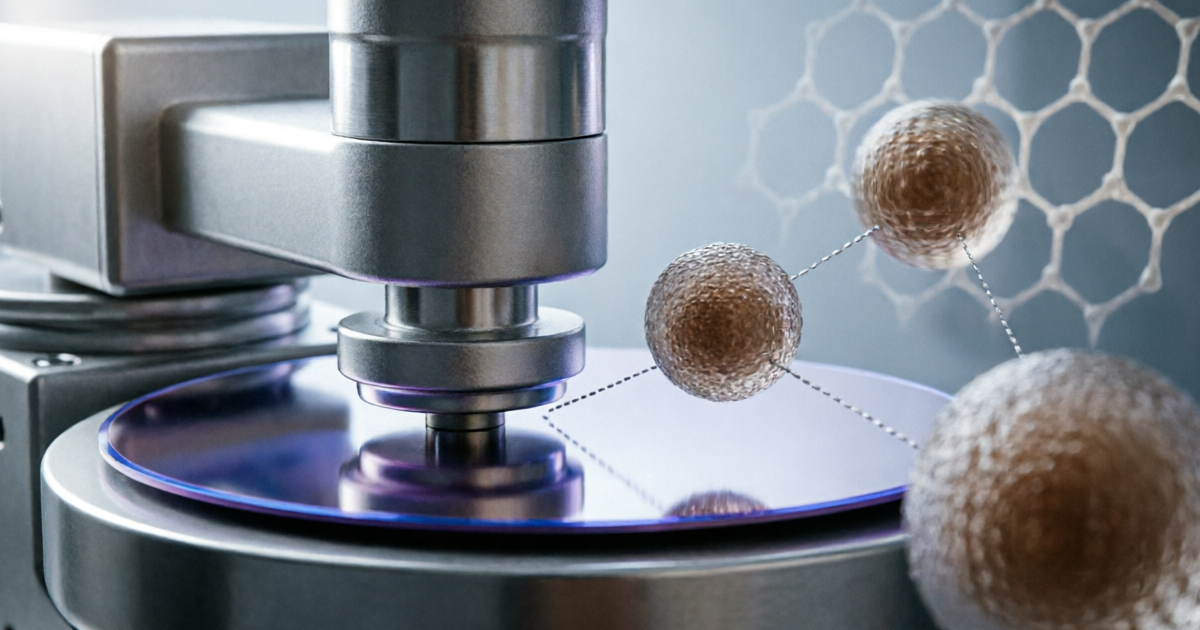
A modern CMP tool is a highly integrated mechatronic system that combines precision mechanical polishing, real-time process monitoring, automated wafer handling, and integrated post-polish cleaning — all within a single platform designed to meet the throughput, uniformity, and defect requirements of high-volume semiconductor manufacturing. Understanding the architecture and performance specifications of CMP tools is essential for fab engineers evaluating new tool purchases, process engineers developing recipes on installed equipment, and procurement specialists managing consumable supply chains.
The CMP tool can be divided into five functional subsystems: (1) the polishing module, containing the platens, carrier heads, and pad conditioning hardware; (2) the slurry delivery system; (3) the endpoint detection system; (4) the integrated cleaning module; and (5) the wafer handling and automation system. Each subsystem has independent performance specifications, and the overall tool performance is limited by the weakest subsystem in the chain.
Polishing Module: Platens and Carrier Heads
Polishing Platen
The polishing platen is the rotating table onto which the polishing pad is mounted. In production 300 mm tools, the platen diameter is typically 660–750 mm, significantly larger than the 300 mm wafer to ensure the wafer sweeps across the full pad area during rotation. The platen is driven by a precision AC servo motor and rotates at 20–120 RPM. Active temperature control of the platen (via embedded cooling water channels) maintains the polishing interface at a stable temperature (typically 20–40°C) — critical because slurry chemical reaction rates are temperature-dependent, and platen temperature drift is a leading cause of run-to-run removal rate variation.
The platen surface flatness specification is typically ±5 µm across the full platen diameter. Any local surface deviation beyond this creates a corresponding non-uniformity in the pad-wafer contact pressure profile and manifests as a systematic within-wafer removal rate non-uniformity pattern that is fixed in position relative to the platen.
Carrier Head (Polishing Head)
The carrier head holds the wafer face-down against the polishing pad and applies the programmed downforce profile through a flexible membrane system. Modern carrier heads feature 3–7 independently controlled pressure zones (inner center, inner ring, middle ring, outer ring, edge ring, and retaining ring) that allow the process engineer to shape the radial pressure profile across the wafer and compensate for incoming wafer thickness non-uniformity, pad bow, and systematic tool-related polishing profiles.
The carrier membrane — the flexible silicone or polyurethane diaphragm that transfers pneumatic pressure from the carrier head body to the wafer backside — is a wear item that must be replaced on a defined schedule. Membrane wear causes pressure zone non-uniformity and can introduce systematic WIWNU patterns that progressively worsen over the membrane lifetime. Membrane replacement intervals are typically 500–2000 wafer passes, depending on the polishing conditions and carrier head design.
Retaining Ring
The retaining ring is the outer plastic or composite annular ring that surrounds the wafer within the carrier head, preventing lateral ejection during polishing and applying a controllable pressure to the pad surface just outside the wafer edge. This edge pressure modifies the pad shape (downward deflection vs. upward bow) near the wafer perimeter and is the primary control knob for edge uniformity. The retaining ring material (PPS, PEEK, or fiber-reinforced composite) must be chemically compatible with the slurry chemistry used and resistant to particle generation from wear.
Integrated Cleaning Module
The integrated cleaning module is physically attached to the polishing module on the same tool platform, allowing wafers to be transferred directly from the polisher to the cleaner under a continuous DI water rinse that prevents slurry drying. This integration is critical for defect performance: any delay between polishing and cleaning allows slurry to dry on the wafer surface, dramatically increasing the adhesion force of particles and making them much harder to remove in the cleaning step.
A full-featured 300 mm integrated cleaner typically includes: a double-sided PVA brush cleaning station (simultaneous front and back cleaning with chemistry dispensed through the brush cores); a megasonic cleaning tank (for sub-50 nm particle removal); a DI water rinse station; and a drying station (Marangoni IPA drying or high-speed spin-dry with N₂ purge). High-throughput tools may have two or more cleaning stations operating in parallel to match the throughput of the polishing module.
Endpoint Detection Systems
Endpoint detection is the intelligence layer of the CMP tool — the system that determines when to stop polishing in real time, wafer after wafer, without relying on fixed time recipes. All modern production-grade CMP platforms offer integrated endpoint detection; the quality and reliability of the endpoint system directly determine how tightly the post-CMP thickness can be controlled and how much overpolish is required.
In-Situ Optical Endpoint
A broadband white light source or laser (typically 400–800 nm wavelength) is directed through a transparent window in the platen and a corresponding window in the polishing pad onto the wafer surface. The reflected spectrum is captured by a spectrometer and analyzed by FFT or spectral fitting algorithms to extract film thickness as a function of polishing time. The endpoint is triggered when the calculated thickness crosses the programmed target value. Optical endpoint achieves sub-1 nm thickness control at the measurement point; across-wafer control depends on the number of measurement sites accessible through the rotating platen window.
Motor Current / Friction Endpoint
The polishing motor’s drive current is monitored in real time. Changes in the wafer surface material (from metal to barrier to oxide) cause changes in the friction coefficient between wafer and pad, producing characteristic current signatures that identify material transitions. Motor current endpoint is particularly reliable for metal CMP applications (copper, tungsten) where the transition from metal to stop layer is abrupt, and it provides a redundant endpoint signal that improves overall system reliability when used alongside optical monitoring.
Advanced Process Control (APC) Integration
Leading-edge fabs integrate CMP endpoint data into a full APC loop: incoming wafer thickness measurements (from pre-CMP metrology) are used to predict the required polishing time for each wafer (feed-forward control), and post-CMP thickness measurements are fed back to adjust the next wafer’s recipe (feedback control). This closed-loop architecture minimizes lot-to-lot and wafer-to-wafer variation and is the standard architecture for all critical metal CMP steps at 28 nm and below.
Slurry Delivery System (SDS) Design
The Slurry Delivery System (SDS) is the infrastructure that stores, conditions, dilutes, monitors, and delivers CMP slurry from bulk supply containers to the polishing pad dispense nozzle. The SDS is often underestimated in importance relative to the polishing tool itself, but a poorly designed or maintained SDS is responsible for a disproportionate fraction of CMP defect yield loss — particularly scratch defects from agglomerated particles generated by shear, sedimentation, or temperature excursions in the delivery loop.
Key SDS Design Requirements
- Continuous recirculation: Slurry must be kept in constant motion through the distribution loop to prevent particle sedimentation. Flow velocity must exceed the Stokes settling velocity for the largest particle in the distribution, typically requiring loop velocities of 0.5–2 m/s.
- Temperature stability: The slurry temperature in the distribution loop must be maintained within ±1°C of the specified storage temperature. Temperature excursions accelerate oxidizer decomposition (H₂O₂ half-life is strongly temperature-dependent) and can cause irreversible agglomeration in some slurry formulations.
- Point-of-use filtration: Absolute-rated capsule filters (0.5–1 µm) at each tool’s dispense point capture agglomerates formed during distribution. Filter pressure drop is monitored; filters are replaced on schedule — never allowed to reach their pressure drop replacement trigger, as approaching that limit indicates captured agglomerates could be released as a defect burst.
- Inline monitoring: Particle count sensors (SPOS or light obscuration), pH electrodes, and conductivity sensors monitor slurry quality continuously. Any parameter excursion outside the specification window triggers an automatic process hold.
- Wetted material compatibility: All SDS components in contact with slurry must be manufactured from chemically compatible materials. Metallic components cause contamination and catalyze oxidizer decomposition. Standard wetted materials are polypropylene (PP), HDPE, PVDF, and PTFE.
Leading CMP Equipment Vendors
| Vendor | Key Platform | Wafer Size | Strengths | Market Position |
|---|---|---|---|---|
| Applied Materials (AMAT) | Mirra Mesa, Reflexion GT, Reflexion LK Prime | 200 mm, 300 mm | Market share leader; advanced APC integration; broadest application coverage; full ecosystem (pad, slurry, conditioner) | ~50% global CMP tool market share |
| Ebara Corporation | FREX series (FREX300, FREX200) | 200 mm, 300 mm | Strong in Japan/APAC; competitive Cu CMP and STI performance; robust cleaning module | ~25% global share |
| KLA Corporation | ViPR, Viper series | 200 mm, 300 mm | Exceptional metrology and endpoint technology; strong APC and yield management ecosystem; combined CMP + metrology solutions | Niche/premium segment |
| Hwatsing Technology | HTG-300 series | 200 mm, 300 mm | Growing China-based supplier; competitive in mature node and compound semiconductor applications | Emerging (China market focus) |
| SKC Solmics / SKC | CMP pad and consumables | All sizes | Leading CMP pad supplier; strong in IC1000 equivalents and specialty pads | Major pad supplier (not tool vendor) |
300 mm vs. 200 mm Platform Considerations
The semiconductor industry operates two primary wafer size standards for production: 300 mm (12-inch) for leading-edge logic, DRAM, and NAND flash; and 200 mm (8-inch) for mature analog, power, MEMS, and specialty process applications. CMP equipment exists for both wafer sizes, with significant differences in tool architecture, consumable specifications, and process economics.
300 mm CMP tools are larger, more complex, and significantly more expensive (typically –8M per tool including cleaning and SDS infrastructure) than 200 mm platforms (–3M). However, 300 mm wafers contain approximately 2.3× more die per wafer than 200 mm wafers, making the cost-per-die on 300 mm competitive for high-volume applications. 200 mm platforms remain economically optimal for specialty, low-volume, or heterogeneous process applications where the wafer cost difference does not justify the capital investment in 300 mm infrastructure.
From a CMP consumables perspective, 300 mm and 200 mm processes use different pad sizes (660–750 mm platen diameter for 300 mm vs. 380–500 mm for 200 mm), different slurry flow rates, and sometimes different slurry formulations optimized for the specific tool’s slurry distribution efficiency. JEEZ supplies consumables for both 300 mm and 200 mm platform requirements.
Total Cost of Ownership (TCO) Analysis
The purchase price of a CMP tool is only a fraction of its true operating cost over a 10–15 year tool lifetime. A rigorous total cost of ownership analysis must account for all categories of operating expense:
Capital Equipment Cost
Tool purchase price: –8M for 300 mm CMP platform. Amortized over 10–15 year lifetime with 5–10% residual value. Includes installation, qualification, and integration cost.
Consumables Cost
Slurry, pads, pad conditioners, PVA brushes, retaining rings, membranes. Typically 0–200 per wafer processed across all CMP steps, depending on slurry type and application. Largest variable cost component.
Preventive Maintenance
Scheduled PM including platen resurface, carrier head rebuild, cleaning module overhaul. Typically 2–4 PMs per year per tool at 0–150K each. Critical for maintaining tool matching and yield consistency.
Facility Cost
DI water consumption (100–500 L/min per tool during polishing and cleaning), chemical waste treatment (slurry effluent, cleaning chemistry), and clean room footprint (typically 4–8 m² per tool including SDS).
Yield Loss Cost
Often the largest hidden cost. CMP-induced defects at advanced nodes can cause yield losses of 1–5% per CMP step. With 20+ CMP steps and wafer values of ,000–5,000+, yield optimization ROI is typically 10–50× the consumable cost.
Downtime Cost
Unplanned maintenance, slurry delivery excursions, and pad changes contribute to tool availability loss. Every hour of 300 mm CMP tool downtime costs ,000–20,000 in lost wafer starts at HVM volumes.
Consumable Qualification for New CMP Tools
When a new CMP tool is installed in a fab — whether a replacement for an aging tool or a capacity expansion — all consumables (slurry, pad, conditioner) must be qualified on the new tool before production wafers can be processed. The qualification sequence involves blanket wafer characterization, patterned wafer evaluation, and lot-release testing against the existing process specification.
JEEZ provides a complete consumable qualification package for new tool installations, including: characterized slurry lots with full certificate of analysis (CoA) and PSD data; baseline recipe recommendations for Applied Materials and Ebara platforms; blanket wafer qualification data demonstrating MRR, WIWNU, and surface roughness performance; and patterned wafer qualification support for copper dishing, erosion, and defect density. For details on how to structure a CMP consumable qualification program, see our process guides on CMP Slurry Selection 和 CMP Polishing Pad Types and Conditioning.
常见问题
CMP tool throughput depends on the number of polishing heads, the polishing time per step, and the cleaning module capacity. A modern 4-head 300 mm platform (such as the Applied Materials Reflexion GT) can achieve 20–30 wafers per hour (wph) for a short oxide CMP step (60–90 seconds polish + 120 seconds clean). For longer Cu bulk CMP steps (150–300 seconds polish), throughput drops to 10–15 wph. Throughput is limited by the bottleneck subsystem — if the cleaning module can only process one wafer at a time, the cleaning time limits overall throughput regardless of how fast the polishing module works. High-throughput tools address this with dual-lane cleaning modules that process two wafers simultaneously.
Production CMP tools typically require minor preventive maintenance (PM) every 3 months and major PM every 6–12 months. Minor PM includes pad replacement and re-qualification, retaining ring inspection and replacement, membrane condition check, and cleaning chemistry system flushing. Major PM includes platen resurfacing or replacement (to restore flatness specification), carrier head rebuild (membrane replacement, bearing inspection, pressure zone leak check), cleaning module overhaul (brush replacement, megasonic transducer inspection), and full tool re-qualification against the process specification sheet. Total tool downtime for a major PM is typically 3–7 days, making PM scheduling and spare parts availability critical for maintaining fab production schedules.
Installing a New CMP Tool? Let JEEZ Help You Qualify It.
JEEZ provides complete consumable qualification packages — slurry, pads, conditioners — with tool-specific baseline recipes and CoA documentation for Applied Materials, Ebara, and KLA platforms.
Request a Qualification Package →