
Stay informed about the latest developments, important announcements and corporate news of Jizhi Electronics. We are committed to sharing the company’s growth journey and key milestones with our customers.

Table of Contents 1. Introduction to Copper CMP 2. Role of Copper CMP Slurry in BEOL Integration 3. Chemical–Mechanical Removal Mechanism 4. Copper CMP Slurry Composition Architecture 5. Two-Step Copper CMP Slurry Systems 6. Key Engineering Parameters & Data Ranges 7. Process Window & Control Maps 8. Defect Mechanisms & Root Cause Analysis 9. High-Volume Manufacturing (HVM) Challenges 10. Slurry Selection & Optimization Guidelines 11. Future Trends in Copper CMP Slurry 1. Introduction to Copper CMP Copper has become the dominant interconnect material in advanced semiconductor devices due to its low resistivity and superior electromigration resistance compared to aluminum. ...
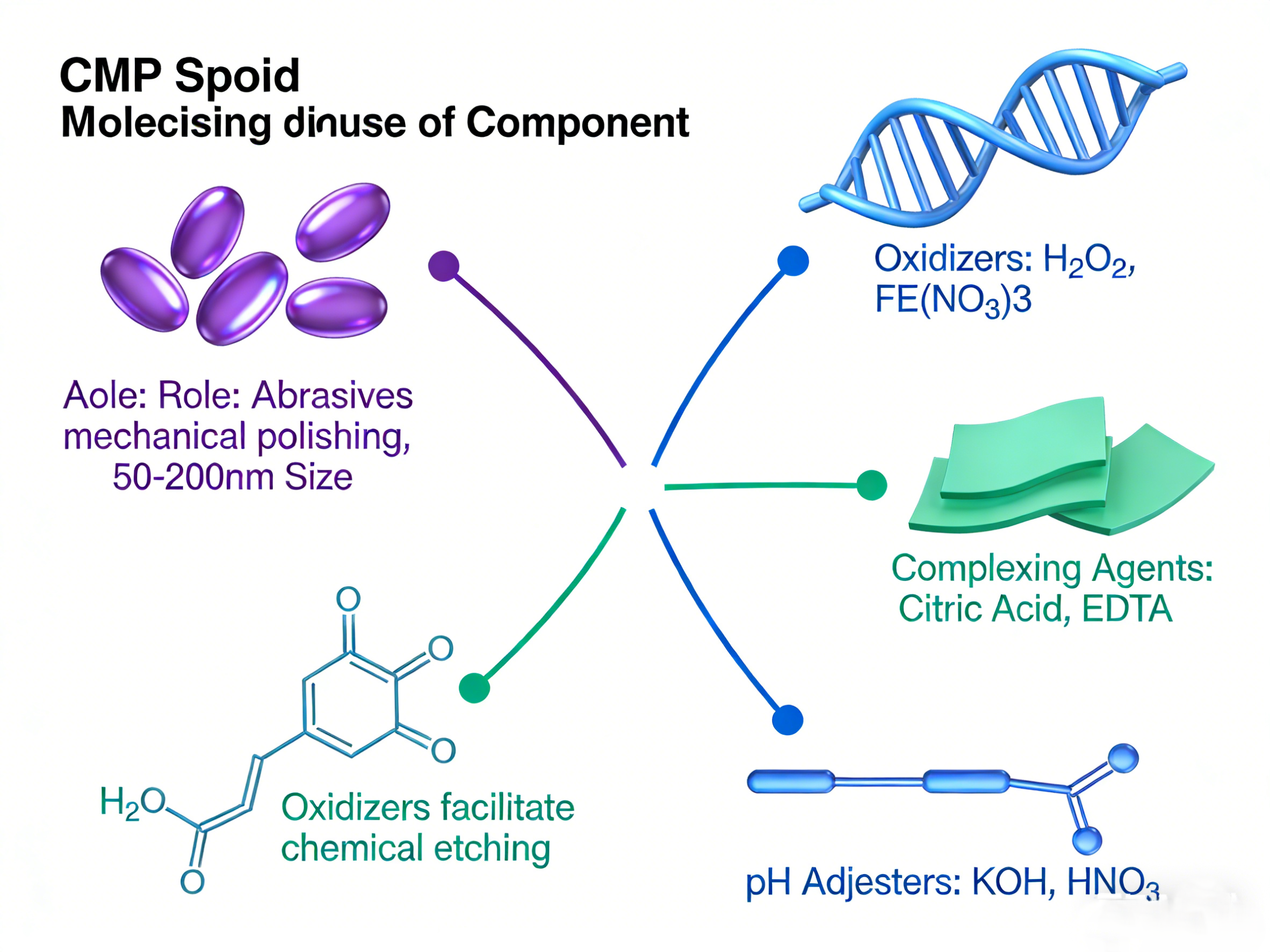
Table of Contents 1. Introduction 2. High-Level Component Overview 3. Abrasive Particles 4. Oxidizers and Reactive Species 5. Complexing & Chelating Agents 6. Corrosion Inhibitors & Passivation Additives 7. pH Buffers and Ionic Control 8. Surfactants & Dispersion Agents 9. Stabilizers & Shelf-Life Additives 10. Trace Impurities & Contamination Risks 11. Component Interaction & Coupled Effects 12. Defect Mechanisms Caused by Component Imbalance 13. Engineering Summary 1. Introduction In chemical mechanical planarization (CMP), slurry is not a simple polishing liquid. It is a carefully engineered multiphase system where mechanical abrasion, chemical reactions, and interfacial transport must remain in precise balance. ...

Table of Contents Introduction Fundamental Architecture of CMP Slurry Abrasive Particles in CMP Slurry Chemical Additives and Oxidizers Complexing Agents and Corrosion Inhibitors pH Control and Chemical Stability Slurry Stability, Dispersion, and Shelf Life Engineering Parameter Tables Experimental Data and Performance Ranges CMP Slurry Process Window Analysis Composition-Related Failure Modes CMP Slurry Composition Within the CMP Ecosystem Introduction CMP slurry composition defines the fundamental behavior of chemical mechanical planarization processes in semiconductor manufacturing. While CMP is often described as a hybrid of chemistry and mechanics, it is the slurry formulation that ultimately governs how these two mechanisms interact at ...
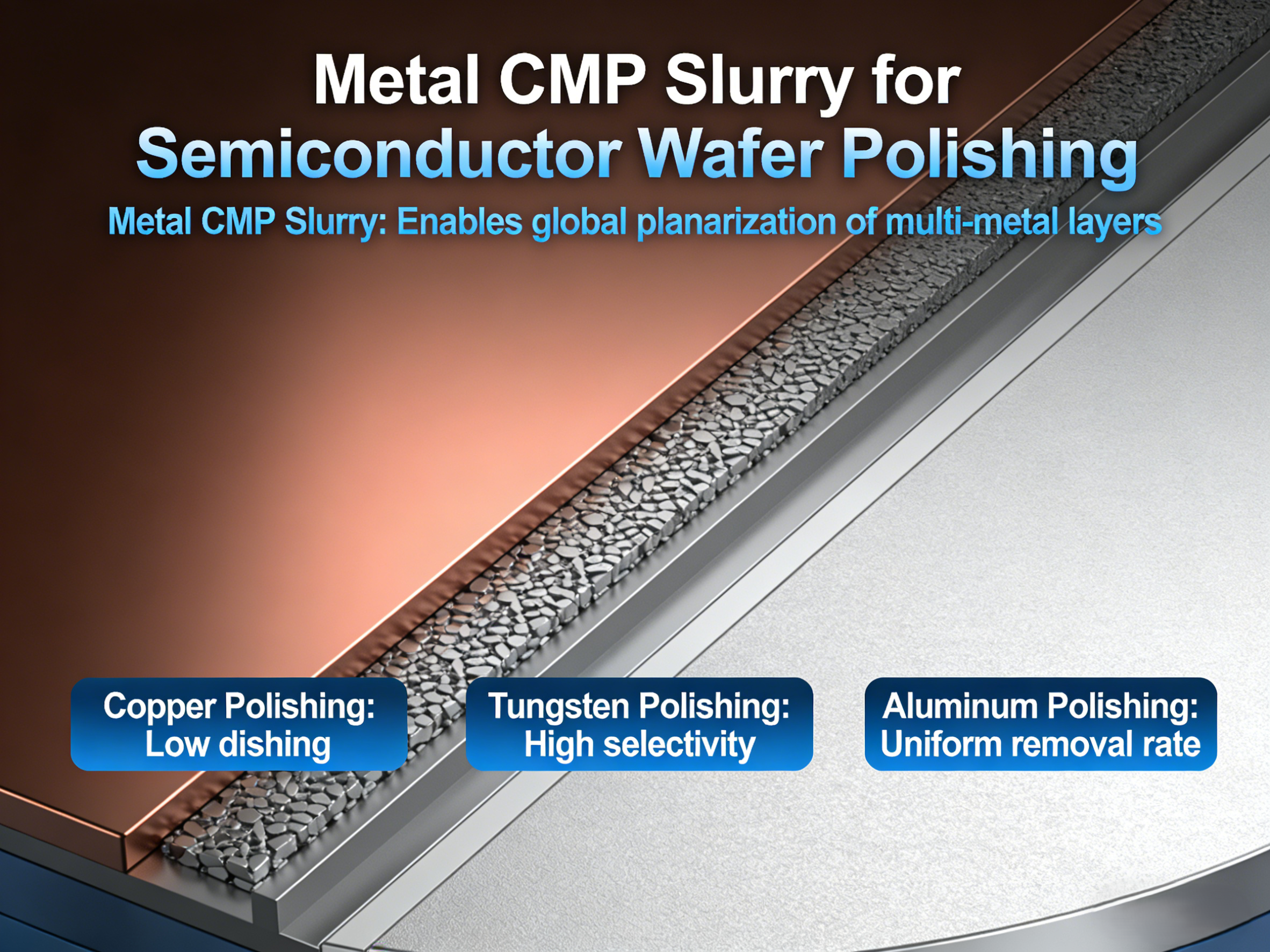
Table of Contents 1. Introduction to Metal CMP 2. Why Metal CMP Is Fundamentally Different 3. Classification of Metal CMP Slurry Types 4. Removal Mechanisms Across Different Metals 5. Metal CMP Slurry Composition Architecture 6. Metal-Specific CMP Slurry Considerations 7. Engineering Parameters & Experimental Data 8. Process Window & Integration Control 9. Metal CMP Defects & Root Cause Analysis 10. High-Volume Manufacturing Challenges 11. Slurry Selection Strategy for Metal CMP 12. Future Trends in Metal CMP Slurry 1. Introduction to Metal CMP Metal Chemical Mechanical Planarization (CMP) is one of the most integration-critical processes in advanced semiconductor manufacturing. Unlike ...
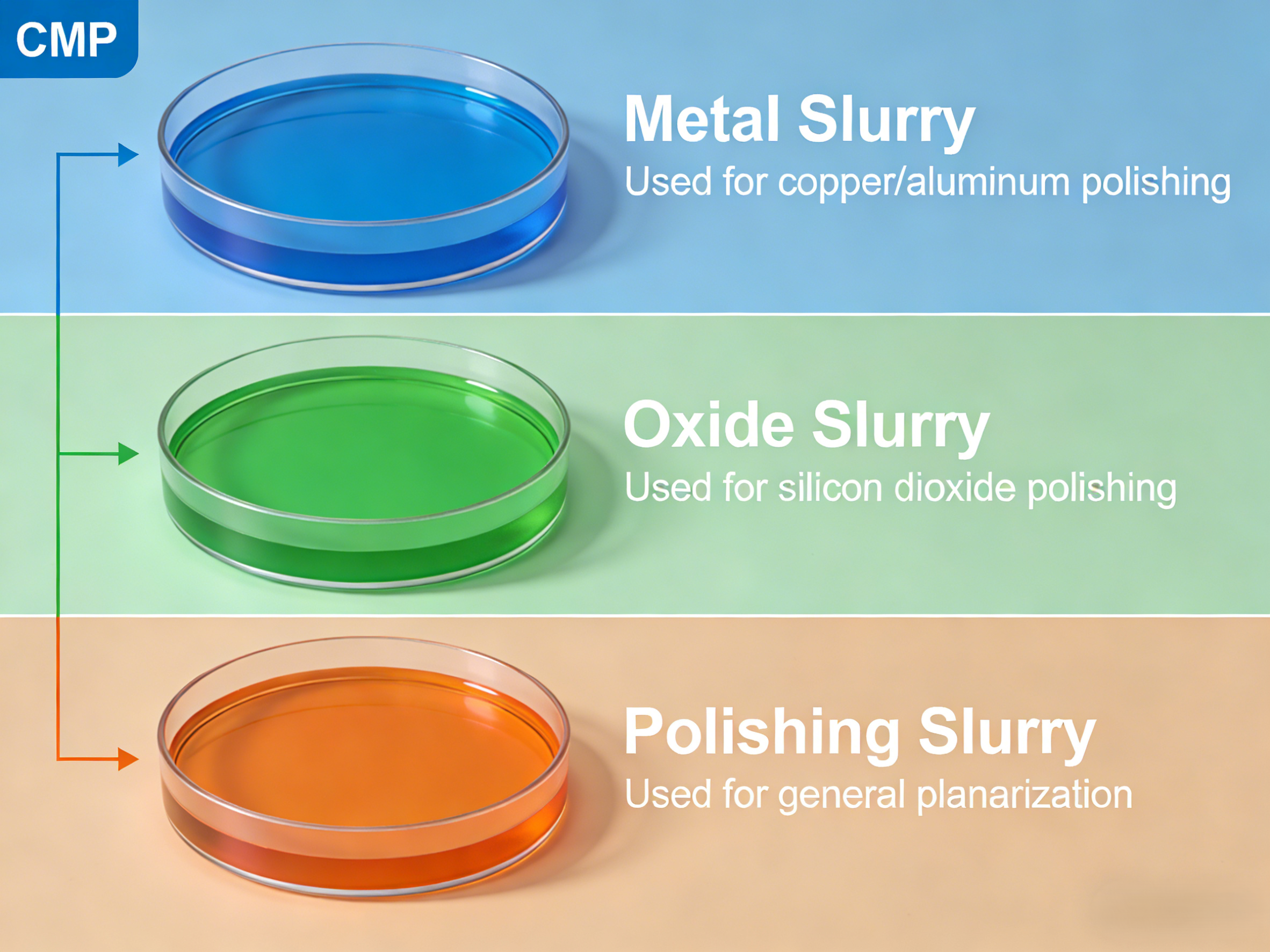
Table of Contents Introduction: Why CMP Slurry Types Matter CMP Slurry Classification Logic Oxide CMP Slurry Copper CMP Slurry Tungsten CMP Slurry Barrier & Hard Mask CMP Slurry Low-k & Advanced Dielectric Slurry Node-Driven Slurry Types Slurry Type vs Process Window Slurry Selection Decision Matrix Type-Specific Failure Modes Introduction: Why CMP Slurry Types Matter CMP slurry types are often oversimplified in commercial literature, frequently reduced to labels such as “oxide slurry” or “copper slurry.” In real semiconductor manufacturing environments, however, slurry type selection directly defines removal mechanisms, defect modes, integration risk, and ultimately yield. As technology nodes shrink and ...
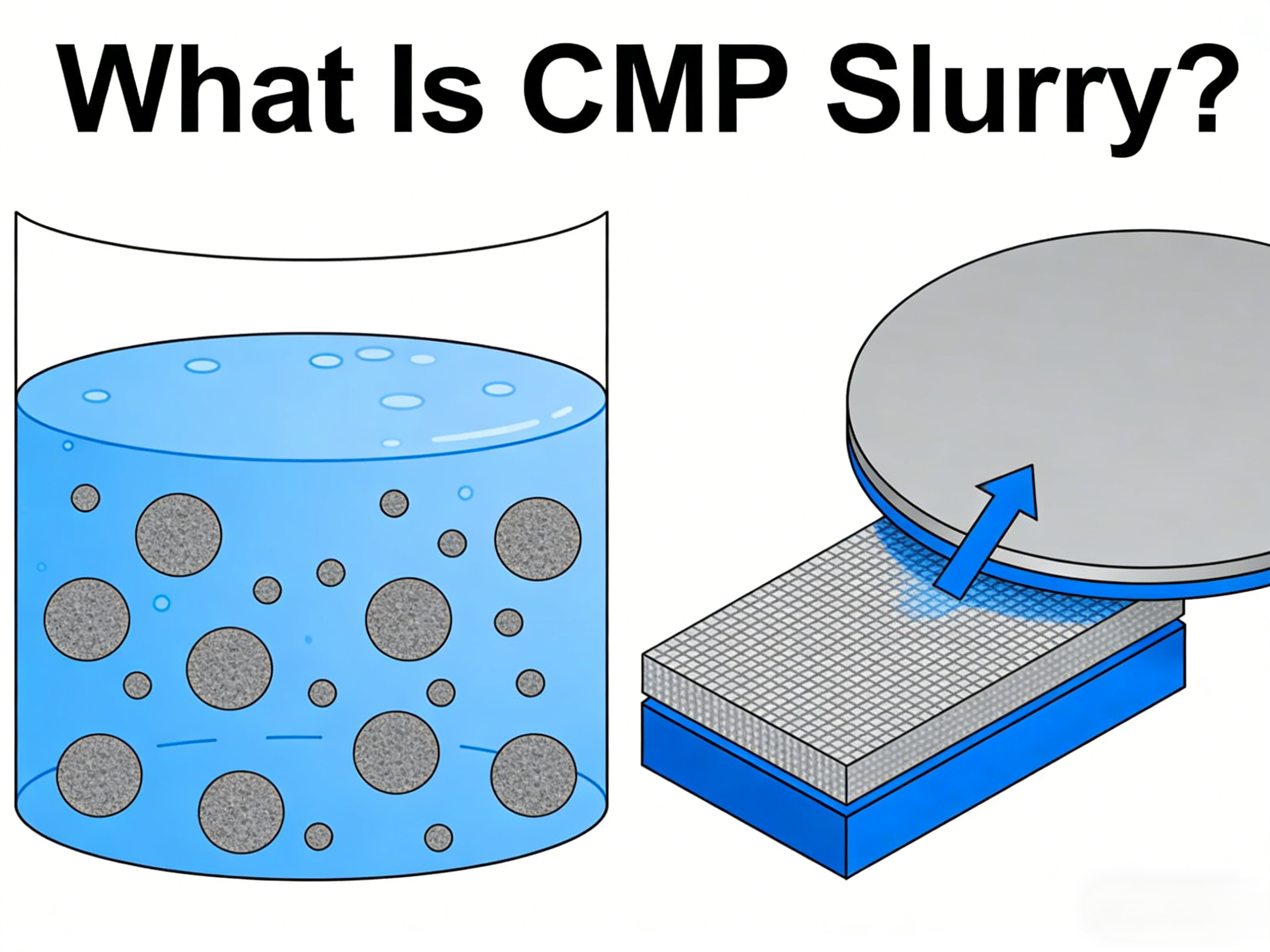
Table of Contents Definition of CMP Slurry CMP Slurry in Chemical Mechanical Planarization How CMP Slurry Works: Chemical and Mechanical Interaction Functions of CMP Slurry in Wafer Polishing Typical Applications of CMP Slurry CMP Slurry vs Conventional Polishing Compounds Key CMP Slurry Process Parameters Common Misunderstandings About CMP Slurry CMP Slurry Within the Complete CMP Ecosystem Definition of CMP Slurry CMP slurry is a chemically active, particle-based suspension specifically formulated for use in Chemical Mechanical Planarization (CMP) processes during semiconductor wafer manufacturing. Unlike generic abrasive slurries, CMP slurry is engineered to achieve highly controlled material removal through the combined ...
Table of Contents What Is CMP Slurry? Role of CMP Slurry in Semiconductor Manufacturing Types of CMP Slurry CMP Slurry Composition and Key Ingredients Metal CMP Slurry Applications CMP Slurry Filtration and Process Control How to Choose CMP Slurry for Wafer Polishing CMP Slurry Supplier and Custom Formulations What Is CMP Slurry? Chemical Mechanical Planarization (CMP) slurry is a highly engineered consumable used in semiconductor wafer polishing processes to achieve global and local planarization of thin films. Unlike conventional abrasive slurries used in mechanical polishing, CMP slurry is a chemically active suspension designed to interact with wafer materials at the ...
Indium Phosphide (InP), as a core material of the third-generation semiconductor, holds an irreplaceable position in high-end fields such as optical communications, millimeter-wave radar, and quantum communications due to its excellent electron mobility, wide bandgap, and superior optoelectronic properties. The surface quality of InP substrates directly determines the precision and reliability of subsequent epitaxial growth and device fabrication, with polishing and lapping processes being the critical steps in controlling this core metric. Drawing on years of practical experience in semiconductor material processing, Gizhi Electronics provides a systematic analysis of the key polishing and lapping processes for InP substrates, along with ...
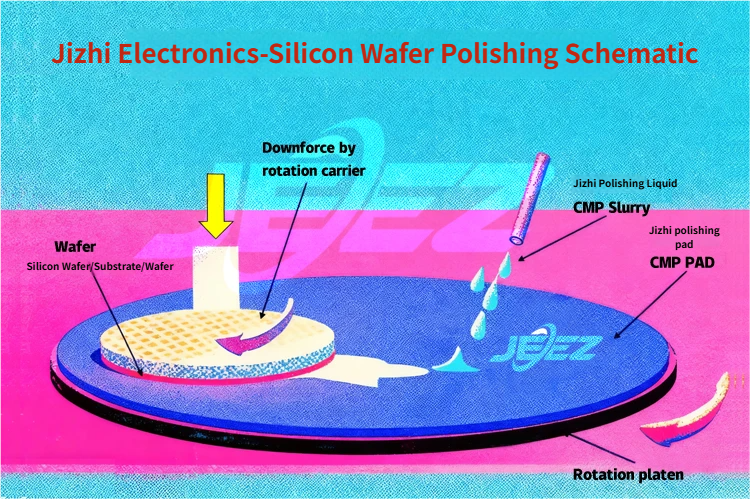
In the precision manufacturing chain of the semiconductor industry, the creation of every high-performance chip relies on hundreds of process steps, from silicon purification to chip packaging. Among these, silicon wafer polishing—a critical process connecting wafer cutting and grinding with subsequent lithography and thin-film deposition—can be called the “art of surface finishing” in semiconductor manufacturing. It shapes the wafer surface with nanometer-level precision, directly determining the chip’s performance, reliability, and yield. As a company deeply rooted in the electronics field, Gizhi Electronics fully understands the core value of this process. This article will delve into the technical essence of silicon ...
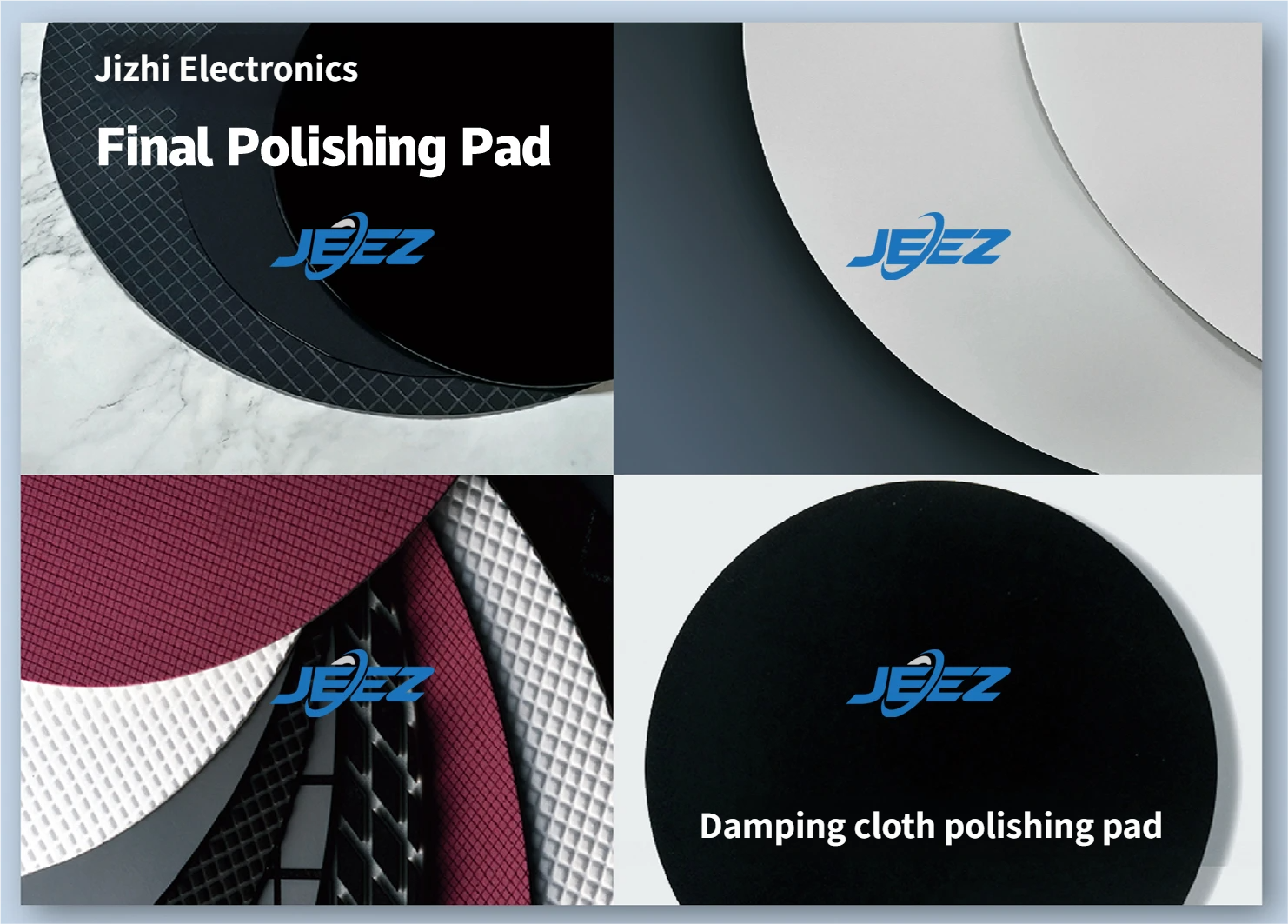
As the third-generation semiconductor industry accelerates its iteration today, silicon carbide (SiC), as a core material, is reshaping the technological landscape of high-end manufacturing fields such as new energy vehicle power devices and high-frequency communication devices with its excellent high-temperature resistance and high breakdown field strength. Chemical Mechanical Polishing (CMP), a critical process in SiC processing, relies heavily on the performance of its core consumable—the polishing pad—which directly determines the precision and reliability of the finished devices. For a long time, Fujibo’s G804W polishing pad from Japan has been one of the mainstream choices in the global SiC CMP field, ...
Unlocking CMP Process: Principles and Advantages In the field of optical component processing, Chemical Mechanical Polishing (CMP) is a core technology for achieving high-precision surface planarization. Through the synergistic effects of chemical corrosion and mechanical grinding, it accomplishes the precision machining of optical glass. The essence of the CMP process lies in the synergy between chemical and mechanical actions. Chemical reagents in the polishing slurry first react with the glass surface to form an easily removable softened layer. This chemical pretreatment lays the foundation for subsequent mechanical grinding, ensuring that the softened layer is easy to remove without damaging the ...


