
Restez informé des derniers développements, des annonces importantes et de l'actualité de l'entreprise Jizhi Electronics. Nous nous engageons à partager avec nos clients le parcours de croissance de l'entreprise et les étapes clés.
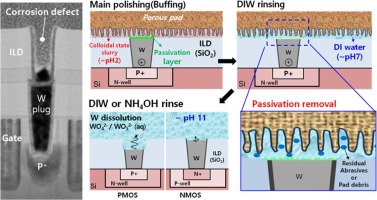
Defect Engineering 📅 Updated July 2026 🕐 20 min read By JEEZ Engineering Team 🔗 Part of the JEEZ Tungsten CMP Slurry Content Series ← Complete Guide: Tungsten CMP Slurry ...
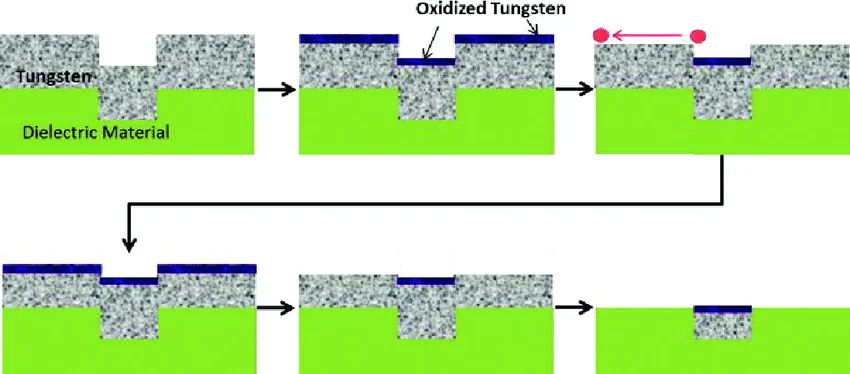
CMP Chemistry 📅 Updated July 2026 🕐 18 min read By JEEZ Engineering Team 🔗 Part of the JEEZ Tungsten CMP Slurry Content Series ← Complete Guide: Tungsten CMP Slurry ...
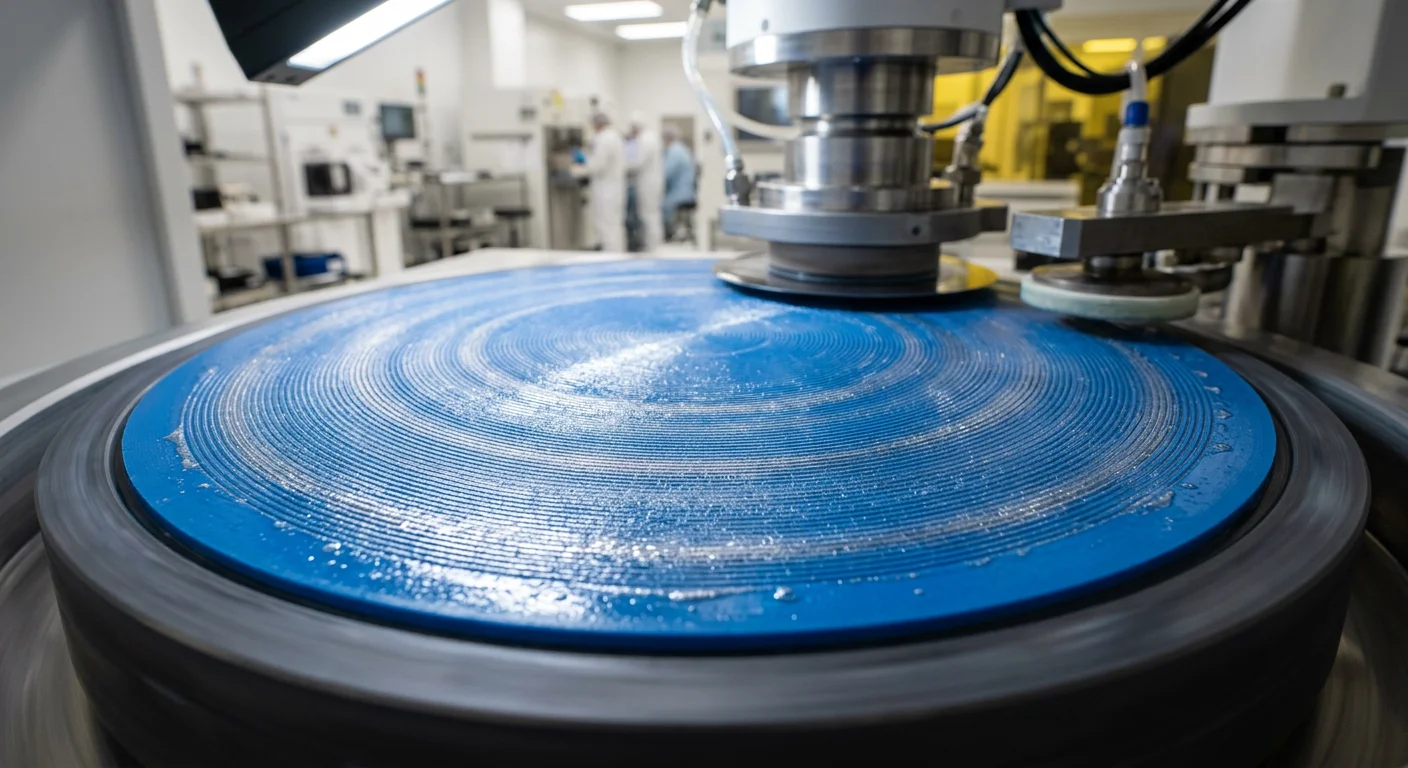
CMP Consumables 📅 Updated July 2026 🕐 25 min read By JEEZ Engineering Team In modern semiconductor fabrication, tungsten CMP slurry is the liquid formulation that makes it possible to ...
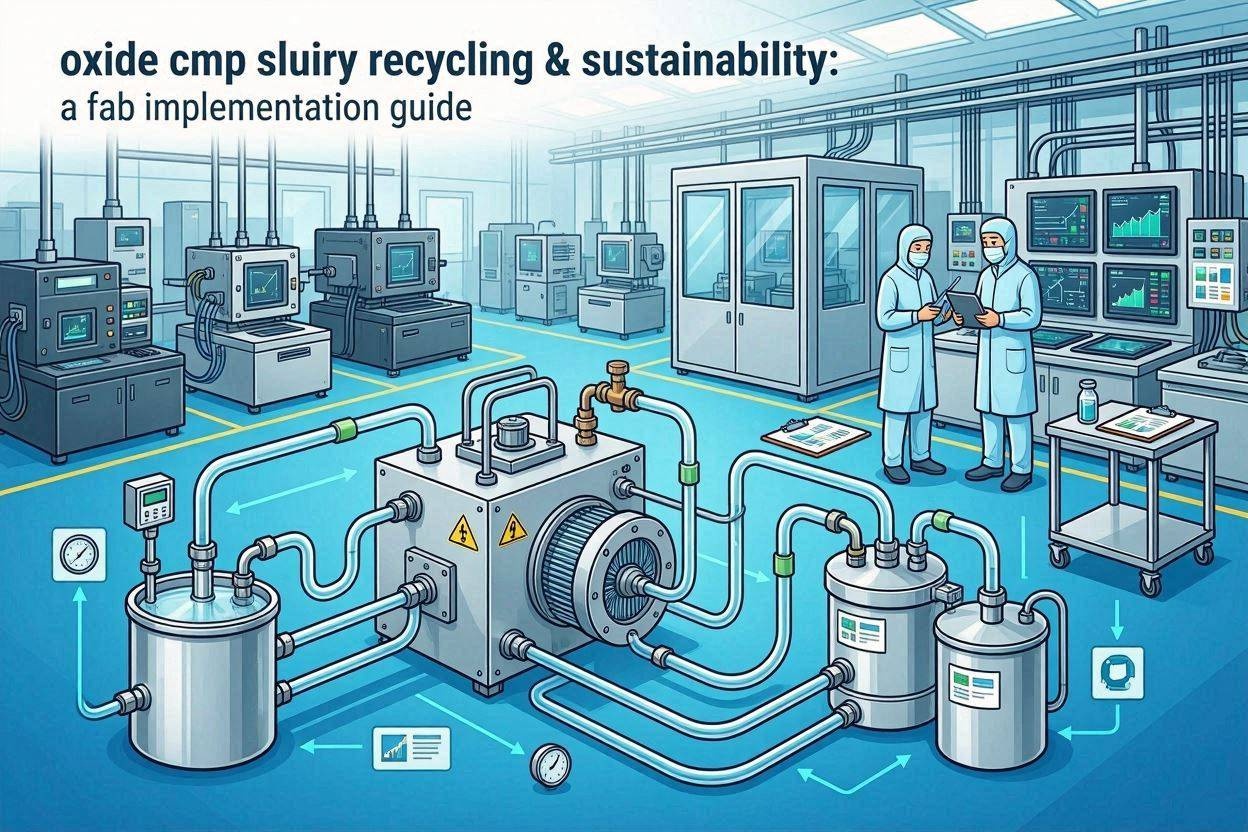
📅 July 2026·⏱ 15 min read·✍️ JEEZ Technical Team Oxide CMP slurry represents one of the largest chemical waste streams in semiconductor manufacturing by volume. At a production 300 mm ...
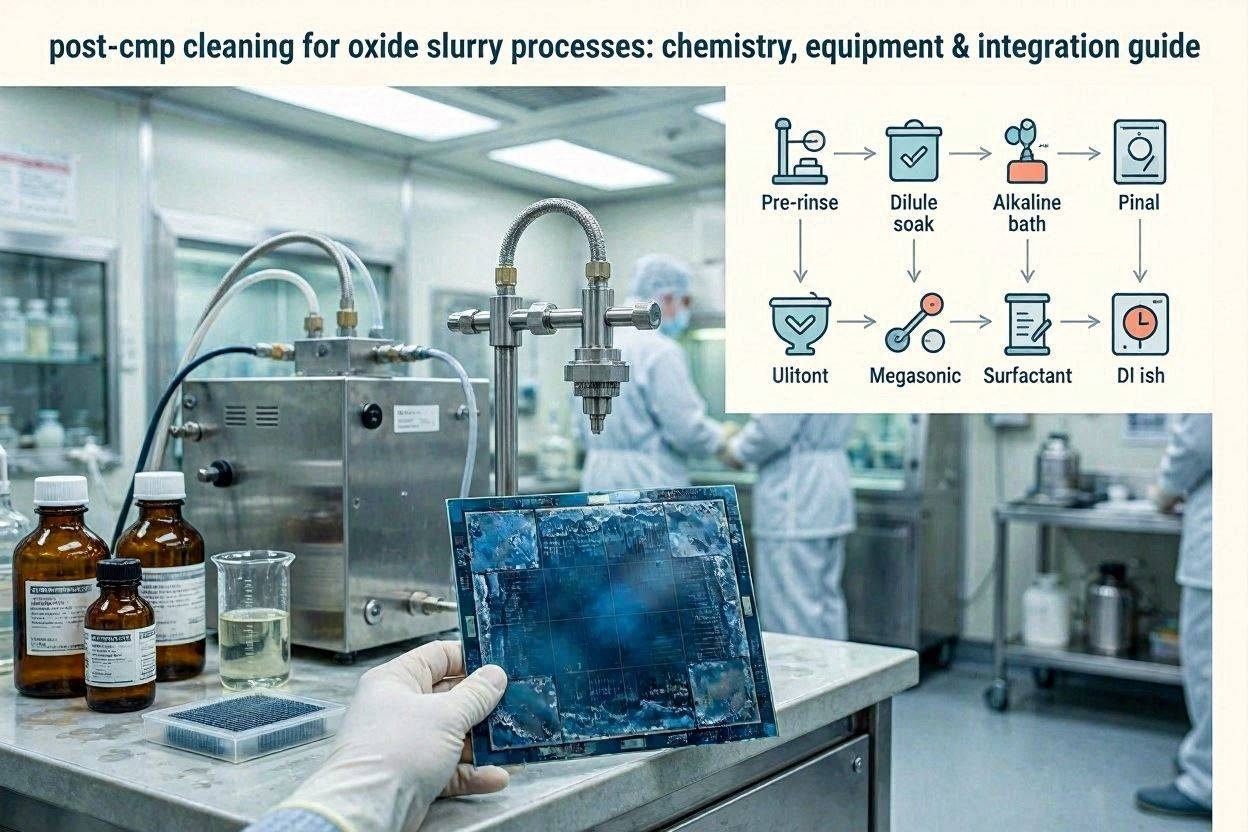
📅 July 2026·⏱ 17 min read·✍️ JEEZ Technical Team Post-CMP cleaning is an integral, yield-critical step in every oxide CMP process flow. The objective is complete removal of residual slurry ...
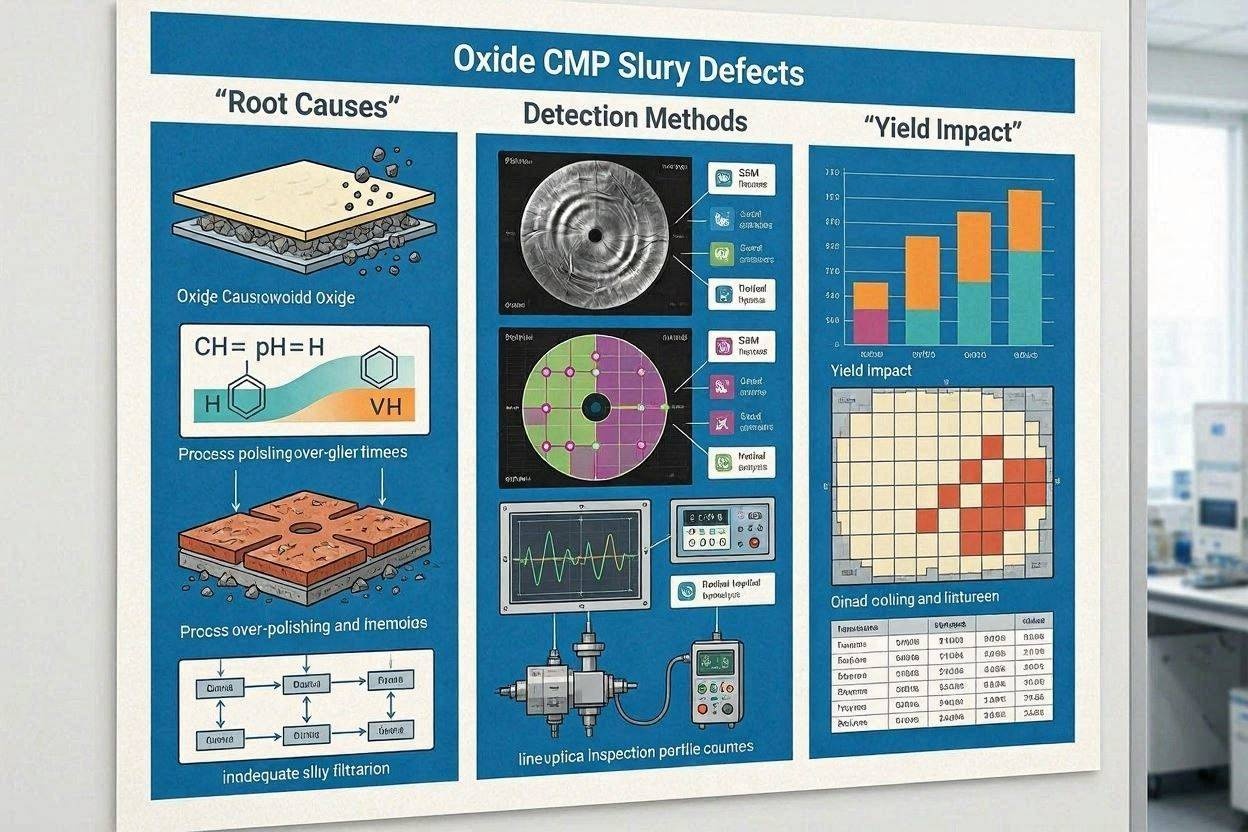
📅 July 2026·⏱ 18 min read·✍️ JEEZ Technical Team Defects introduced during oxide CMP are among the most yield-consequential defects in the semiconductor manufacturing flow. Unlike contamination defects that can ...

📅 July 2026·⏱ 16 min read·✍️ JEEZ Technical Team The global oxide CMP slurry market is among the fastest-growing segments of the semiconductor materials industry, driven by relentless expansion in ...
📅 July 2026·⏱ 17 min read·✍️ JEEZ Technical Team The demands placed on oxide CMP slurry intensify with every new process generation. At FinFET nodes, 3D NAND, gate-all-around transistors, and ...
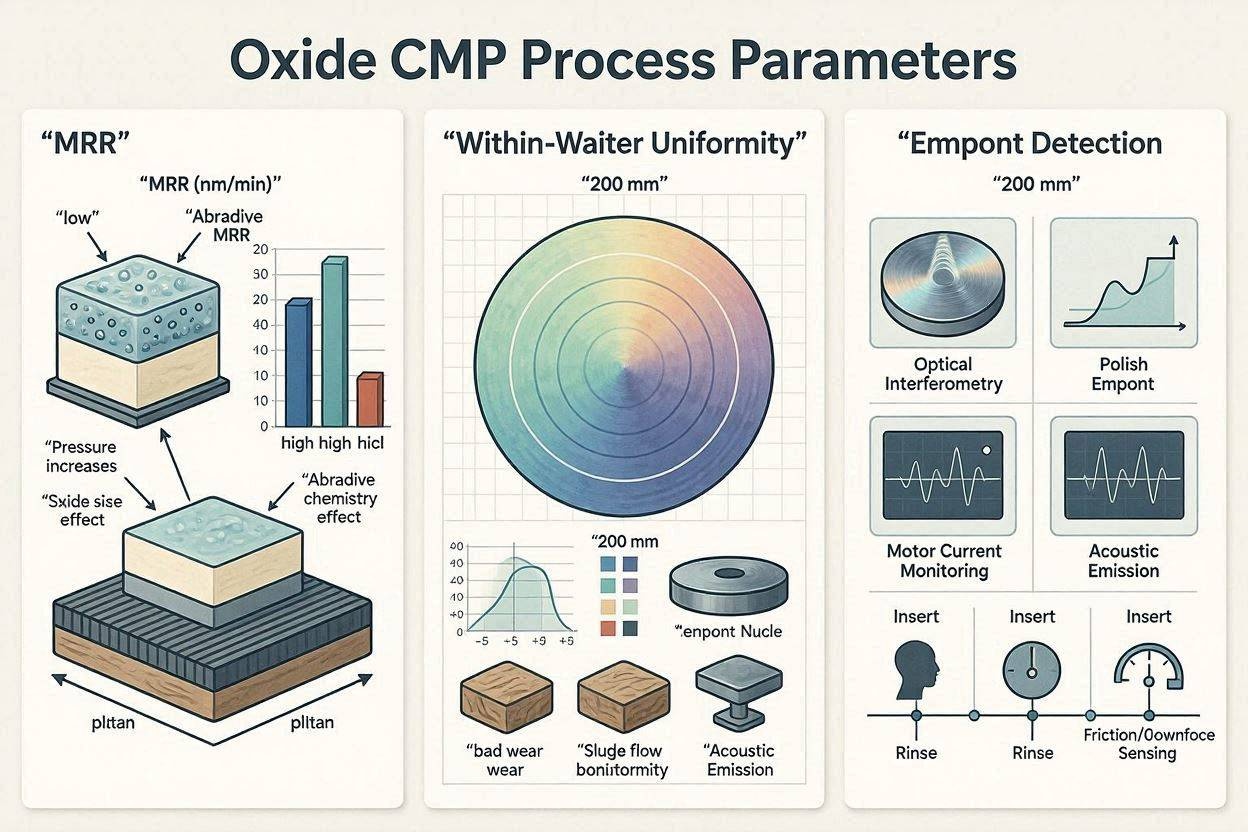
📅 July 2026·⏱ 20 min read·✍️ JEEZ Technical Team Oxide CMP process performance — material removal rate, within-wafer uniformity, surface finish, and defect density — is determined by the combined ...
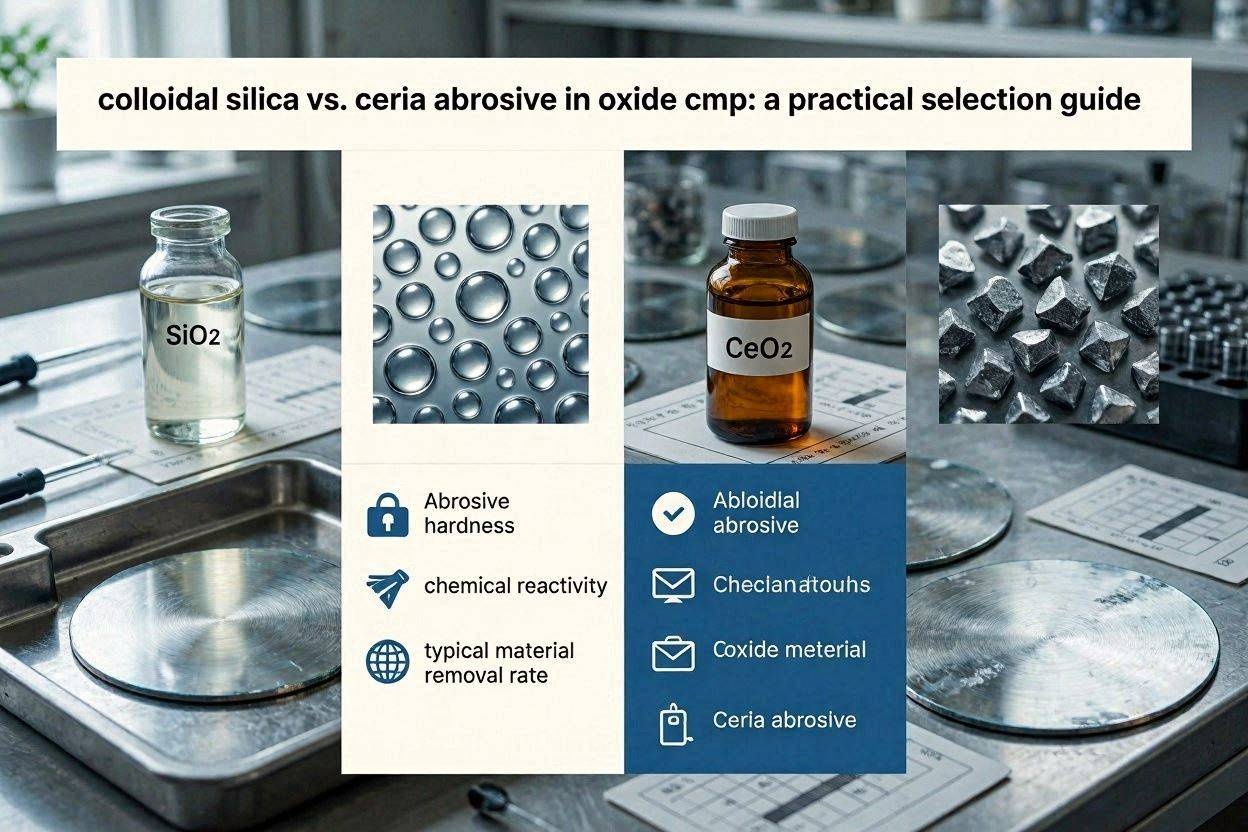
📅 July 2026·⏱ 16 min read·✍️ JEEZ Technical Team Choosing between colloidal silica and ceria abrasive is the single most important formulation decision in oxide CMP. The two systems differ ...
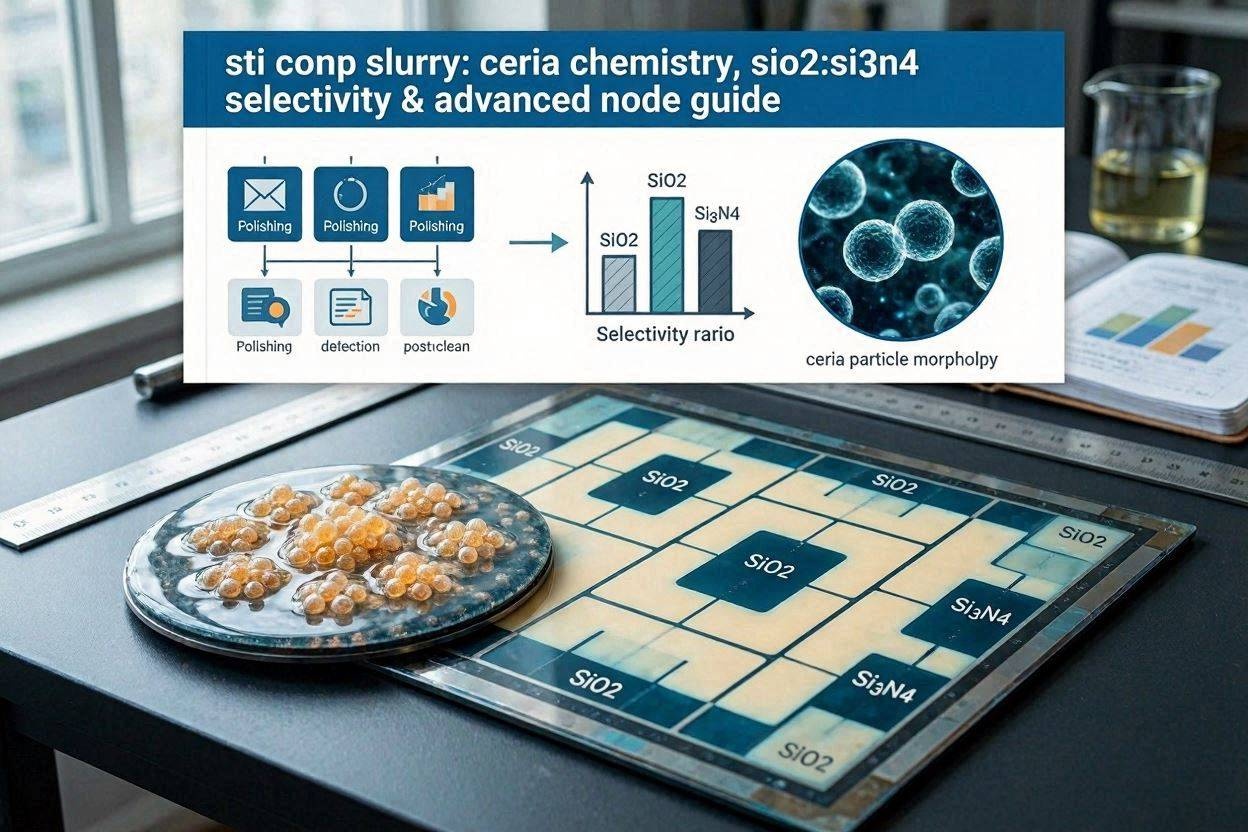
📅 July 2026·⏱ 19 min read·✍️ JEEZ Technical Team Shallow trench isolation (STI) CMP is among the most technically demanding polishing steps in front-end-of-line semiconductor processing. The requirement to achieve ...
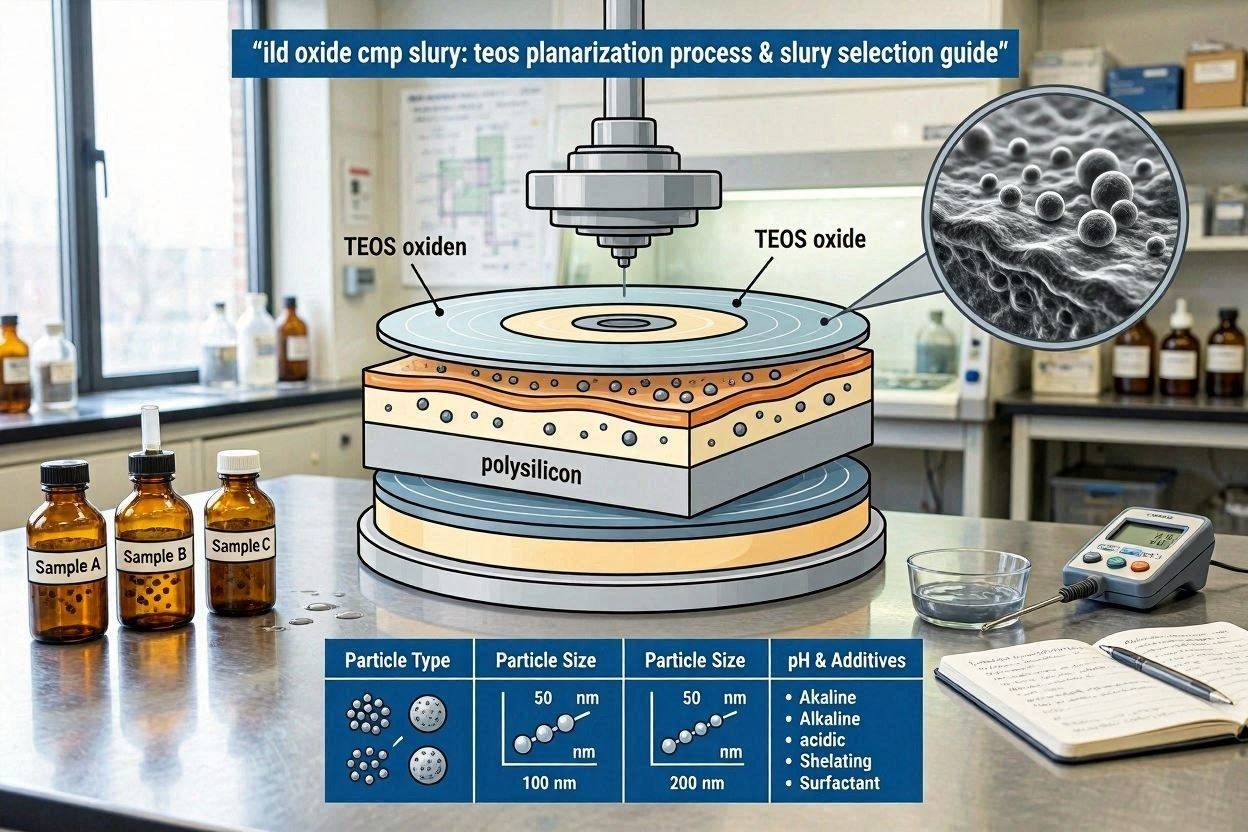
📅 July 2026·⏱ 18 min read·✍️ JEEZ Technical Team Inter-layer dielectric (ILD) oxide CMP is the single highest-volume CMP application in semiconductor manufacturing. Understanding the process — its target films, ...


