logo

À propos de semiconductor

Cet auteur n'a pas encore fourni de détails.
Jusqu'à présent, semiconductor a créé 51 entrées de blog.

Copper CMP Slurry for Advanced Semiconductor Manufacturing

  Table of Contents 1. Introduction to Copper CMP 2. Role of Copper CMP Slurry in BEOL Integration 3. Chemical–Mechanical Removal Mechanism 4. Copper CMP Slurry Composition Architecture 5. Two-Step Copper CMP Slurry Systems 6. Key Engineering Parameters & Data Ranges 7. Process Window & Control Maps 8. Defect Mechanisms & Root Cause Analysis 9. High-Volume Manufacturing (HVM) Challenges 10. Slurry Selection & Optimization Guidelines 11. Future Trends in Copper CMP Slurry 1. Introduction to Copper CMP Copper has become the dominant interconnect material in advanced semiconductor devices due to its low resistivity and superior electromigration resistance compared to aluminum. ...
Par |2026-01-05T16:11:37+08:002026年1月5日|Blog, L'industrie|0 Commentaires

What Does Slurry in CMP Contain? A Complete Engineering-Level Explanation

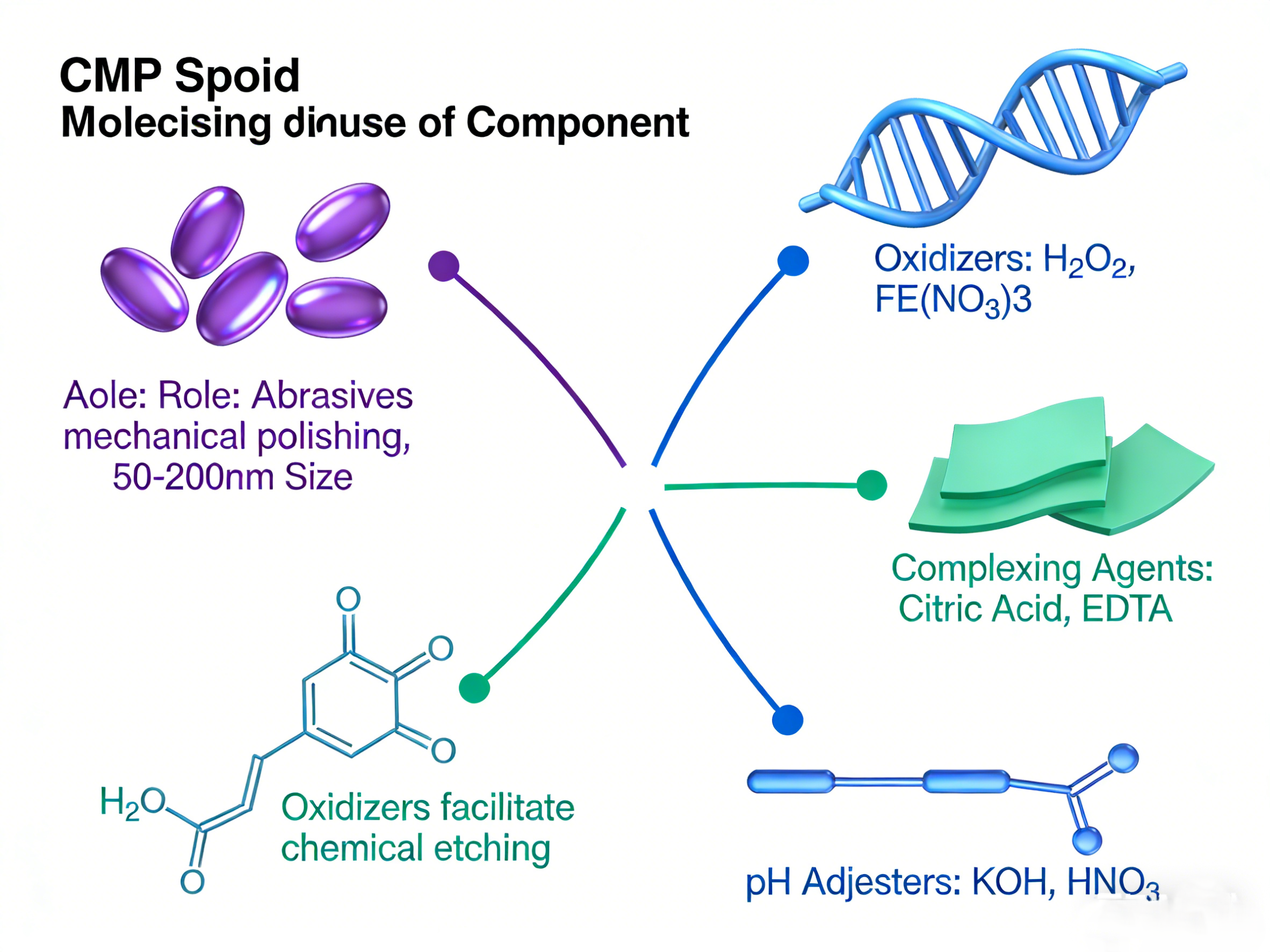
Table of Contents 1. Introduction 2. High-Level Component Overview 3. Abrasive Particles 4. Oxidizers and Reactive Species 5. Complexing & Chelating Agents 6. Corrosion Inhibitors & Passivation Additives 7. pH Buffers and Ionic Control 8. Surfactants & Dispersion Agents 9. Stabilizers & Shelf-Life Additives 10. Trace Impurities & Contamination Risks 11. Component Interaction & Coupled Effects 12. Defect Mechanisms Caused by Component Imbalance 13. Engineering Summary 1. Introduction In chemical mechanical planarization (CMP), slurry is not a simple polishing liquid. It is a carefully engineered multiphase system where mechanical abrasion, chemical reactions, and interfacial transport must remain in precise balance. ...

Par |2026-01-05T16:30:30+08:002026年1月5日|Blog, L'industrie|0 Commentaires

CMP Slurry Composition Explained

  Table of Contents Introduction Fundamental Architecture of CMP Slurry Abrasive Particles in CMP Slurry Chemical Additives and Oxidizers Complexing Agents and Corrosion Inhibitors pH Control and Chemical Stability Slurry Stability, Dispersion, and Shelf Life Engineering Parameter Tables Experimental Data and Performance Ranges CMP Slurry Process Window Analysis Composition-Related Failure Modes CMP Slurry Composition Within the CMP Ecosystem Introduction CMP slurry composition defines the fundamental behavior of chemical mechanical planarization processes in semiconductor manufacturing. While CMP is often described as a hybrid of chemistry and mechanics, it is the slurry formulation that ultimately governs how these two mechanisms interact at ...

Par |2026-01-05T16:00:57+08:002026年1月5日|Blog, L'industrie|0 Commentaires

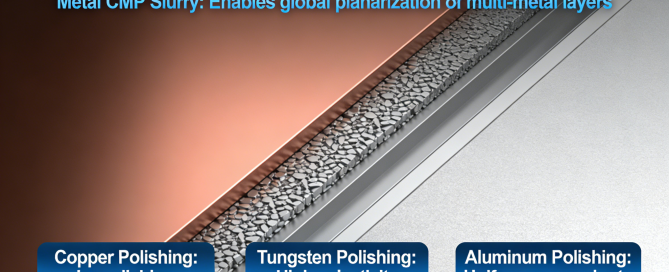
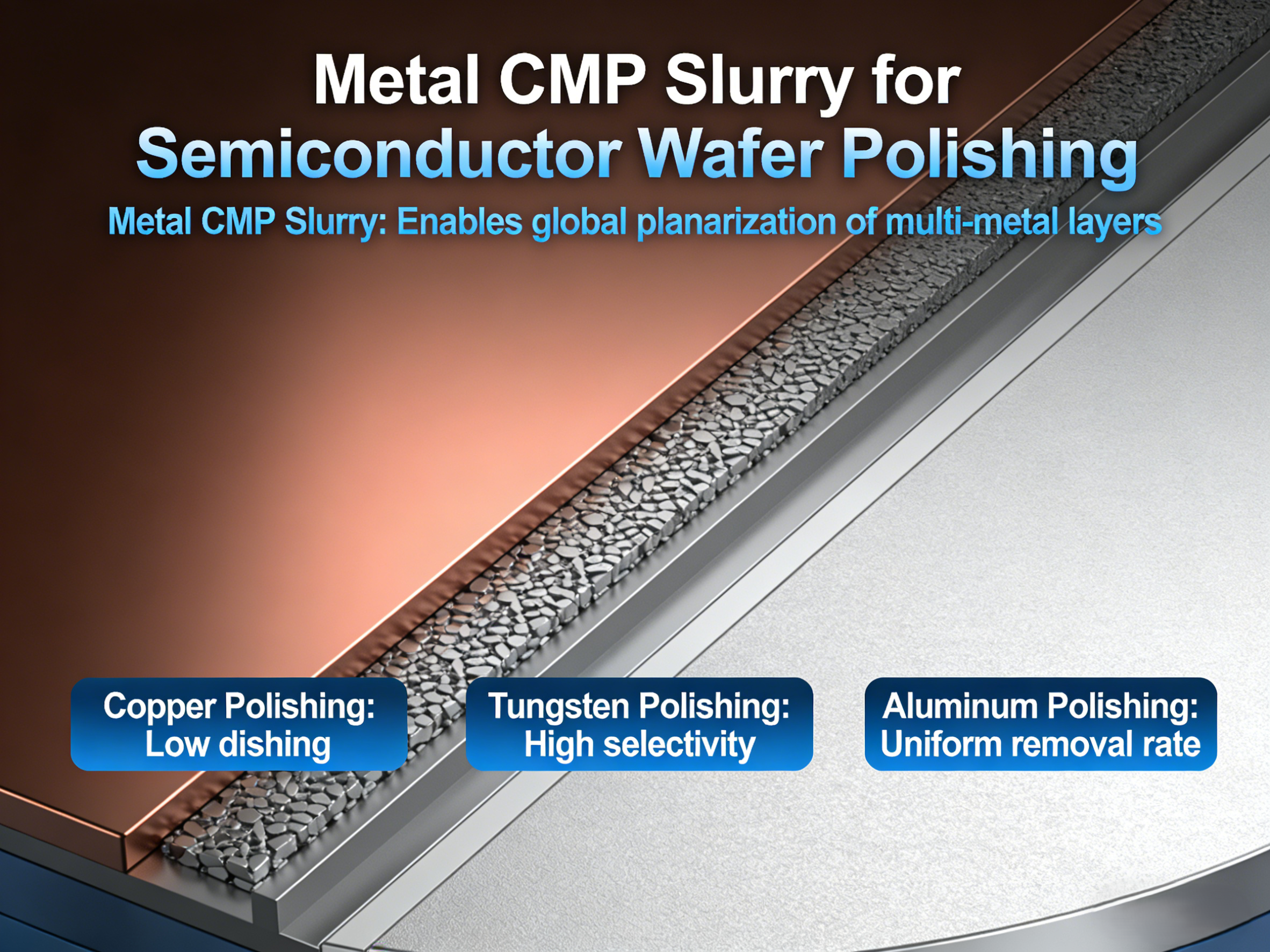
Metal CMP Slurry for Semiconductor Wafer Polishing

  Table of Contents 1. Introduction to Metal CMP 2. Why Metal CMP Is Fundamentally Different 3. Classification of Metal CMP Slurry Types 4. Removal Mechanisms Across Different Metals 5. Metal CMP Slurry Composition Architecture 6. Metal-Specific CMP Slurry Considerations 7. Engineering Parameters & Experimental Data 8. Process Window & Integration Control 9. Metal CMP Defects & Root Cause Analysis 10. High-Volume Manufacturing Challenges 11. Slurry Selection Strategy for Metal CMP 12. Future Trends in Metal CMP Slurry 1. Introduction to Metal CMP Metal Chemical Mechanical Planarization (CMP) is one of the most integration-critical processes in advanced semiconductor manufacturing. Unlike ...

Par |2026-01-05T16:22:08+08:002026年1月5日|Blog, L'industrie|0 Commentaires

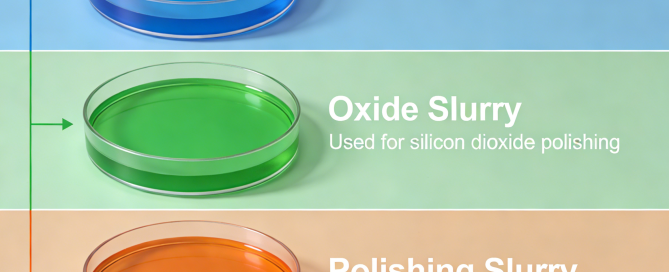
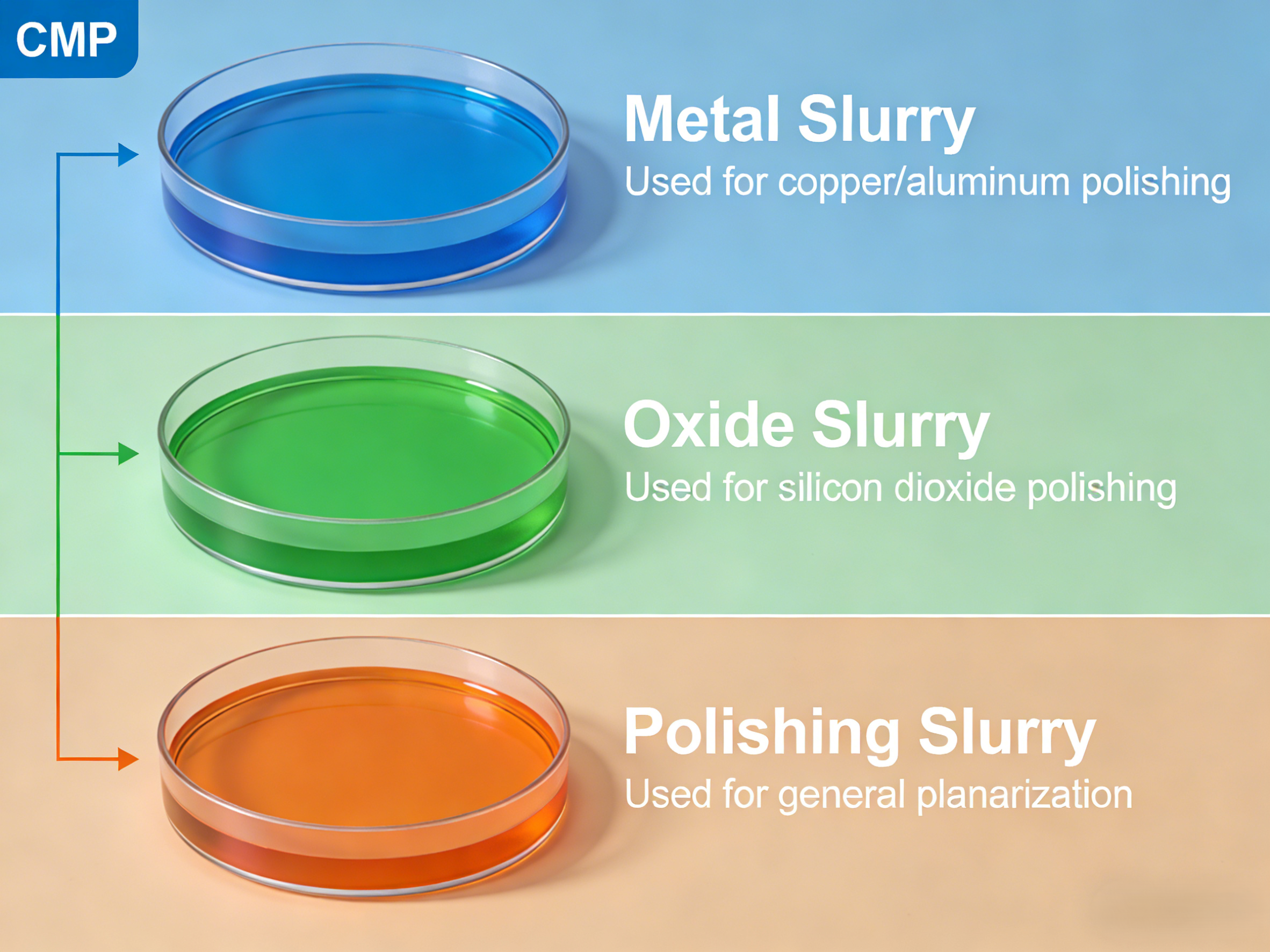
CMP Slurry Types Explained

  Table of Contents Introduction: Why CMP Slurry Types Matter CMP Slurry Classification Logic Oxide CMP Slurry Copper CMP Slurry Tungsten CMP Slurry Barrier & Hard Mask CMP Slurry Low-k & Advanced Dielectric Slurry Node-Driven Slurry Types Slurry Type vs Process Window Slurry Selection Decision Matrix Type-Specific Failure Modes Introduction: Why CMP Slurry Types Matter CMP slurry types are often oversimplified in commercial literature, frequently reduced to labels such as “oxide slurry” or “copper slurry.” In real semiconductor manufacturing environments, however, slurry type selection directly defines removal mechanisms, defect modes, integration risk, and ultimately yield. As technology nodes shrink and ...

Par |2026-01-05T16:09:04+08:002026年1月5日|Blog, L'industrie|0 Commentaires

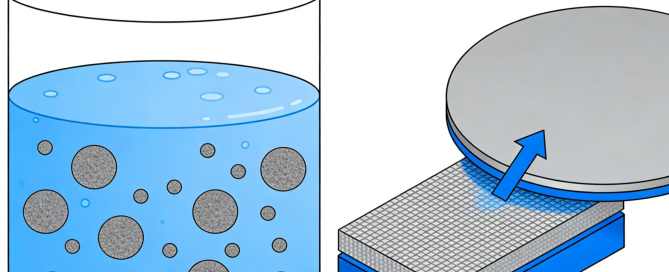
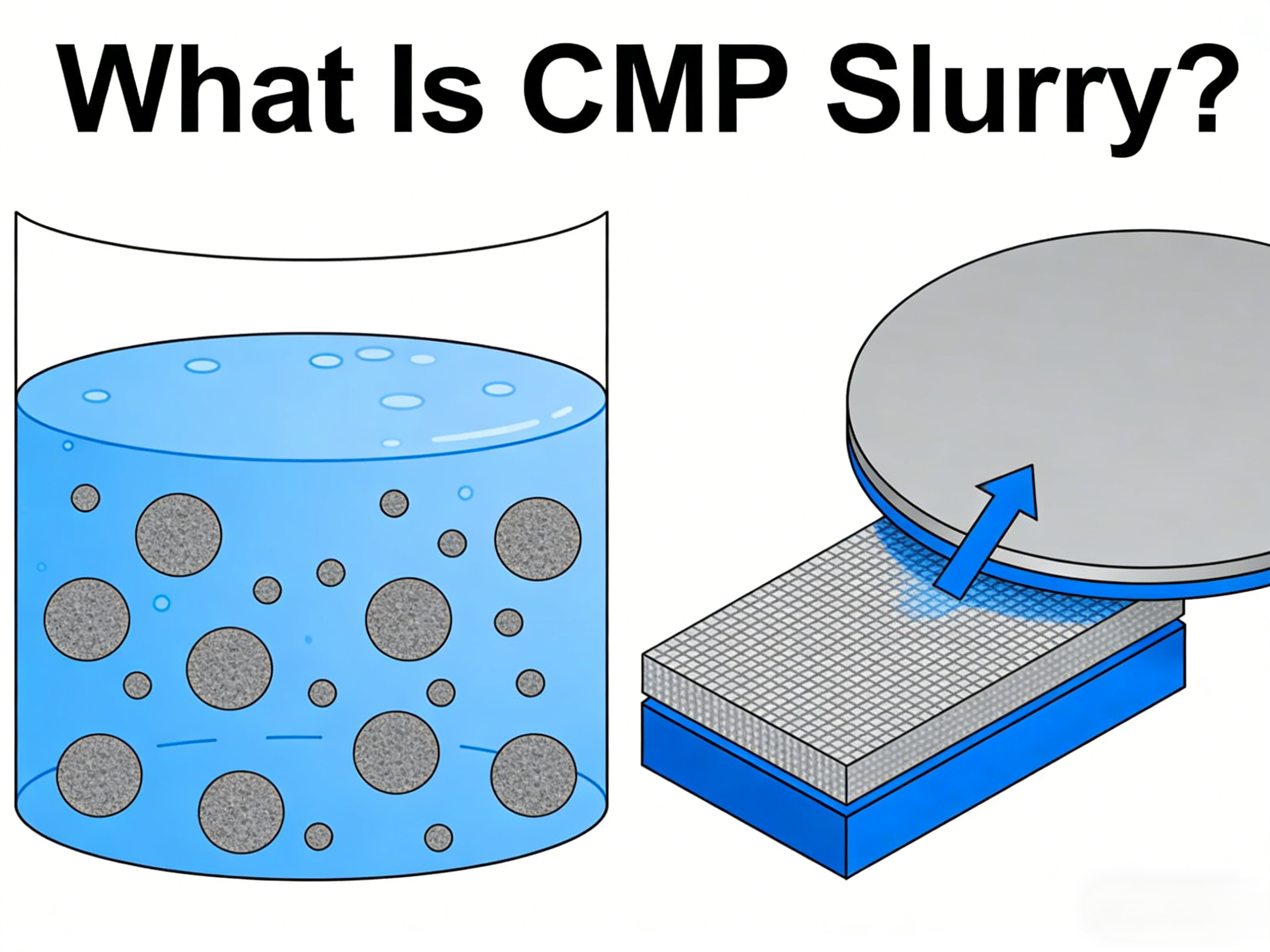
What Is CMP Slurry?

  Table of Contents Definition of CMP Slurry CMP Slurry in Chemical Mechanical Planarization How CMP Slurry Works: Chemical and Mechanical Interaction Functions of CMP Slurry in Wafer Polishing Typical Applications of CMP Slurry CMP Slurry vs Conventional Polishing Compounds Key CMP Slurry Process Parameters Common Misunderstandings About CMP Slurry CMP Slurry Within the Complete CMP Ecosystem Definition of CMP Slurry CMP slurry is a chemically active, particle-based suspension specifically formulated for use in Chemical Mechanical Planarization (CMP) processes during semiconductor wafer manufacturing. Unlike generic abrasive slurries, CMP slurry is engineered to achieve highly controlled material removal through the combined ...

Par |2026-01-05T16:03:27+08:002026年1月5日|Blog, L'industrie|0 Commentaires

CMP Slurry for Semiconductor Wafer Polishing

Table of Contents What Is CMP Slurry? Role of CMP Slurry in Semiconductor Manufacturing Types of CMP Slurry CMP Slurry Composition and Key Ingredients Metal CMP Slurry Applications CMP Slurry Filtration and Process Control How to Choose CMP Slurry for Wafer Polishing CMP Slurry Supplier and Custom Formulations What Is CMP Slurry? Chemical Mechanical Planarization (CMP) slurry is a highly engineered consumable used in semiconductor wafer polishing processes to achieve global and local planarization of thin films. Unlike conventional abrasive slurries used in mechanical polishing, CMP slurry is a chemically active suspension designed to interact with wafer materials at the ...

Par |2026-01-05T15:58:58+08:002026年1月5日|Blog, L'industrie|0 Commentaires

Saphir

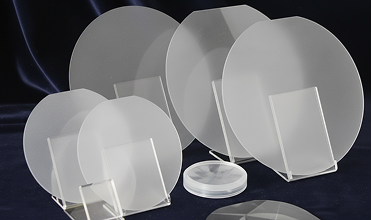
Les cristaux de saphir possèdent une excellente stabilité optique, mécanique et chimique, ainsi qu'une solidité, une dureté et une résistance à l'érosion élevées. Ils peuvent fonctionner dans des conditions difficiles à des températures avoisinant les 2000°C. Le saphir est principalement utilisé dans les substrats de LED, les lentilles de montres et est largement appliqué dans les dispositifs militaires infrarouges, la technologie spatiale des satellites et comme matériaux de fenêtre pour les lasers à haute intensité. Il constitue un substrat idéal pour les applications pratiques des semi-conducteurs telles que les diodes électroluminescentes (DEL) GaN/Al₂O₃, les circuits intégrés à grande échelle (SOI et SOS) et les films minces à nanostructures guidées. Actuellement, les boues de polissage et les fluides de broyage du saphir en Chine dépendent encore largement des importations. Après des années de ...

Par |2025-12-16T11:38:02+08:002025年12月9日|Application|0 Commentaires

Céramique

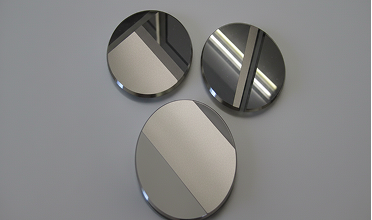
Il s'agit d'une feuille de céramique d'alumine nécessitant une finition miroir. Habituellement, le polissage des céramiques d'alumine implique un meulage grossier avec un disque de fer suivi d'un polissage avec un chiffon blanc, mais cette méthode est extrêmement lente - il faut souvent 30 à 40 minutes avec le chiffon blanc pour obtenir la surface miroir souhaitée. Cette méthode est inacceptable pour le traitement par lots. Il existe une autre méthode : après un meulage grossier avec un disque de fer, on utilise directement un disque d'étain pour le polissage du miroir. Toutefois, cette approche présente également des inconvénients, notamment le coût de traitement élevé des disques d'étain, ce qui rend difficile la production en série. D'une manière générale, le traitement des feuilles de céramique d'alumine présente certains ...

Par |2025-12-16T11:47:51+08:002025年12月9日|Application|0 Commentaires

Acier au tungstène

Garantir la brillance de la surface et les angles droits est un défi majeur dans le polissage de l'acier au tungstène. L'acier au tungstène est principalement utilisé pour les outils et les lames de coupe, de sorte que le tranchant de ses arêtes a un impact direct sur la qualité du produit. La brillance de la surface permet également de maintenir la perpendicularité du produit. Lors du polissage d'outils en acier au tungstène, il ne faut pas utiliser de roues en tissu ou de disques de polissage doux. Seuls des tampons de polissage d'une dureté appropriée peuvent garantir des angles droits plus nets.

Par |2025-12-16T11:38:42+08:002025年12月9日|Application|0 Commentaires
Haut de page