
Restez informé des derniers développements, des annonces importantes et de l'actualité de l'entreprise Jizhi Electronics. Nous nous engageons à partager avec nos clients le parcours de croissance de l'entreprise et les étapes clés.
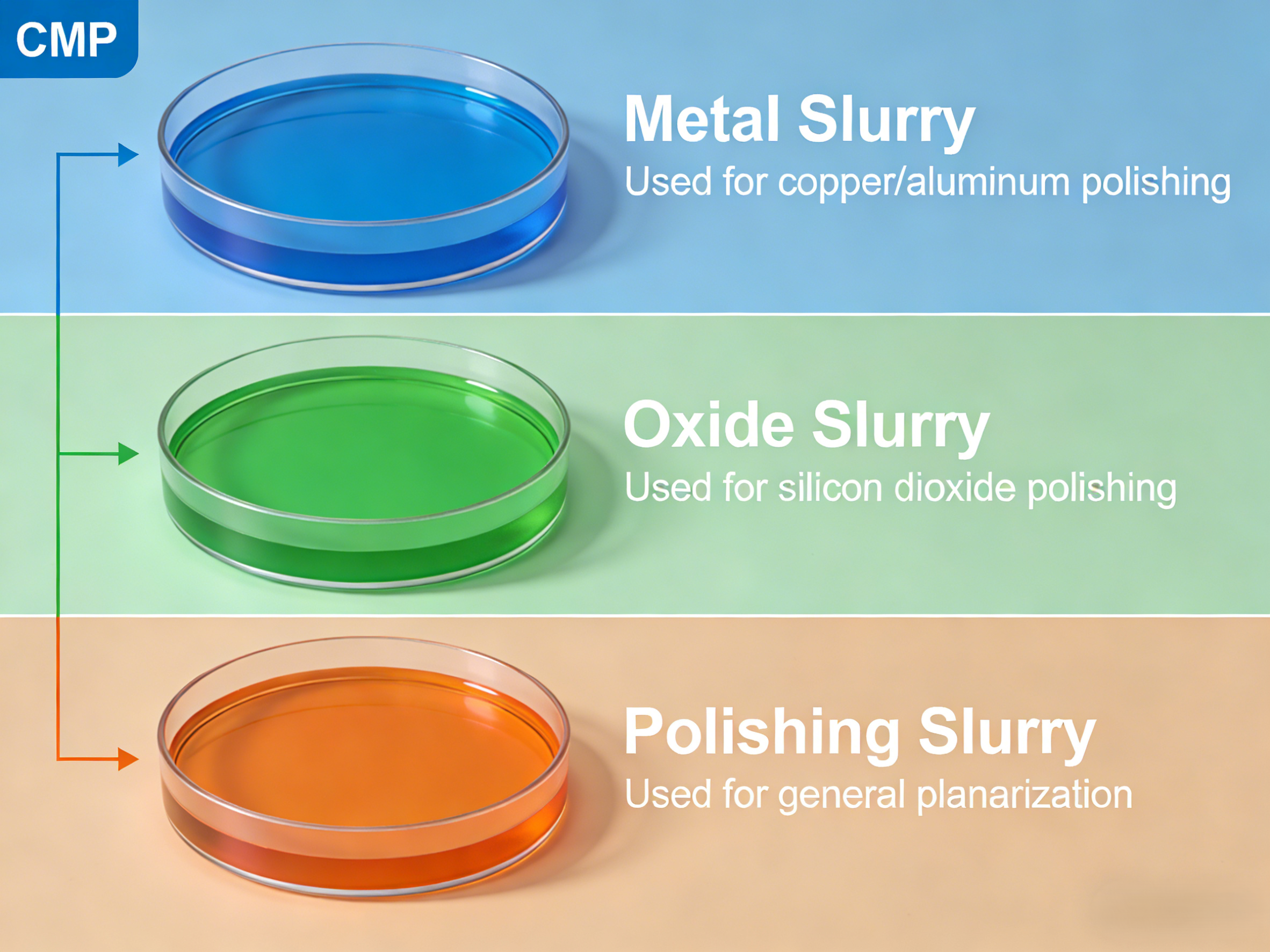
Table of Contents Introduction: Why CMP Slurry Types Matter CMP Slurry Classification Logic Oxide CMP Slurry Copper CMP Slurry Tungsten CMP Slurry Barrier & Hard Mask CMP Slurry Low-k & Advanced Dielectric Slurry Node-Driven Slurry Types Slurry Type vs Process Window Slurry Selection Decision Matrix Type-Specific Failure Modes Introduction: Why CMP Slurry Types Matter CMP slurry types are often oversimplified in commercial literature, frequently reduced to labels such as “oxide slurry” or “copper slurry.” In real semiconductor manufacturing environments, however, slurry type selection directly defines removal mechanisms, defect modes, integration risk, and ultimately yield. As technology nodes shrink and ...
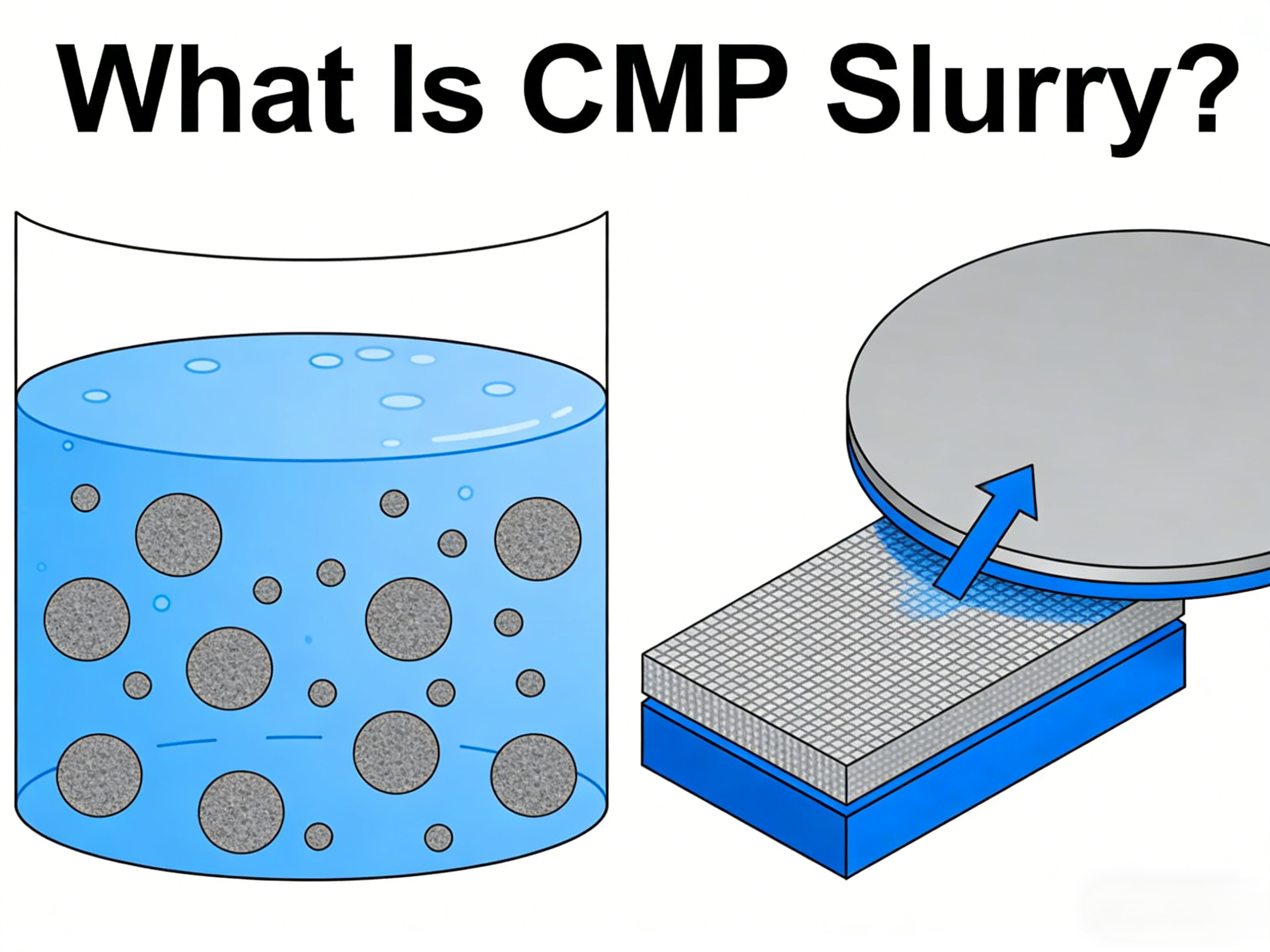
Table of Contents Definition of CMP Slurry CMP Slurry in Chemical Mechanical Planarization How CMP Slurry Works: Chemical and Mechanical Interaction Functions of CMP Slurry in Wafer Polishing Typical Applications of CMP Slurry CMP Slurry vs Conventional Polishing Compounds Key CMP Slurry Process Parameters Common Misunderstandings About CMP Slurry CMP Slurry Within the Complete CMP Ecosystem Definition of CMP Slurry CMP slurry is a chemically active, particle-based suspension specifically formulated for use in Chemical Mechanical Planarization (CMP) processes during semiconductor wafer manufacturing. Unlike generic abrasive slurries, CMP slurry is engineered to achieve highly controlled material removal through the combined ...
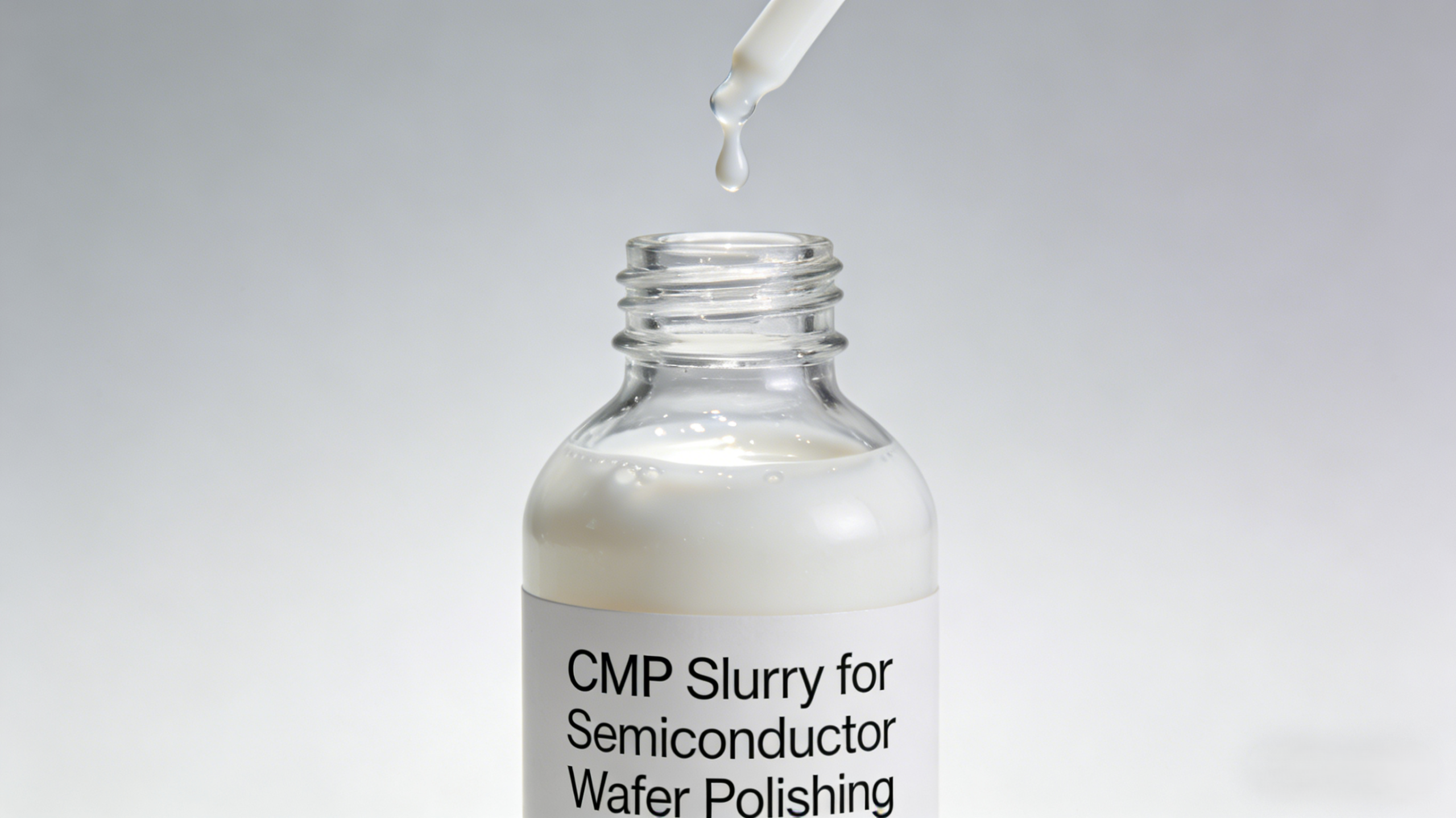
Table of Contents What Is CMP Slurry? Role of CMP Slurry in Semiconductor Manufacturing Types of CMP Slurry CMP Slurry Composition and Key Ingredients Metal CMP Slurry Applications CMP Slurry Filtration and Process Control How to Choose CMP Slurry for Wafer Polishing CMP Slurry Supplier and Custom Formulations What Is CMP Slurry? Chemical Mechanical Planarization (CMP) slurry is a highly engineered consumable used in semiconductor wafer polishing processes to achieve global and local planarization of thin films. Unlike conventional abrasive slurries used in mechanical polishing, CMP slurry is a chemically active suspension designed to interact with wafer materials at the ...
Indium Phosphide (InP), as a core material of the third-generation semiconductor, holds an irreplaceable position in high-end fields such as optical communications, millimeter-wave radar, and quantum communications due to its excellent electron mobility, wide bandgap, and superior optoelectronic properties. The surface quality of InP substrates directly determines the precision and reliability of subsequent epitaxial growth and device fabrication, with polishing and lapping processes being the critical steps in controlling this core metric. Drawing on years of practical experience in semiconductor material processing, Gizhi Electronics provides a systematic analysis of the key polishing and lapping processes for InP substrates, along with ...
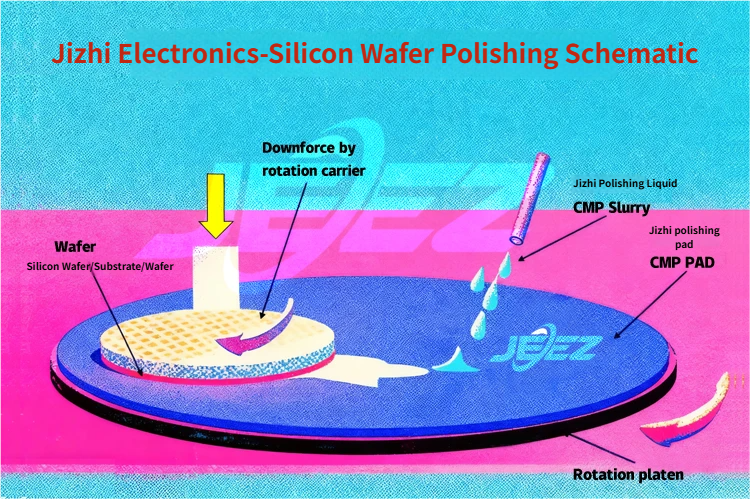
In the precision manufacturing chain of the semiconductor industry, the creation of every high-performance chip relies on hundreds of process steps, from silicon purification to chip packaging. Among these, silicon wafer polishing—a critical process connecting wafer cutting and grinding with subsequent lithography and thin-film deposition—can be called the “art of surface finishing” in semiconductor manufacturing. It shapes the wafer surface with nanometer-level precision, directly determining the chip’s performance, reliability, and yield. As a company deeply rooted in the electronics field, Gizhi Electronics fully understands the core value of this process. This article will delve into the technical essence of silicon ...
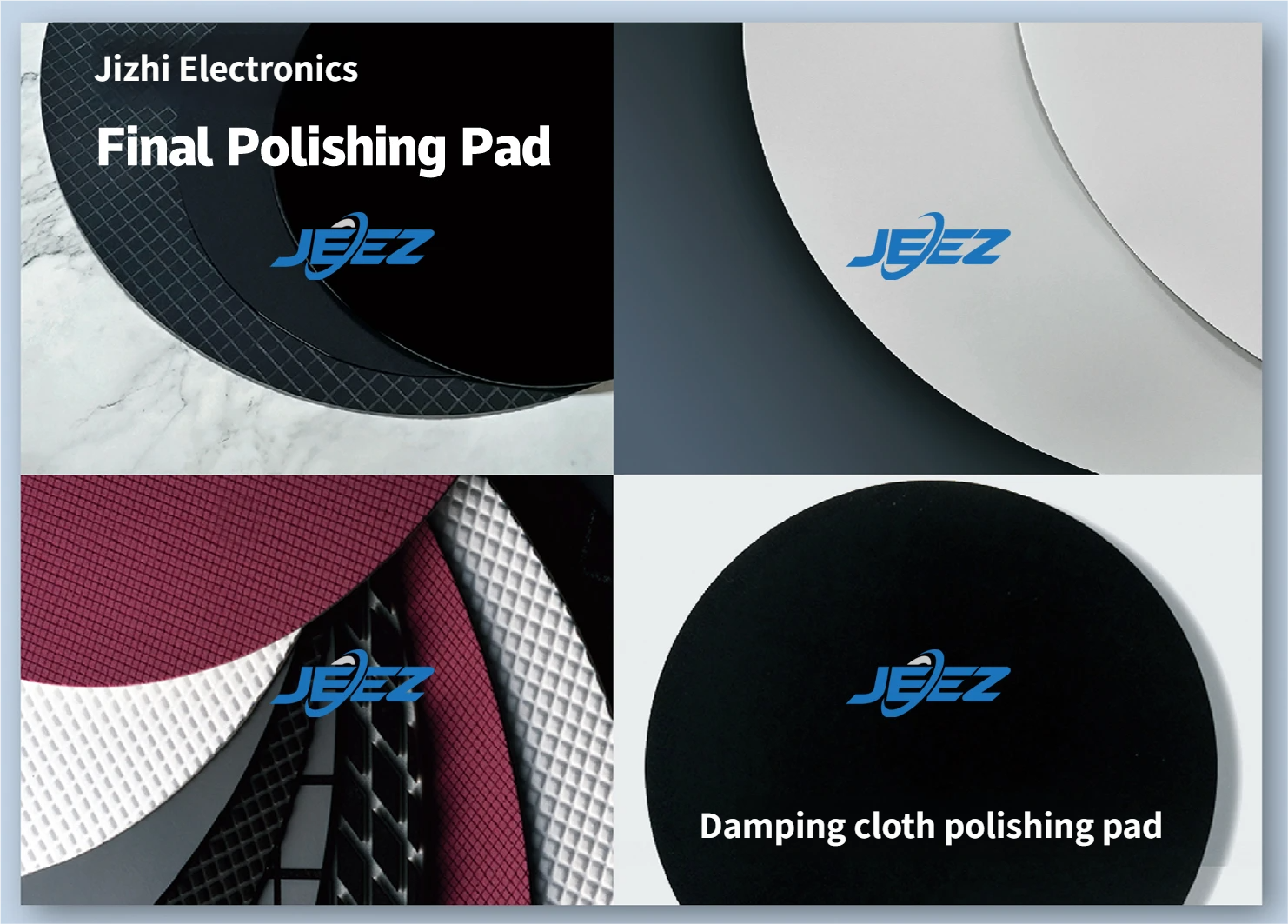
Alors que l'industrie des semi-conducteurs de troisième génération accélère son itération aujourd'hui, le carbure de silicium (SiC), en tant que matériau de base, redessine le paysage technologique des domaines de fabrication haut de gamme tels que les dispositifs d'alimentation des véhicules à énergie nouvelle et les dispositifs de communication à haute fréquence, grâce à son excellente résistance aux hautes températures et à son champ de rupture élevé. Le polissage mécano-chimique (CMP), un processus critique dans le traitement du SiC, dépend fortement de la performance de son principal consommable, le tampon de polissage, qui détermine directement la précision et la fiabilité des dispositifs finis. Depuis longtemps, le tampon de polissage G804W de Fujibo (Japon) est l'un des principaux choix dans le domaine du CMP SiC, ...
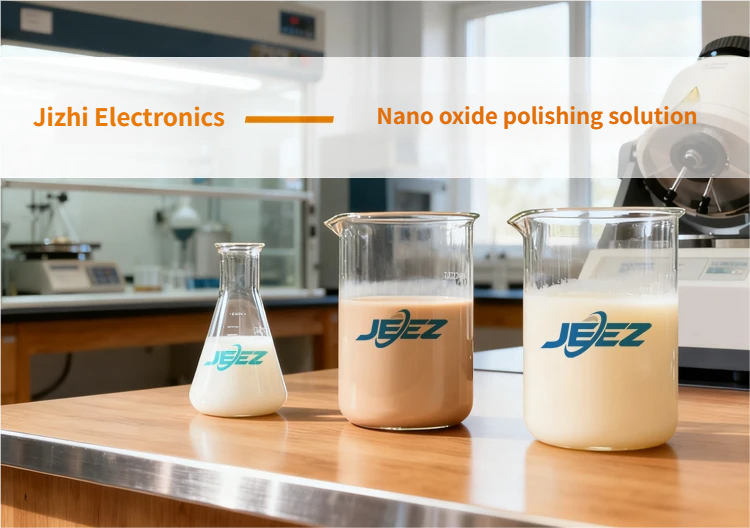
Débloquer le processus CMP : Principes et avantages Dans le domaine du traitement des composants optiques, le polissage chimico-mécanique (CMP) est une technologie de base permettant d'obtenir une planarisation de surface de haute précision. Grâce aux effets synergiques de la corrosion chimique et du meulage mécanique, il permet d'usiner avec précision le verre optique. L'essence du processus CMP réside dans la synergie entre les actions chimiques et mécaniques. Les réactifs chimiques contenus dans la suspension de polissage réagissent d'abord avec la surface du verre pour former une couche ramollie facile à enlever. Ce prétraitement chimique jette les bases du meulage mécanique ultérieur, en veillant à ce que la couche ramollie soit facile à enlever sans endommager la surface du verre.


