
 2025年12月9日Catégories : Application
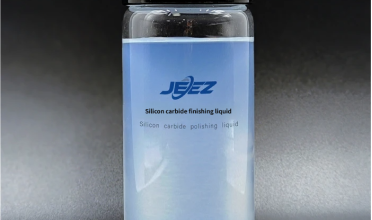
Gizhil Electronic’s silicon carbide fine polishing slurry is suitable for the surface planarization of SiC silicon carbide wafer substrates during precision machining. The slurry used for wafer polishing exhibits high polishing efficiency and low surface roughness. After polishing with Gizhil Electronic’s SiC substrate polishing slurry, the wafer surface is free from defects such as scratches and haze, ensuring excellent flatness of the silicon carbide wafers. Developed by Gizhil Electronic, this silicon carbide polishing slurry offers a high dilution ratio and easy post-polishing cleaning, making it widely applicable in the manufacturing of semiconductor integrated circuit substrates. Gizhil Electronic’s SiC slurry for ...
 2025年12月9日Catégories : Application
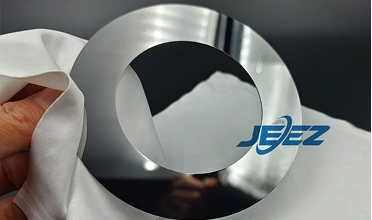
Hard alloy blades possess a series of excellent properties, including high hardness, good toughness, heat resistance, and corrosion resistance. Particularly, their high hardness and wear resistance allow them to maintain significant hardness even at 1000°C. Tungsten steel workpieces made of hard alloy are considered a challenging material for many polishing processes. Currently, tungsten steel blades can be polished using CMP (Chemical Mechanical Polishing) technology combined with specialized metal polishing slurries to achieve an ideal surface finish. Hard alloy blades, also known as tungsten steel blades, often exhibit surface defects such as rust spots, scratches, and pitting on the raw workpiece. ...
 2025年12月9日Catégories : Application
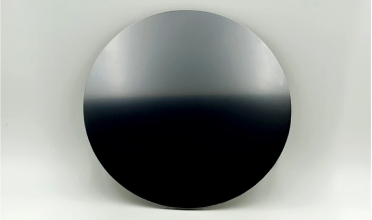
Depending on the specific semiconductor industry processes, CMP (Chemical Mechanical Polishing) slurries can be categorized into dielectric layer CMP slurries, barrier layer CMP slurries, copper CMP slurries, silicon CMP slurries, tungsten CMP slurries, TSV (Through-Silicon Via) CMP slurries, shallow trench isolation CMP slurries, and others. SiC CMP slurry is one of the essential materials required in the semiconductor wafer manufacturing process. It plays a crucial role in the polishing of silicon carbide material workpieces. Factors such as the type of slurry, particle dispersion, particle size, physicochemical properties, and stability are closely related to the polishing outcome. In recent years, driven ...
 2025年12月5日Catégories : Application
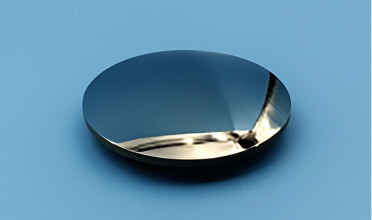
Polishing the stainless steel back cover of a smart watch requires both the rough and fine polishing stages of the CMP process. Using Jizhi Electronics’ polishing slurry and pads in combination can achieve a perfect, flawless mirror finish. The workpiece is made of stainless steel, with visible texture lines before polishing. The surface to be polished on the original part has a curved shape. Unlike common flat surface polishing, curved and arched surface polishing requires designing polishing pads with different groove specifications and combining different cushioning materials. The curved surface is treated with polishing slurries of different compositions to remove ...
 2025年12月5日Catégories : Application
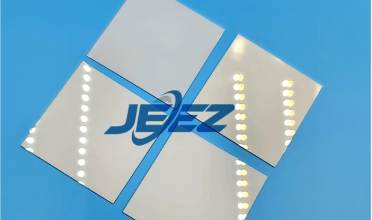
L'obtention d'une finition miroir sur les feuilles de céramique d'alumine présente des défis importants pour deux raisons principales : premièrement, la dureté élevée de l'alumine la rend difficile à poncer ; deuxièmement, sa propriété de surface absorbant fortement la lumière rend difficile l'obtention d'un effet miroir avec les méthodes de polissage conventionnelles. Ces facteurs augmentent considérablement la difficulté du polissage des céramiques d'alumine. En réponse à ces défis de traitement, Jizhi Electronics a développé des techniques de polissage éprouvées et des boues spécialisées pour les céramiques d'alumine, offrant ainsi des solutions de polissage complètes. Pour les feuilles de céramique d'alumine des clients nécessitant une finition miroir, le processus traditionnel implique souvent un broyage brut initial avec un disque de fer, suivi d'un polissage ...
 2025年12月5日Catégories : Application
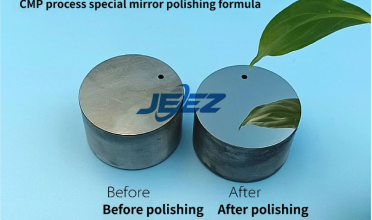
Les procédés traditionnels permettant d'obtenir des finitions miroir de haute qualité sur l'acier inoxydable utilisent principalement des technologies de polissage telles que le polissage électrochimique, le polissage chimique et le polissage mécanique. Compte tenu des exigences croissantes en matière de qualité de surface de l'acier inoxydable fini miroir et de la nécessité d'améliorer l'efficacité du polissage, un nouveau procédé de polissage de l'acier inoxydable, le CMP (Chemical Mechanical Polishing), a été largement adopté. L'utilisation d'équipements CMP, de boues et de tampons de polissage, combinée à des réactions chimiques et à un broyage à grande vitesse, permet d'obtenir des surfaces de haute qualité. Pour le traitement de la surface miroir de l'acier inoxydable, Jizhi Electronics formule des boues de polissage CMP spécialisées. Ces boues améliorent l'activité de la surface de l'acier inoxydable grâce à des solutions chimiques ...


